Foreign trade policy plays a crucial role in a nation’s economic development. This article delves into examples of foreign trade policy, providing a clearer understanding of its importance and impact on the economy.
What is Foreign Trade Policy?
Foreign trade policy encompasses the measures, regulations, and laws a country implements to govern its international trade activities. Its objectives include promoting exports, controlling imports, protecting the domestic economy, and fostering international cooperation. This policy utilizes tools like tariffs, quotas, subsidies, and other non-tariff measures.
Examples of Protectionist Foreign Trade Policy
Protectionism is a type of foreign trade policy aimed at shielding nascent domestic industries from competition posed by imports. A prime example is imposing high tariffs on imported goods. For instance, a country might levy high taxes on imported cars to protect its domestic auto industry. This increases the price of imported cars, making domestically produced vehicles more competitive.
Car Industry Protectionism
Examples of Free Trade Policy
Free trade policy encourages the exchange of goods and services between countries with minimal or no trade barriers. Free trade agreements exemplify this approach. Participating countries eliminate or reduce tariffs and other trade barriers on goods and services exchanged among themselves. For example, the Comprehensive and Progressive Agreement for Trans-Pacific Partnership (CPTPP) is a free trade agreement among 11 countries, creating a vast free trade area.
Benefits of Free Trade Policy
Free trade policy offers numerous benefits, including economic growth, job creation, and reduced prices for goods and services. However, it can also lead to challenges such as increased competition for domestic businesses.
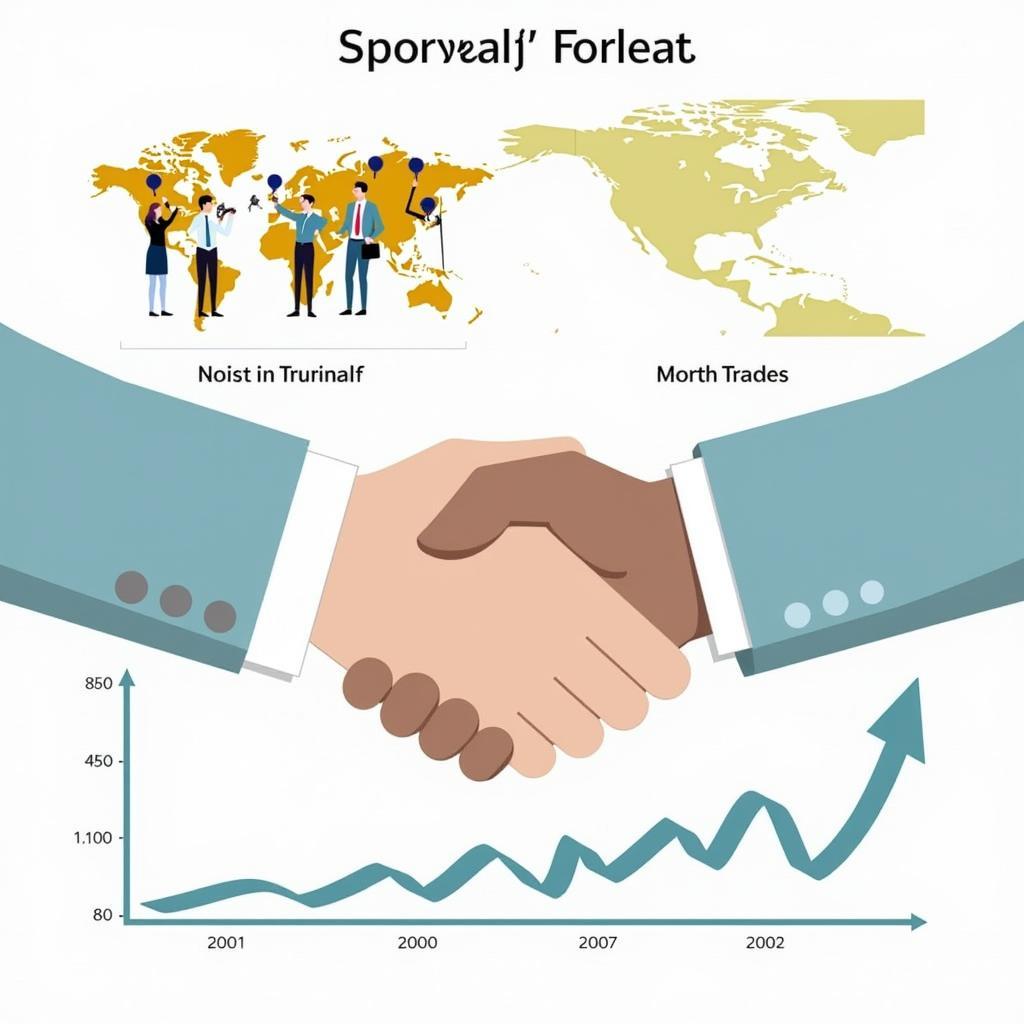 CPTPP Free Trade Agreement
Vietnam’s Foreign Trade Policy
Vietnam pursues an open foreign trade policy, deeply integrating into the global economy. Vietnam has joined several significant free trade agreements, including the WTO, CPTPP, and EVFTA. Learning more about Vietnam’s current foreign trade policy will provide deeper insights into this strategy. This participation has fueled export growth, attracted foreign investment, and stimulated economic growth. However, Vietnam also needs appropriate measures to protect domestic industries from import competition. Cosmetic company member policies and the list of regulated goods offer specific examples of how Vietnam adjusts trade policies within particular sectors.
Conclusion
Examples of foreign trade policies highlight the importance of selecting policies aligned with each stage of economic development. These policies require flexibility to adapt to changes in the international economic environment. Environmental policies also play a crucial role in shaping sustainable foreign trade policies. Understanding these examples empowers nations to make informed decisions, maximizing benefits and minimizing risks in international trade. Richard Brealey’s finance book can provide further knowledge on international finance and the impact of foreign trade policy.
FAQ
- What is foreign trade policy?
- What are the objectives of foreign trade policy?
- What are the tools of foreign trade policy?
- What is the difference between protectionist and free trade policies?
- What foreign trade policy is Vietnam currently implementing?
For assistance, please contact us by phone: 0968239999, Email: [email protected], or visit our address: No. TT36 – CN9 Road, Tu Liem Industrial Zone, Phuong Canh Ward, Nam Tu Liem District, Hanoi. We have a 24/7 customer service team.