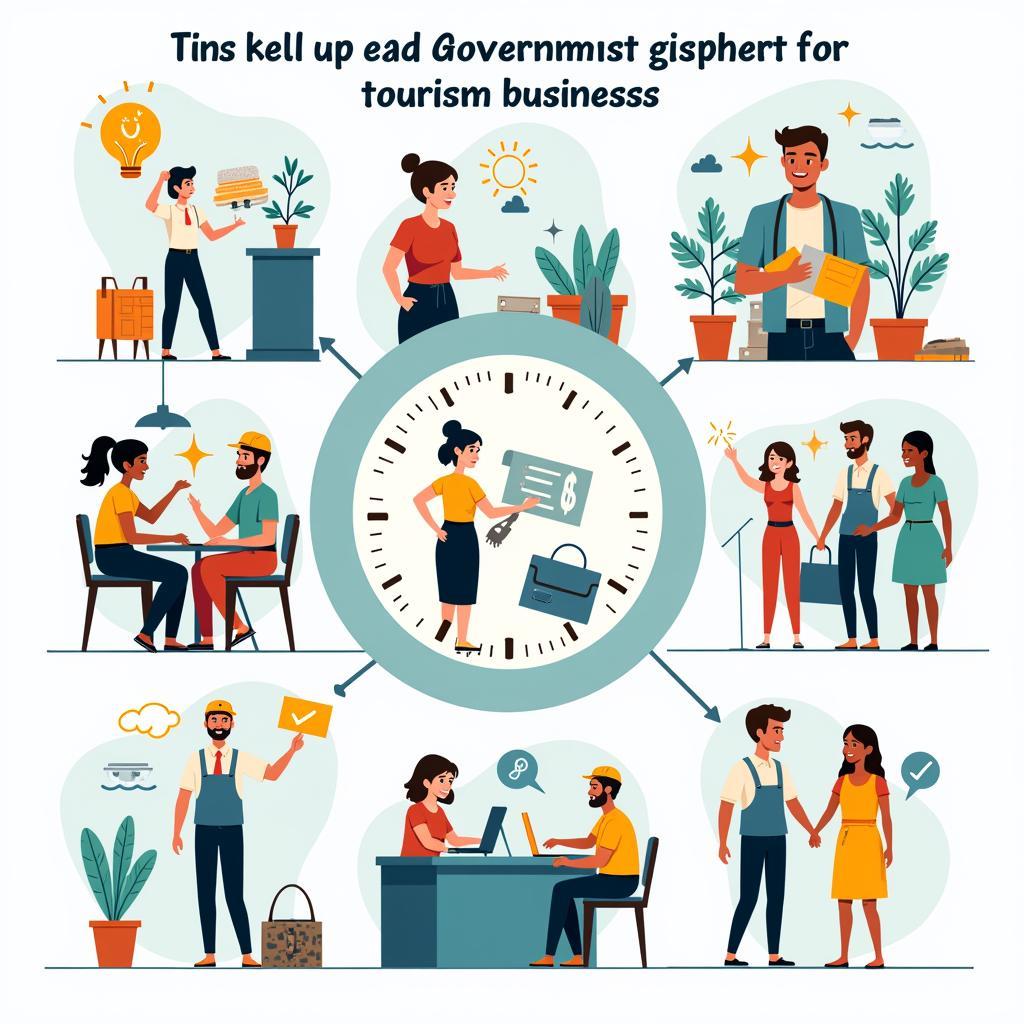
Economic policies that support tourism play a crucial role in the recovery and development of the tourism industry, especially after the negative impacts of global events like pandemics. These policies create favorable conditions for businesses, stimulate tourism demand, and attract investment.
The Importance of Economic Policies for Tourism Support
The tourism industry is a key economic sector, contributing significantly to GDP and creating jobs for many people. Economic policies supporting tourism not only help the industry overcome difficulties but also promote sustainable growth. This support is demonstrated through tax reductions, visa exemptions, investment in infrastructure, and human resource training. Governments also need policies to encourage investment in ecotourism and sustainable tourism projects.
Types of Economic Policies Supporting Tourism
Economic policies supporting tourism are diverse and abundant, including fiscal, monetary, and non-financial policies. Fiscal policies include tax reductions and direct financial support for tourism businesses. Monetary policies focus on adjusting interest rates and facilitating access to loans. Non-financial policies include simplifying administrative procedures, promoting tourism, and improving service quality.
Fiscal Policies
Reducing taxes for tourism businesses is one of the most important fiscal policies. This helps businesses reduce costs, increase competitiveness, and invest in business expansion. For example, reducing VAT on accommodation, food and beverage, and tourism transportation services.
Monetary Policies
Monetary policy supports tourism by providing preferential loan packages with low interest rates. This helps businesses access capital more easily, invest in infrastructure, and improve service quality.
Tourism business support policy
Non-Financial Policies
Simplifying visa procedures, investing in international tourism promotion, and improving the quality of tourism human resource training are examples of non-financial policies. Similar to [Russia’s policy of protecting North Korea], this support also aims to create favorable conditions for the development of a specific sector. (Note: Bracketed content appears to be placeholder text and should be replaced with relevant information if available.)
Effectiveness of Economic Policies Supporting Tourism
Effective economic policies supporting tourism will help increase tourist arrivals, increase revenue for the tourism industry, create more jobs, and contribute to the state budget. However, there needs to be coordination between policies and the active participation of stakeholders.
Sustainable Tourism Growth
Economic policies supporting tourism should be directed towards sustainable development, environmental protection, and local culture preservation. This has similarities with [Agribank’s seafood credit policy], aiming to support the sustainable development of a specific economic sector. (Note: Bracketed content appears to be placeholder text and should be replaced with relevant information if available.)
 Sustainable tourism development
Economic Policies Supporting Tourism in Vietnam
The Vietnamese government has been implementing many economic policies to support tourism, including tax reductions, visa exemptions for certain countries, and investment in tourism infrastructure. To better understand [list of talented people in the RVN government], you can learn more about those who contributed to building economic policy. (Note: Bracketed content appears to be placeholder text and should be replaced with relevant information if available.)
Challenges and Opportunities
Despite many efforts, Vietnam’s tourism industry still faces many challenges such as international competition, service quality, and climate change. However, with its rich tourism potential, Vietnam has many opportunities to develop tourism into a key economic sector. A detailed example of [loosening the deferred payment policy] is the application of this policy in the tourism sector, allowing customers to pay after using the service. (Note: Bracketed content appears to be placeholder text and should be replaced with relevant information if available.)
Conclusion
Economic policies supporting tourism play a key role in the development of the tourism industry. The implementation of effective policies will help Vietnam’s tourism industry develop sustainably, contributing to the socio-economic development of the country. For those interested in [China’s aircraft management policy], this content will also be helpful in understanding the importance of economic policy in different sectors. (Note: Bracketed content appears to be placeholder text and should be replaced with relevant information if available.)
FAQ
- What are economic policies supporting tourism?
- What are the common types of economic policies supporting tourism?
- How does fiscal policy support tourism?
- How does monetary policy support tourism?
- What does non-financial policy support for tourism include?
- What is the effectiveness of economic policies supporting tourism?
- What are the challenges and opportunities of tourism in Vietnam?
For support, please contact Phone Number: 0968239999, Email: [email protected] Or visit the address: No. TT36 – CN9 Road, Tu Liem Industrial Park, Phuong Canh Ward, Nam Tu Liem District, Hanoi. We have a 24/7 customer support team.









