Have you ever heard the term “smooth operator” used to describe a skilled driver? One of the most crucial elements in becoming a driving expert is mastering the art of shifting gears. How can you shift gears accurately, smoothly, and safely? Let’s delve into the details with Hanoi Truck.
1. The Importance of Proper Gear Shifting
Proper gear shifting not only makes driving easier and smoother but also:
- Extends the lifespan of the engine and transmission: Incorrect shifting, especially grinding gears or forcing them, can severely damage the engine and transmission, leading to costly repairs.
- Improves fuel efficiency: Shifting at the right time and in the correct manner allows the engine to operate at optimal RPM, leading to significant fuel savings.
- Ensures safety: Proper shifting enhances your control over the vehicle’s speed and acceleration, especially in emergencies, ensuring your safety and the safety of others on the road.
2. Fundamental Principles of Gear Shifting
The general principle of gear shifting is:
- Lower gears provide greater torque and lower speed: Use lower gears when starting, climbing hills, or carrying heavy loads.
- Higher gears provide less torque and higher speed: Use higher gears when cruising at a steady speed on level roads.
Specifically:
- Neutral (N): Used when stopped or parked.
- First Gear (1): Used for starting, climbing steep hills, or navigating challenging terrain.
- Second Gear (2): Used after starting in first gear, for accelerating.
- Third, Fourth, and Fifth Gears (3, 4, 5): Used for cruising at steady speeds on level roads.
- Reverse (R): Used for backing up.
Note:
- Always fully depress the clutch pedal before shifting gears.
- Shift decisively to avoid grinding gears or selecting the wrong gear.
- Avoid holding the clutch down in gear while stopped at traffic lights or in traffic jams.
2.1. Gear Shifting Speed Guide for Manual Transmissions
| Speed (km/h) | Gear |
|---|---|
| 0-10 | 1 |
| 10-20 | 2 |
| 20-40 | 3 |
| 40-60 | 4 |
| Above 60 | 5 |
Note: This table is a general guideline. Actual shifting speeds may vary based on road conditions, vehicle load, and individual driving habits.
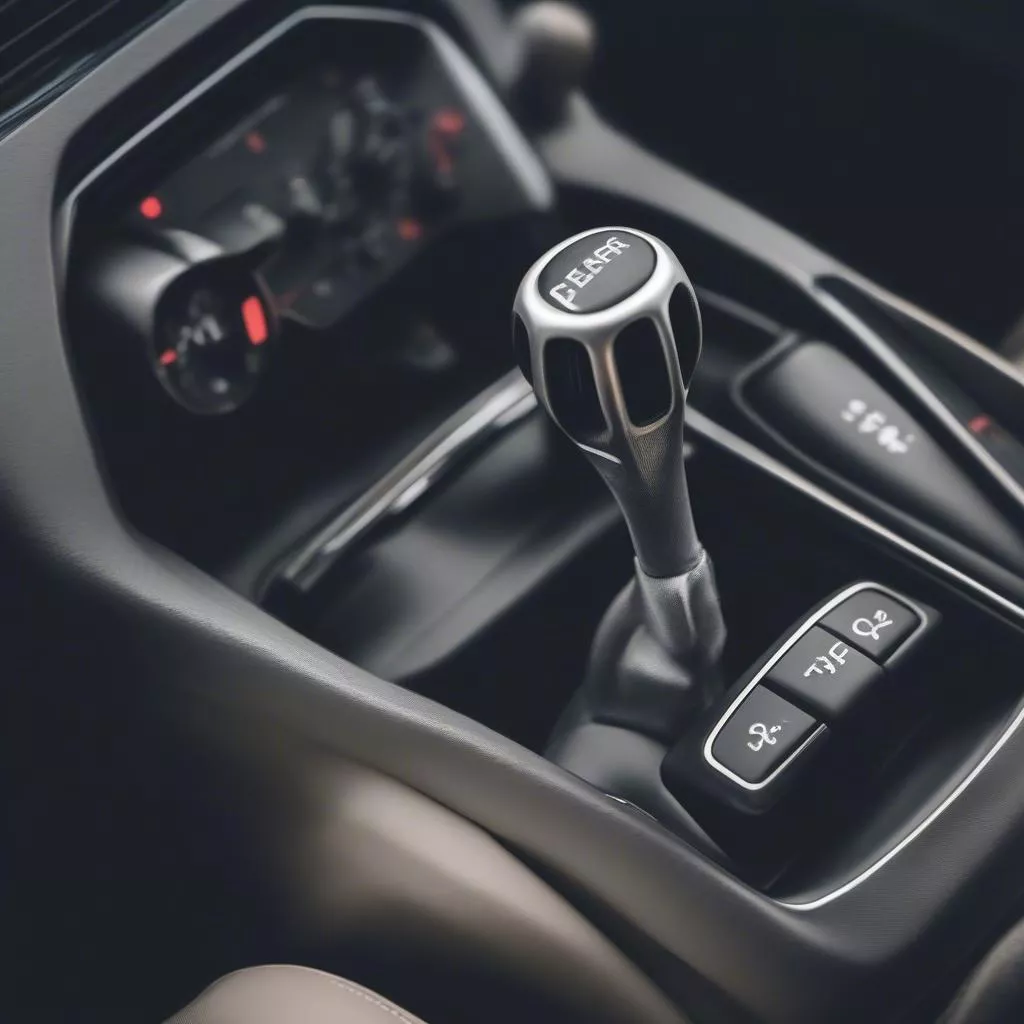
Car Gearbox
3. Common Gear Shifting Problems and Solutions
3.1. Difficulty Shifting Gears
- Cause: The clutch may not be fully disengaged, there might be friction in the clutch, or the transmission may require maintenance.
- Solution: Depress the clutch pedal fully, check the clutch’s travel, and have the transmission serviced regularly.
3.2. Jerky Shifting
- Cause: Releasing the clutch too quickly, causing the engine speed to mismatch the vehicle speed.
- Solution: Release the clutch smoothly and gradually, coordinating with the gas pedal.
3.3. Engine Stalling After Shifting
- Cause: Selecting the wrong gear, a faulty clutch, or engine problems.
- Solution: Verify the correct gear is selected, check the clutch and engine for issues.
4. Expert Tips for Smooth Gear Shifting
Mr. Nguyen Van A, an experienced technician at Thai Phong Auto Repair, shares: “For smooth gear changes, focus on coordinating the clutch, gas pedal, and gear shifter harmoniously. When learning to drive, practice in quiet areas with minimal traffic. Most importantly, be persistent and patient, and you will master this skill.”
 Skilled Driver Shifting Gears
5. Feng Shui and Truck Number Selection
Many truck drivers believe that choosing a license plate number with elements that complement their own brings good luck and prosperity. For example, someone with a Metal element should choose numbers associated with Earth (since Earth produces Metal), such as 2, 5, or 8.
However, Hanoi Truck encourages you to consider this as a secondary factor. Prioritize safe driving and adherence to traffic regulations above all.









