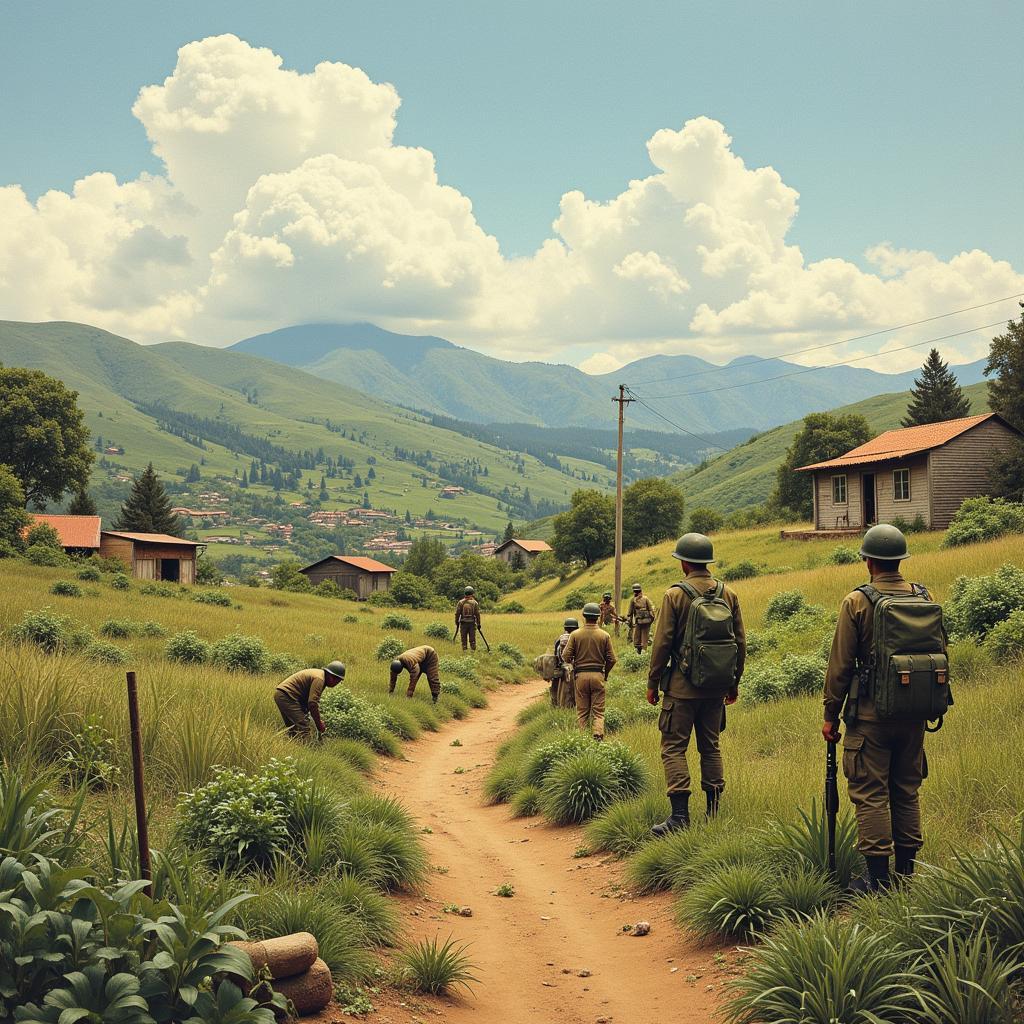
The policy of safe zone villages played a crucial role in Vietnam’s history, particularly during the resistance war against French colonialism. This article delves into this policy, analyzing its specific components and significance in the struggle for national independence.
Understanding Safe Zone Villages
Safe zone villages were rural areas strategically chosen and developed into secure bases for revolutionary leaders, armed forces, and civilians. These zones were vital for maintaining revolutionary activities, protecting personnel, storing food and weapons, and training troops. Establishing these villages was a critical strategy that contributed significantly to the war’s success.
Safe Zone Village During the Resistance War
Specific Policies within Safe Zone Villages
The policies governing safe zone villages encompassed various aspects, from political and economic to social and cultural. Politically, revolutionary governments were established within these zones, managing, organizing, and leading the population. Economically, policies encouraged agricultural and handicraft production to ensure self-sufficiency in food and essential supplies. Socially, cultural and educational activities were maintained and developed to enhance literacy and patriotism. Even salary reform policies were considered to ensure the well-being of officials and residents.
The Role of Safe Zone Villages in the Resistance War Against France
Safe zone villages played a pivotal role in protecting revolutionary forces and sustaining the protracted resistance. They provided safe havens for officials, soldiers, and civilians from enemy raids. They also served as training grounds for troops and storage areas for food and weapons, supporting military campaigns. The existence and development of these villages significantly contributed to the ultimate victory against French colonialism.
Similar to the ASEAN South China Sea security policy, establishing safe zone villages demonstrated proactive measures for ensuring security and stability.
Challenges and Difficulties
Establishing and maintaining safe zone villages faced numerous challenges. The enemy frequently conducted raids, attempting to destroy these bases. Ensuring adequate food, supplies, and essential resources for the population within these zones also posed a significant challenge, especially amidst the hardships of war.
Lessons Learned from Safe Zone Villages
The safe zone village model provided valuable lessons in base building, protecting revolutionary forces, and mobilizing popular support in the struggle for national independence. These lessons remain relevant today. Even perspectives on improving employment policies can draw insights from the organization and management within these villages.
 Lessons Learned from Safe Zone Villages
Conclusion
The policy of safe zone villages was a unique and effective innovation of the Vietnamese Communist Party and its people during the resistance against French colonialism. Establishing and maintaining these villages significantly contributed to the war’s eventual triumph and provided invaluable lessons for national construction and defense. This topic warrants further research and application to contemporary issues.
FAQ
- What were safe zone villages?
- What role did safe zone villages play in the resistance against French colonialism?
- What challenges and difficulties were encountered in establishing and maintaining safe zone villages?
- What lessons can be learned from the safe zone village model?
- What were the economic policies within safe zone villages?
- What were the social policies within safe zone villages?
- How did safe zone villages impact the lives of the people?
You can also refer to articles on tourism policy and economic development policy of Quang Ninh province on our website.
For assistance, please contact us by phone: 0968239999, Email: [email protected] Or visit us at: TT36 – CN9 Road, Tu Liem Industrial Zone, Phuong Canh Ward, Nam Tu Liem District, Hanoi. We have a 24/7 customer support team.









