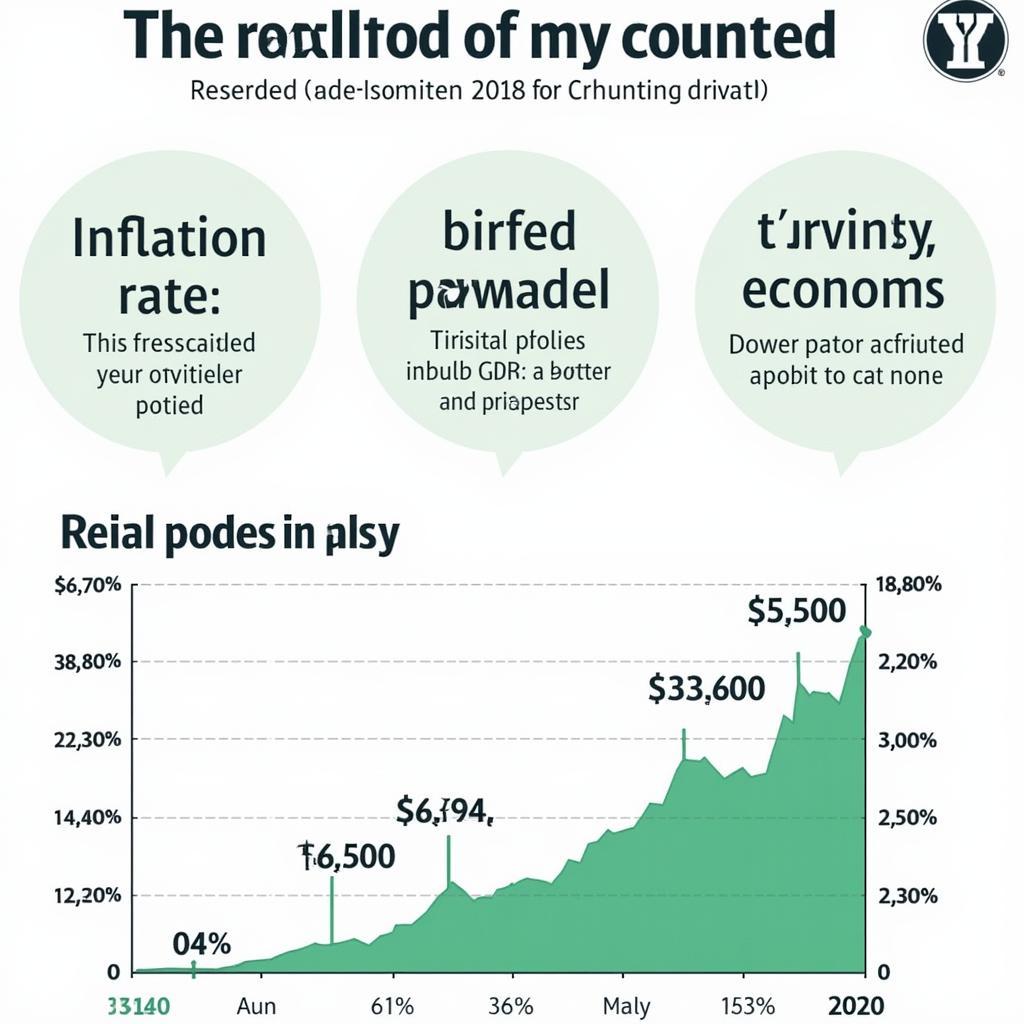
Vietnam’s monetary policy in 2018 focused on macroeconomic stability, inflation control, and supporting economic growth. The global economic landscape in 2018 presented numerous challenges to monetary policy management.
Challenges in Monetary Policy Management in 2018
In 2018, Vietnam faced increasing inflationary pressures due to rising global oil prices, exchange rate fluctuations, and global trade tensions. Maintaining reasonable economic growth was also a key priority. Balancing inflation control and growth support required flexible and prudent monetary policy management.
Monetary Policy Tools in 2018
The State Bank of Vietnam utilized various monetary policy tools to achieve its objectives. These included adjustments to the operating interest rate, reserve requirement ratios, and foreign exchange market interventions. The flexible use of these tools helped stabilize the monetary market and support economic growth.
Operating Interest Rate
The operating interest rate served as a crucial tool for regulating money flow in the economy. Adjustments to this rate influenced lending and deposit rates of commercial banks, thereby impacting investment and consumption activities.
Reserve Requirement Ratio
The reserve requirement ratio is the percentage of deposits that commercial banks must hold at the State Bank of Vietnam. Adjustments to this ratio affect the lending capacity of banks, thus impacting the money supply in the economy.
Results of the 2018 Monetary Policy
Thanks to flexible and prudent management, the 2018 monetary policy achieved positive results. Inflation was controlled at a reasonable level, while economic growth was maintained at a high rate. This contributed to macroeconomic stability and created favorable conditions for socio-economic development.
Results of the 2018 monetary policy
Similar to the 2018 health insurance policy, the 2018 monetary policy also aimed for stability and development. For a better understanding of the 2018 interest rate policy, you can refer to official sources.
Expert Assessments
Mr. Nguyen Van A, an economic expert, stated: “The 2018 monetary policy was managed quite effectively, helping to control inflation and support economic growth amidst a volatile global economy.”
Ms. Tran Thi B, Research Director at the X Institute of Economics, said: “The flexible use of monetary policy tools contributed to stabilizing the monetary market and creating favorable conditions for production and business activities.”
 Experts assessing monetary policy
This shares similarities with the software enterprise development policy as both aim for economic development. A detailed example of the cultural assimilation policy is… For those interested in interest rates as a tool of monetary policy, this content will be helpful…
Conclusion
The 2018 monetary policy significantly contributed to macroeconomic stability and supported economic growth. Continued flexible and prudent monetary policy management is essential to respond to future economic fluctuations.
For assistance, please contact us at Phone: 0968239999, Email: [email protected] or visit us at: TT36 – CN9 Road, Tu Liem Industrial Park, Phuong Canh Ward, Nam Tu Liem District, Hanoi. We have a 24/7 customer service team.









