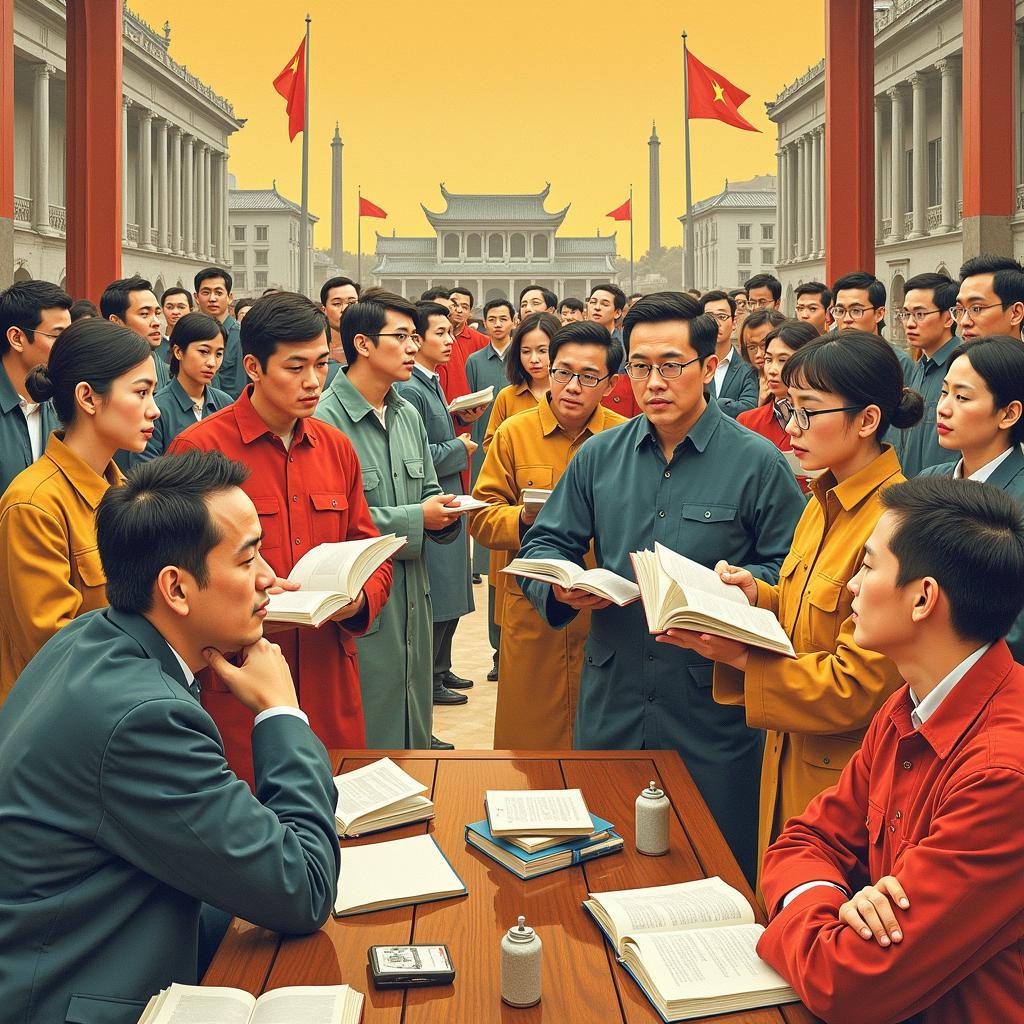
The Nguyen Dynasty, Vietnam’s last feudal dynasty, ruled from 1802 to 1945 and implemented numerous repressive policies to maintain power and social stability. While these policies initially brought unity and order, they also had significant negative consequences, contributing to the dynasty’s eventual decline and collapse. This article will delve into the Nguyen Dynasty’s repressive policies and their impact on Vietnamese society.
Religious Persecution Under the Nguyen Dynasty
One of the most controversial policies of the Nguyen Dynasty was the persecution of religious groups, particularly Catholics. The Nguyen rulers feared the influence of Western missionaries and viewed Catholicism as a threat to the regime’s stability. This policy manifested in the prohibition of Catholicism, the arrest and execution of missionaries and converts.
Control of Thought and Speech Under the Nguyen Dynasty
The Nguyen Dynasty also implemented strict measures to control thought and speech. Criticizing the court or expressing dissenting opinions was strictly forbidden. Literary works and historical texts had to adhere to the state’s ideological framework. This severely restricted the development of culture and intellectual thought.
Depiction of thought control under the Nguyen Dynasty
Economic Policies that Hindered Development
The Nguyen Dynasty’s economic policies were also conservative and hindered development. The court focused on agriculture while limiting the growth of commerce and industry. The closure of trade with the West led to Vietnam’s isolation and its falling behind global advancements.
“The restriction of trade with the West caused Vietnam to miss opportunities to access modern science and technology, contributing to the country’s backwardness.” – Prof. Nguyen Van A, Vietnamese History Expert.
“The Nguyen Dynasty’s religious persecution not only caused suffering for the people but also undermined social unity.” – Dr. Tran Thi B, Cultural Researcher.
Conclusion
The Nguyen Dynasty and its repressive policies left a profound mark on Vietnamese history. While there were some positive aspects in maintaining social order, these policies ultimately contributed to the dynasty’s weakening and downfall. A thorough and objective examination of these policies is crucial for drawing lessons for the present and future.
FAQ
- What led to the Nguyen Dynasty’s policy of religious persecution?
- How did the policy of thought control affect the development of Vietnamese culture?
- What were the limitations of the Nguyen Dynasty’s economic policies?
- What lessons can be learned from the policies of the Nguyen Dynasty?
- What was the role of the Nguyen Dynasty in Vietnamese history?
- What were the differences between the policies of the Nguyen Dynasty and previous dynasties?
- Which policies of the Nguyen Dynasty still have an impact today?
Suggested Further Reading on Our Website:
- The Formation of the Nguyen Dynasty
- Culture During the Nguyen Dynasty
- The Decline of the Nguyen Dynasty
For assistance, please contact us by phone: 0968239999, Email: [email protected] or visit our address: TT36 – CN9 Road, Tu Liem Industrial Zone, Phuong Canh Ward, Nam Tu Liem District, Hanoi. We have a 24/7 customer service team.









