Policy bank management is a critical field, playing a pivotal role in a nation’s socio-economic development. A policy bank management curriculum provides foundational and specialized knowledge about the operations, management, and administration of policy banks. This article delves into the importance of this curriculum.
The Importance of a Policy Bank Management Curriculum
A policy bank management curriculum is an essential learning resource for undergraduate and graduate students, researchers, and professionals working in the banking sector. This curriculum provides comprehensive knowledge of operational principles, management mechanisms, and policies related to policy banks. Mastering this knowledge helps learners understand the role of policy banks in regulating the economy, supporting key economic sectors, and achieving socio-economic development goals. Understanding the objectives of policy banks is crucial.
Content of a Policy Bank Management Curriculum
A standard policy bank management curriculum typically covers the following core topics: an overview of policy banks, their functions and responsibilities, organizational structure, credit operations, risk management, and related policies. The curriculum should also analyze real-world case studies, lessons learned from other countries, and the development trends of policy banks in the context of international economic integration. Learning about different types of international trade policies is also beneficial.
The Role of Policy Banks in the Economy
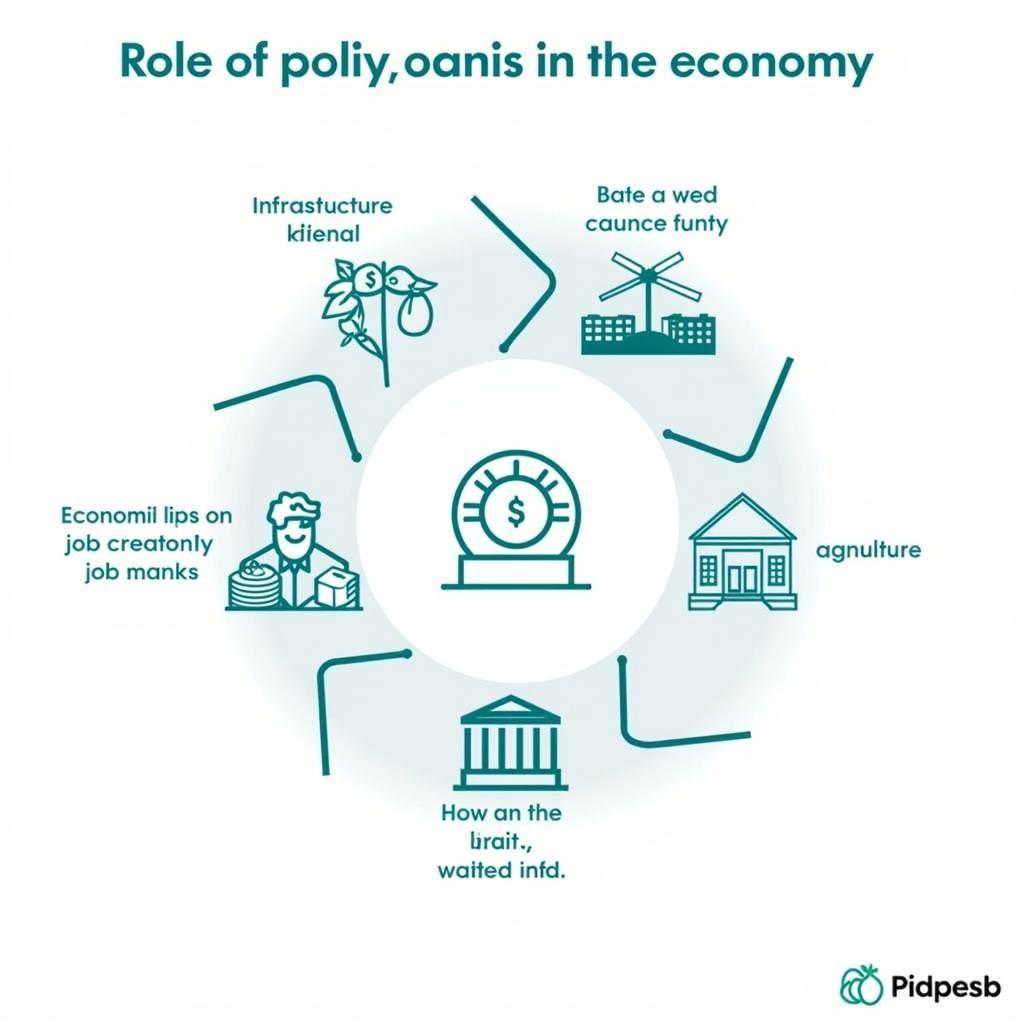
Policy banks play a crucial role in economic stability and development. They provide capital for national key projects, support small and medium-sized enterprises, promote agricultural and rural development, and contribute to poverty reduction. Policy banks also participate in regulating the money market, controlling inflation, and maintaining macroeconomic stability.
The role of policy banks in the economy
Challenges Facing Policy Banks
Policy banks also face numerous challenges, including risk management, improving operational efficiency, ensuring transparency, and accountability. In the context of international economic integration, policy banks must constantly innovate, enhance their competitiveness, and adapt to changes in the business environment. Public-private partnership policies also play a vital role; learn more about public-private partnership policies.
Applying Knowledge from the Curriculum to Practice
The policy bank management curriculum equips learners with the necessary knowledge and skills to analyze, evaluate, and propose solutions to practical problems in the field of policy banking. Applying knowledge from the curriculum to real-world situations enhances the operational efficiency of policy banks, contributing to the sustainable development of the economy.
Conclusion
A policy bank management curriculum is a vital resource, providing essential knowledge and skills for those interested in this field. Studying and applying the knowledge from this curriculum will contribute to improving the operational efficiency of policy banks and promoting sustainable economic development. Understanding telecommunications infrastructure policy can also support policy bank management. Refer to Pearson finance books for further financial knowledge enhancement.
For assistance, please contact us by phone at 0968239999, email at [email protected], or visit us at TT36 – CN9 Road, Tu Liem Industrial Park, Phuong Canh Ward, Nam Tu Liem District, Hanoi. We have a 24/7 customer support team.