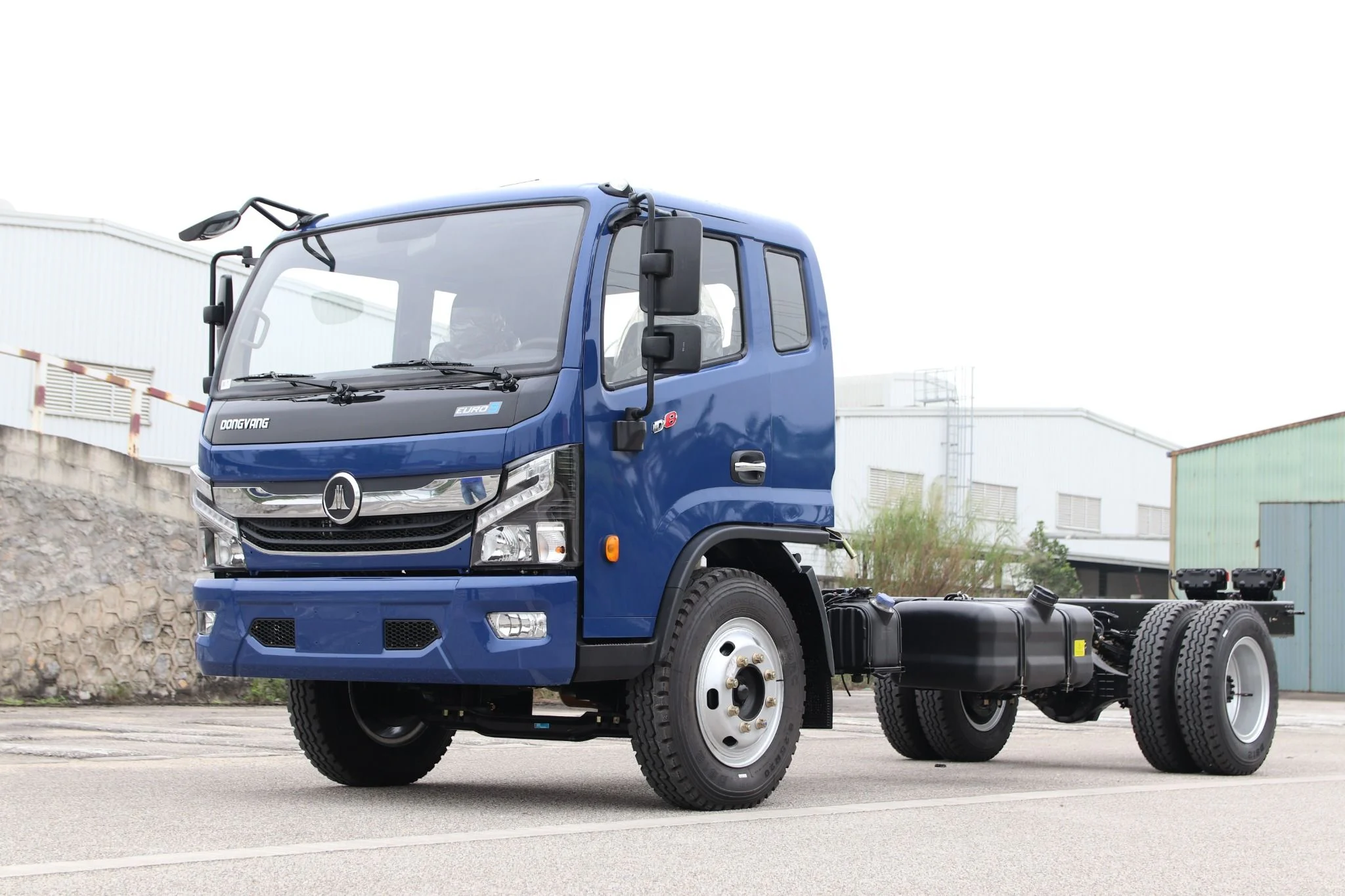
Mr. Ba, owner of a grocery store on Tay Son Street, still vividly remembers the day his Dongfeng truck struggled along Truong Chinh Road. Loaded with goods for the upcoming April 30th holiday, the truck suddenly became sluggish and shaky. Pulling over, Mr. Ba discovered the tires were significantly underinflated. He’d been so busy that he’d forgotten his regular tire pressure checks. Luckily, a nearby mechanic showed him how to check and inflate his tires correctly. Mr. Ba never forgot this seemingly small but crucial lesson.
So, what is the correct PSI for car tires? How can you determine the right tire pressure for your vehicle? Let’s delve into the details with xetaihanoi.edu.vn!
Tire Pressure: A Small But Mighty Factor Affecting Safety and Performance
What is PSI? Why is Correct Tire Inflation Crucial?
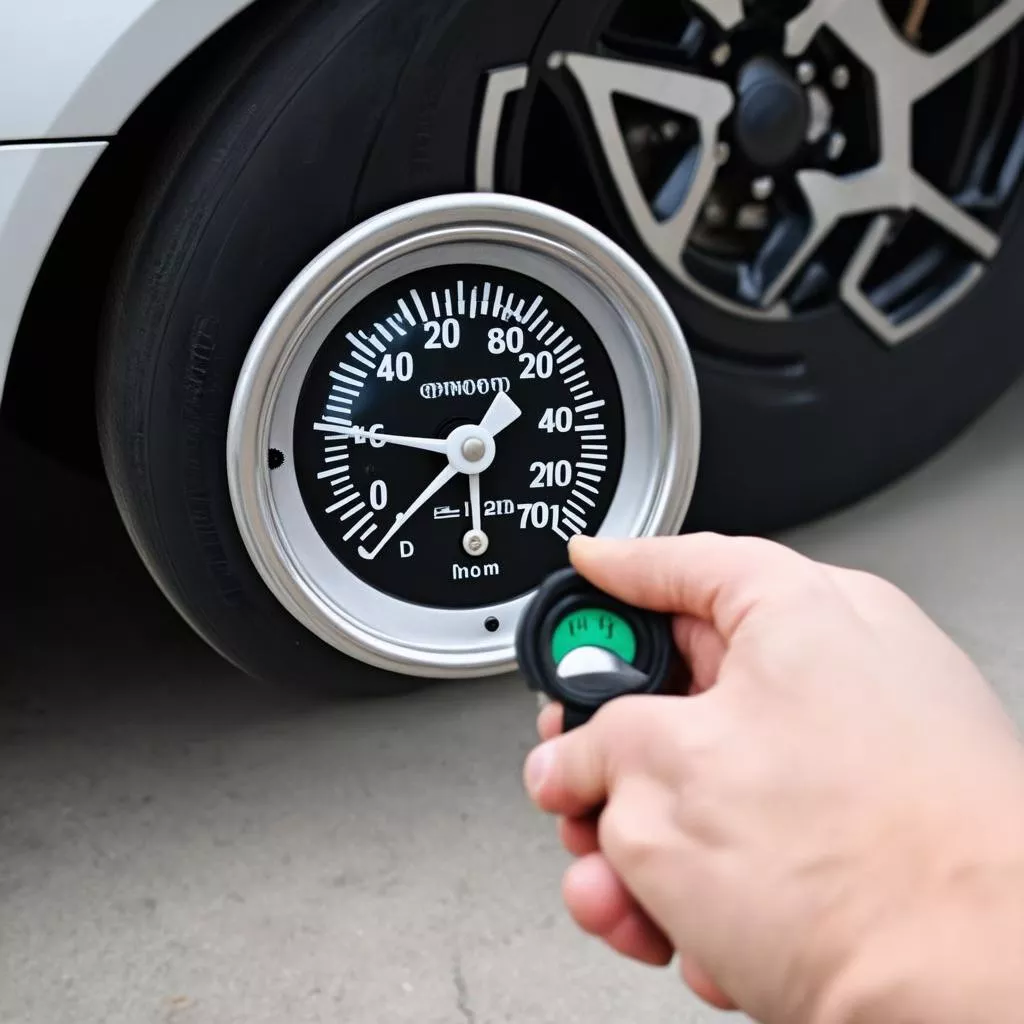
PSI stands for “Pounds per Square Inch,” a common unit for measuring pressure in the US and several other countries, including Vietnam. Simply put, PSI measures tire pressure, indicating the amount of air compressed inside the tire.
Car tire pressure gauge
Maintaining the correct PSI is vital as it directly impacts:
- Safety: Underinflated tires reduce grip, increasing the risk of blowouts, especially at high speeds or under heavy loads. Overinflated tires cause bouncing, reduce traction, and make handling difficult.
- Tire Longevity: Both underinflation and overinflation lead to uneven tire wear, shortening their lifespan.
- Fuel Efficiency: Underinflated tires increase rolling resistance, forcing the engine to work harder and consume more fuel.
- Driving Comfort: Properly inflated tires ensure a smoother and more comfortable ride.
What’s the Right PSI for Car Tires?
There’s no single correct PSI for all vehicles. The ideal tire pressure depends on several factors:
- Vehicle Type: Trucks, cars, and pickups have different recommended tire pressures.
- Tire Size: Each tire has specific specifications for maximum pressure.
- Vehicle Load: When carrying heavy loads, tire pressure should be increased accordingly.
- Weather Conditions: High temperatures increase tire pressure, requiring adjustments during summer.
So, how do you determine the right tire pressure for your vehicle? Refer to these sources:
- Owner’s Manual: This is the most accurate source for your vehicle’s recommended tire pressure.
- Tire Placard: Manufacturers usually place a sticker with tire information, including pressure, on the driver’s side doorjamb.
- Manufacturer’s Website: You can find this information on the vehicle manufacturer’s website.
- Expert Advice: Consult reputable garages for guidance if you’re still unsure.
Tire Pressure Reference Chart for Common Trucks
| Truck Model | Front Tire Pressure (PSI) | Rear Tire Pressure (PSI) |
|---|---|---|
| Hyundai Porter H150 | 55-60 | 60-65 |
| Thaco Towner 990 | 50-55 | 55-60 |
| Suzuki Carry Truck | 45-50 | 50-55 |
| Isuzu QKR | 65-70 | 70-75 |
| Hino XZU720 | 70-75 | 75-80 |
Note: This chart is for reference only. Always consult your owner’s manual or the tire placard for the most accurate information.
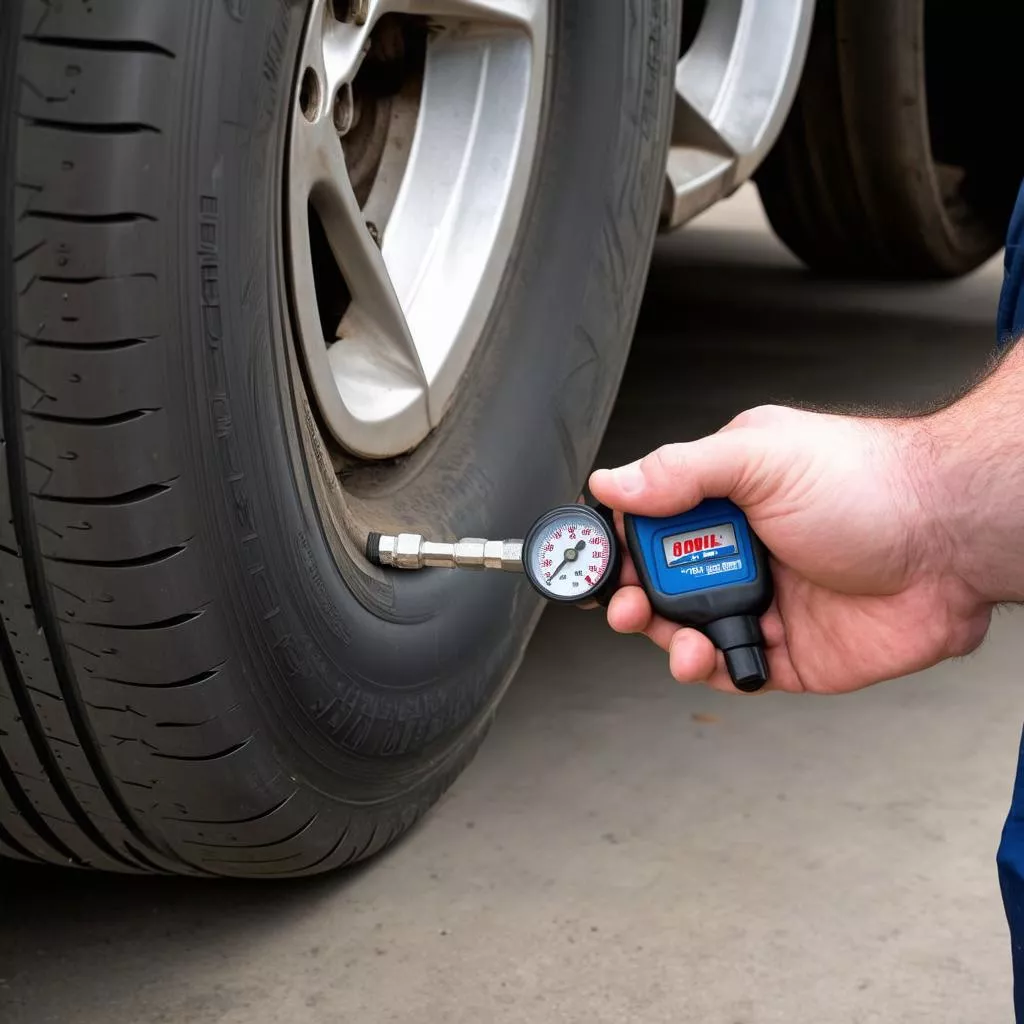 Mechanic checking truck tire pressure
Tire Inflation Tips
- Check tire pressure regularly, preferably every two weeks or before long trips.
- Inflate tires when they’re cold (after sitting for at least three hours or driven less than two kilometers).
- Use a reliable tire pressure gauge for accurate readings.
- Avoid underinflating or overinflating tires.
- Visit reputable garages or tire service centers for professional inflation.
Frequently Asked Questions
1. Where can I find reliable tire inflation services in Hanoi?
Consider these reputable options in Hanoi:
- XE TẢI HÀ NỘI: With branches across various districts like Cau Giay, Thanh Xuan, and Long Bien, XE TẢI HÀ NỘI is a trustworthy choice.
- Bridgestone, Michelin tire service centers.
- Other reputable auto repair shops.
2. How much does it cost to inflate car tires?
Tire inflation typically costs between 10,000 – 20,000 VND per visit, depending on the location.
3. Which type of air should I use for car tires?
You can use nitrogen or regular air. Nitrogen maintains more stable pressure but is more expensive.
Conclusion
Proper tire inflation is a simple yet crucial task that ensures your safety and your vehicle’s well-being on every journey.
Share this article with friends and family to spread valuable knowledge about vehicle maintenance! And don’t forget to visit xetaihanoi.edu.vn for more helpful information about the world of trucks!