The other day, Mr. Ba, the motorcycle repairman down the street, told me a story about a young man struggling to inflate his tire. The culprit? A tiny, faulty tire valve. Mr. Ba chuckled, “That little thing, small as an ant, is so important. If it acts up, even the biggest bike won’t budge!” His story sparked my curiosity about this small but mighty component. So, what exactly is a tire valve, and why is it so crucial? Let’s explore!
Understanding the Motorcycle Tire Valve
Many Names, One Essential Part
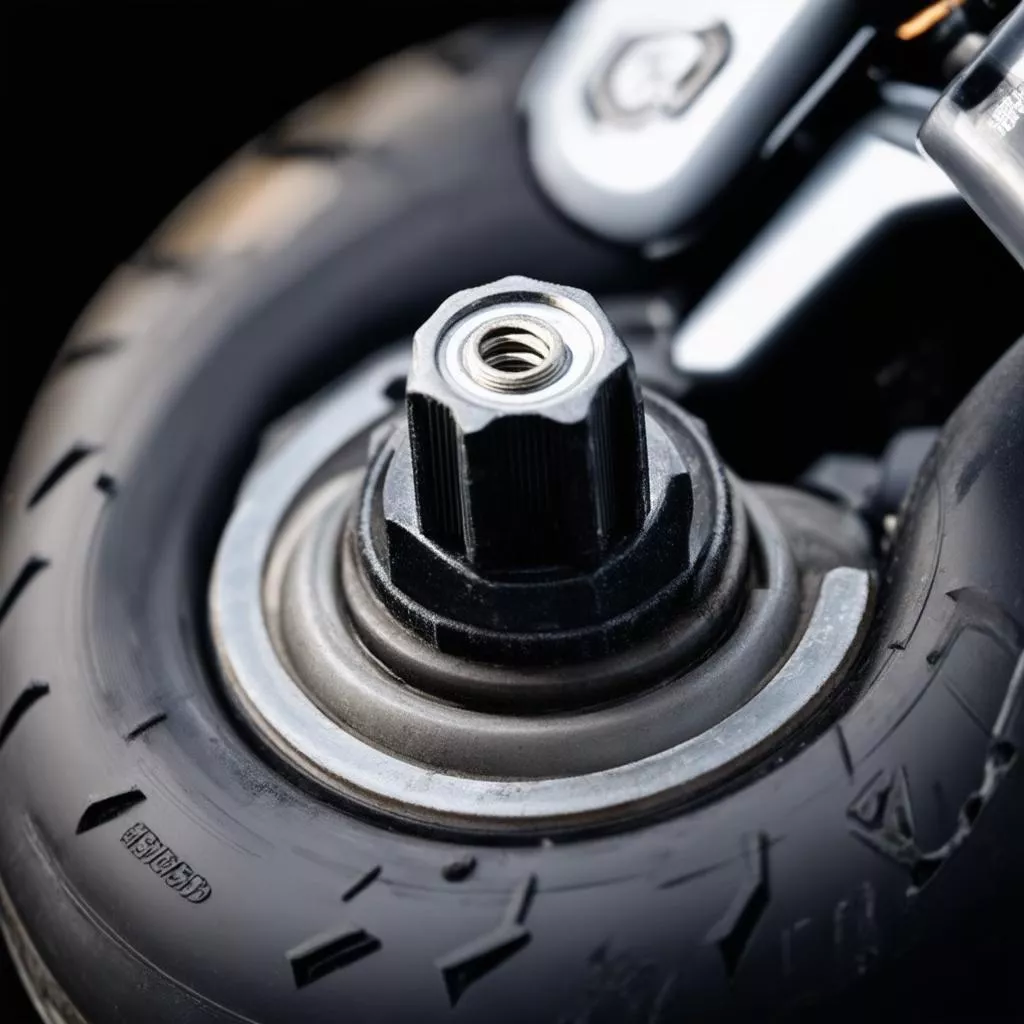
“Van vòi ong bơm xe máy” – a colloquial Vietnamese term, translates to “tire valve” in English. While often called simply a “tire valve,” it’s also known as a “valve stem” or “valve cap.”
An Indispensable Role
Regardless of its name, the tire valve plays a vital role:
- Controlling Airflow: The valve acts as a gatekeeper, allowing air to enter the tire during inflation and preventing it from escaping.
- Maintaining Tire Pressure: Thanks to the valve, tires maintain proper pressure, ensuring a safe and smooth ride.
A Critical Link in the Inflation System
Imagine the tire valve as a loyal gatekeeper. It ensures air flows in only one direction—into the tire during inflation—and keeps it securely inside. Without this “gatekeeper,” inflating a tire would be impossible.
Motorcycle tire valve
Common Questions About Motorcycle Tire Valves
Components of a Tire Valve
Despite its small size, the tire valve has a surprisingly intricate design:
- Valve Body: Typically made of brass or aluminum, it has threads to connect to the inner valve of the tube/tire.
- Valve Core: The most critical part, responsible for opening and closing to control airflow.
- Valve Cap: Made of plastic or metal, it protects the core from dust and water.
Signs of a Faulty Tire Valve
- Rapid Tire Deflation: The most common sign of a faulty valve is rapid air loss.
- Difficulty Inflating Tires: You might struggle to pump air into the tire, or air might leak out even with the pump securely attached.
- Cracked or Broken Valve Cap: A damaged cap can allow dirt and water to enter, damaging the valve core.
The Tire Valve and Superstition
Some believe the tire valve influences a journey’s smoothness. A functioning valve provides peace of mind, while a faulty one might be seen as an omen of trouble.
However, this is merely a superstition; there’s no need for undue worry.
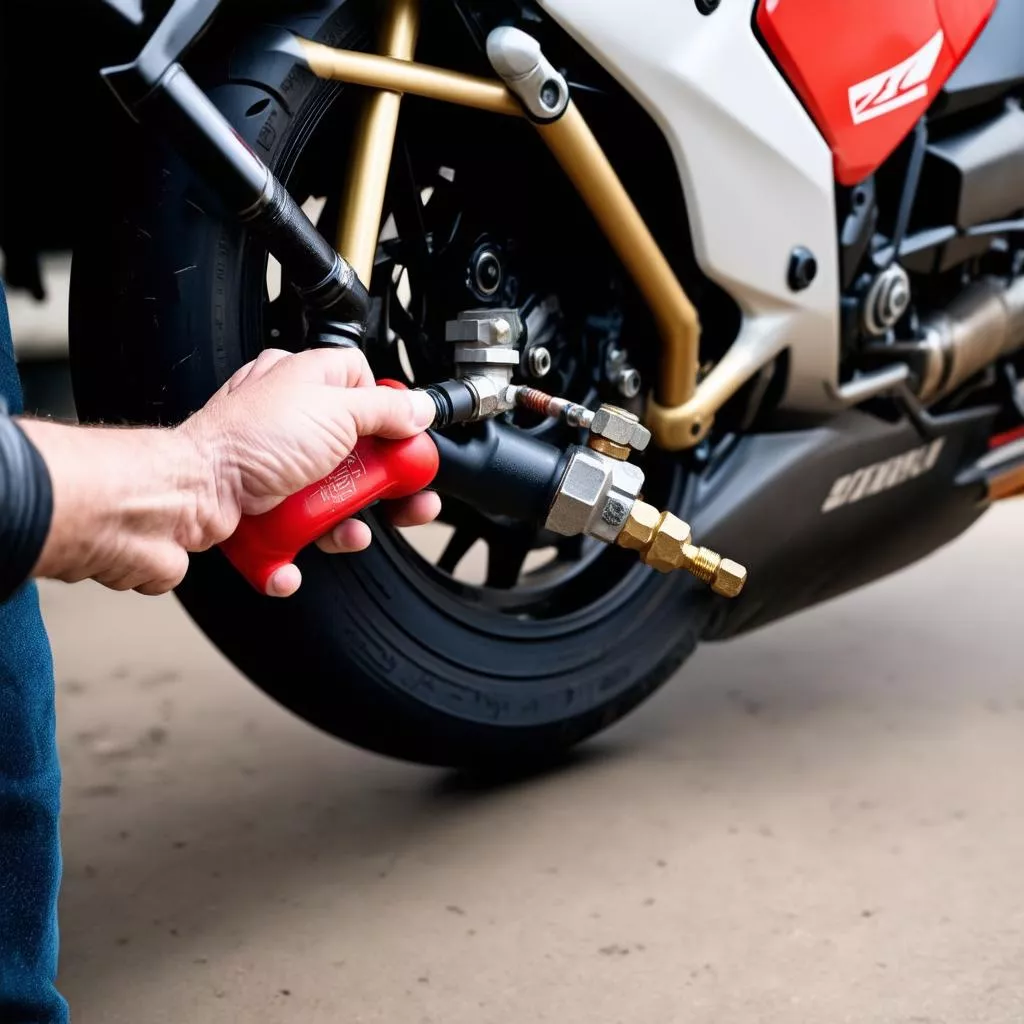 Inflating a motorcycle tire
Troubleshooting Tire Valve Issues
DIY Inspection and Replacement
Replacing a tire valve is relatively simple. You can find instructional videos on YouTube or seek help from someone experienced.
Seeking Professional Repair
If you’re unsure, take your motorcycle to a reputable repair shop for proper inspection and replacement.
Frequently Asked Questions
- Are there different types of motorcycle tire valves?
- How much does a tire valve cost?
- Where can I find a reliable place to replace my tire valve?
- Should I try replacing the tire valve myself?
Related Articles
For more information on motorcycle parts and maintenance, check out these articles:
Contact XE TẢI HÀ NỘI
We hope this article provided valuable insights into motorcycle tire valves. For further assistance or to inquire about purchasing a truck, contact XE TẢI HÀ NỘI or call our hotline: 0968 239 999 for 24/7 support.