The old saying, “All rivers run to the sea,” still holds true today. Vietnam’s increasingly globalized economy has led to remarkable growth in the logistics and international freight industries. And when it comes to import and export, the “gatekeeper” – Customs – plays a crucial role. So, what are Vietnam’s customs procedures? How can you ensure smooth and efficient customs clearance? Let’s delve into the details with “XE TẢI HÀ NỘI”.
The mere mention of administrative procedures often evokes feelings of dread due to their perceived complexity. However, customs procedures are essentially the “rules of the game.” Understanding these rules will empower you to confidently navigate the process and achieve success.
Customs procedures in Vietnam
Vietnam Customs Procedures List
Customs procedures involve various documents and forms, depending on the type of import/export and the goods being traded. Here are some of the most common procedures:
1. Customs Declaration
This is a mandatory procedure for all import and export shipments. Businesses must accurately declare information about the goods, means of transport, and shipment value on the Customs electronic system.
2. Customs Inspection
After receiving the declaration, Customs may conduct a physical inspection of the goods based on risk assessment. This inspection can be carried out by the Customs Department of the border gate or the Inland Customs Department.
For instance, Mr. Nguyen Van A, Director of an agricultural export company in Hoai Duc district, shared: “Previously, I was very worried whenever my goods were subjected to inspection. But since thoroughly understanding the policies and regulations, I’ve become more proactive in preparing documents. As a result, customs clearance time has been significantly reduced, saving the company considerable costs.”
3. Tax Payment
Depending on the type of goods, origin, and tax rates, businesses will have to pay taxes such as import tax, value-added tax, and special consumption tax. Tax payment can be made directly at the bank or through the electronic information portal.
4. Customs Clearance
After completing all the above procedures and receiving Customs approval, businesses will be granted customs clearance, allowing the goods to be exported or imported.
Important Considerations
- Prepare complete documentation as required.
- Declare information truthfully and accurately.
- Comply with regulations regarding customs clearance procedures and timelines.
- Proactively seek information and contact Customs authorities for assistance.
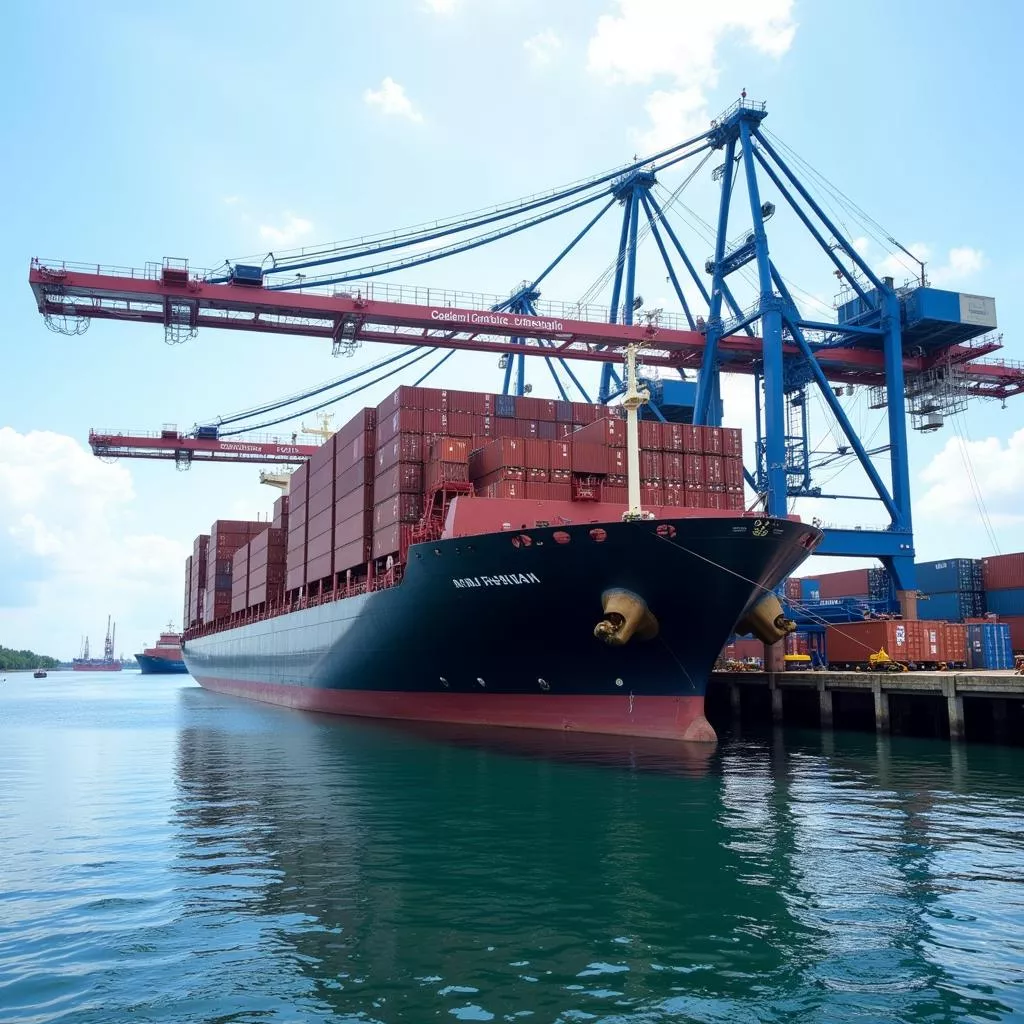 International freight transport
Mastering these procedures not only helps you understand the “rules of the game” but also enhances business efficiency, saving time and costs.
“XE TẢI HÀ NỘI” – Your Trusted Partner
Understanding the challenges businesses face in navigating customs procedures, “XE TẢI HÀ NỘI” offers comprehensive transportation services, including professional and reliable customs declaration services. With our experienced and knowledgeable team, we are committed to providing optimal solutions for swift, safe, and cost-effective customs clearance.
Contact us for assistance:
- Phone: 0968239999
- Email: [email protected]
- Address: No. TT36 – CN9 Road, Tu Liem Industrial Zone, Phuong Canh Ward, Nam Tu Liem District, Hanoi.
“XE TẢI HÀ NỘI” – Reputation Builds Brand!









