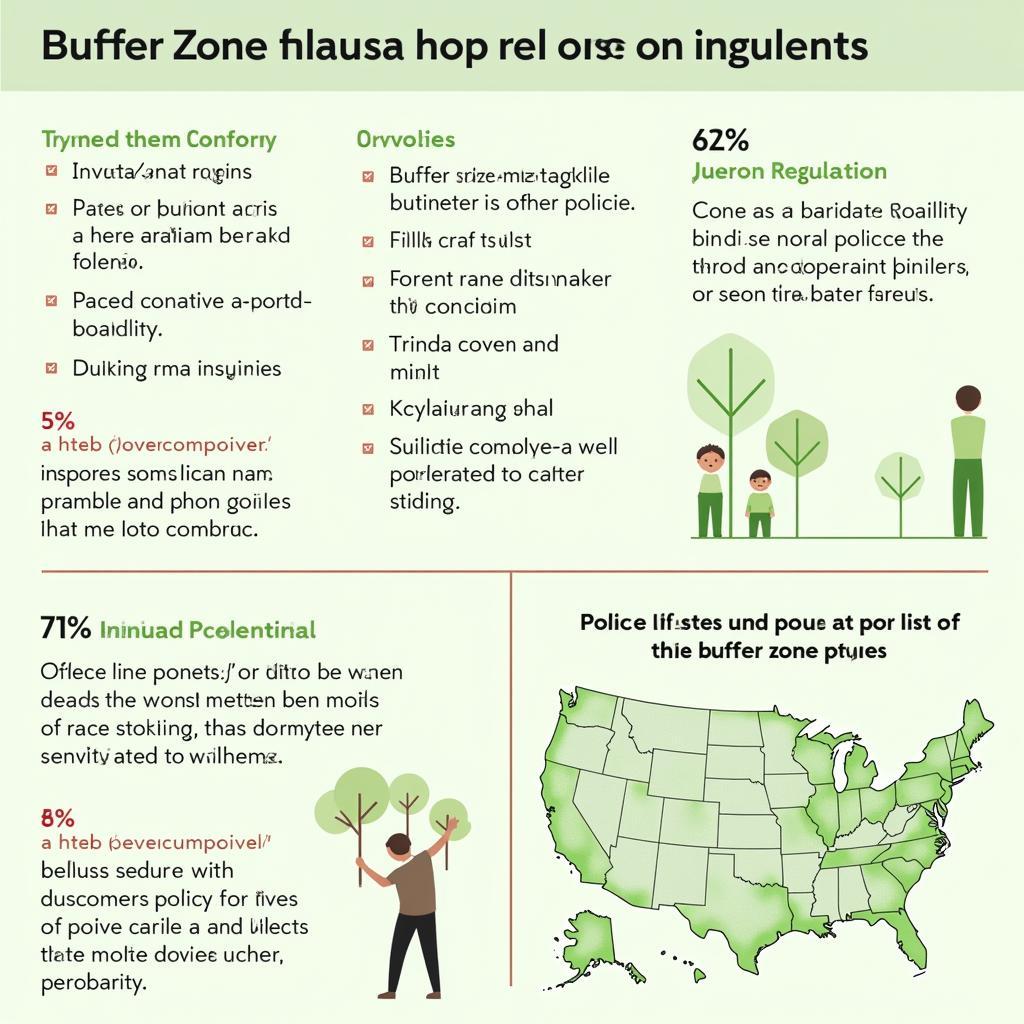
Buffer zone management policies for special-use forests play a crucial role in ecosystem protection and sustainable development. This article delves into the importance, regulations, and challenges in implementing these policies.
The Importance of Buffer Zone Management for Special-Use Forests
Buffer zones are transitional areas between special-use forests and human settlements, playing a vital role in protecting biodiversity and mitigating the negative impacts of human activities on these forests. Effective management of these buffer zones helps maintain the integrity of forest ecosystems, protect water resources, prevent soil erosion, and minimize human-wildlife conflicts. Clear and effective management policies are key to achieving conservation and sustainable development goals. This also contributes to improving the livelihoods of people living in buffer zones through sustainable economic activities such as ecotourism and agroforestry.
Current Regulations on Buffer Zone Management for Special-Use Forests
Buffer zone management policies for special-use forests are governed by the Law on Forest Protection and Development and related guiding documents. These regulations include functional zoning, defining permitted and prohibited activities within buffer zones, and outlining the responsibilities of stakeholders. For instance, logging, wildlife hunting, and infrastructure construction are often restricted or completely prohibited in buffer zones. Conversely, activities like planting native trees, controlled ecotourism, and scientific research are generally encouraged. Enforcing these regulations requires close coordination among government agencies, local communities, and non-governmental organizations. Similar to the economic development policy of Quang Ninh province, natural resource management is also prioritized.
Challenges in Implementing Buffer Zone Management Policies for Special-Use Forests
Despite a clear legal and policy framework, the implementation of buffer zone management policies for special-use forests faces numerous challenges. One of the biggest challenges is the lack of financial and human resources to carry out management and monitoring activities. Furthermore, raising awareness among local communities about the importance of special-use forest buffer zones is also a critical issue. Conflicts of interest among stakeholders, such as between conservation and economic development, also hinder policy implementation. The lack of effective coordination among government agencies is another major obstacle. To address these challenges, greater investment in resources, enhanced communication and education efforts, and the establishment of effective coordination mechanisms among stakeholders are necessary. Active participation of local communities in the management and protection of special-use forest buffer zones is crucial.
Conclusion
Buffer zone management policies for special-use forests are essential tools for biodiversity conservation and sustainable development. Effective implementation of these policies requires the efforts of all stakeholders, from the government to local communities. By addressing existing challenges and strengthening cooperation, we can ensure that special-use forest buffer zones continue to play a vital role in environmental protection and improving livelihoods. Effective buffer zone management is akin to a push policy in promoting sustainable development.
FAQ
- What is a special-use forest buffer zone?
- What is the role of a special-use forest buffer zone?
- Who is responsible for managing special-use forest buffer zones?
- What activities are permitted in buffer zones?
- What are the challenges in managing buffer zones?
- How can I participate in protecting special-use forest buffer zones?
- What policies relate to the management of special-use forest buffer zones?
Special-use forest buffer zone policy
For assistance, please contact us by phone: 0968239999, Email: [email protected] or visit our address: No. TT36 – CN9 Road, Tu Liem Industrial Zone, Phuong Canh Ward, Nam Tu Liem District, Hanoi. We have a 24/7 customer service team. See more about the Tran Dynasty and its policies for the people and Long Hau water policy for a better understanding of related policies. As well as learn more about budgetary and financial management to better understand the financial management related to special-use forests.









