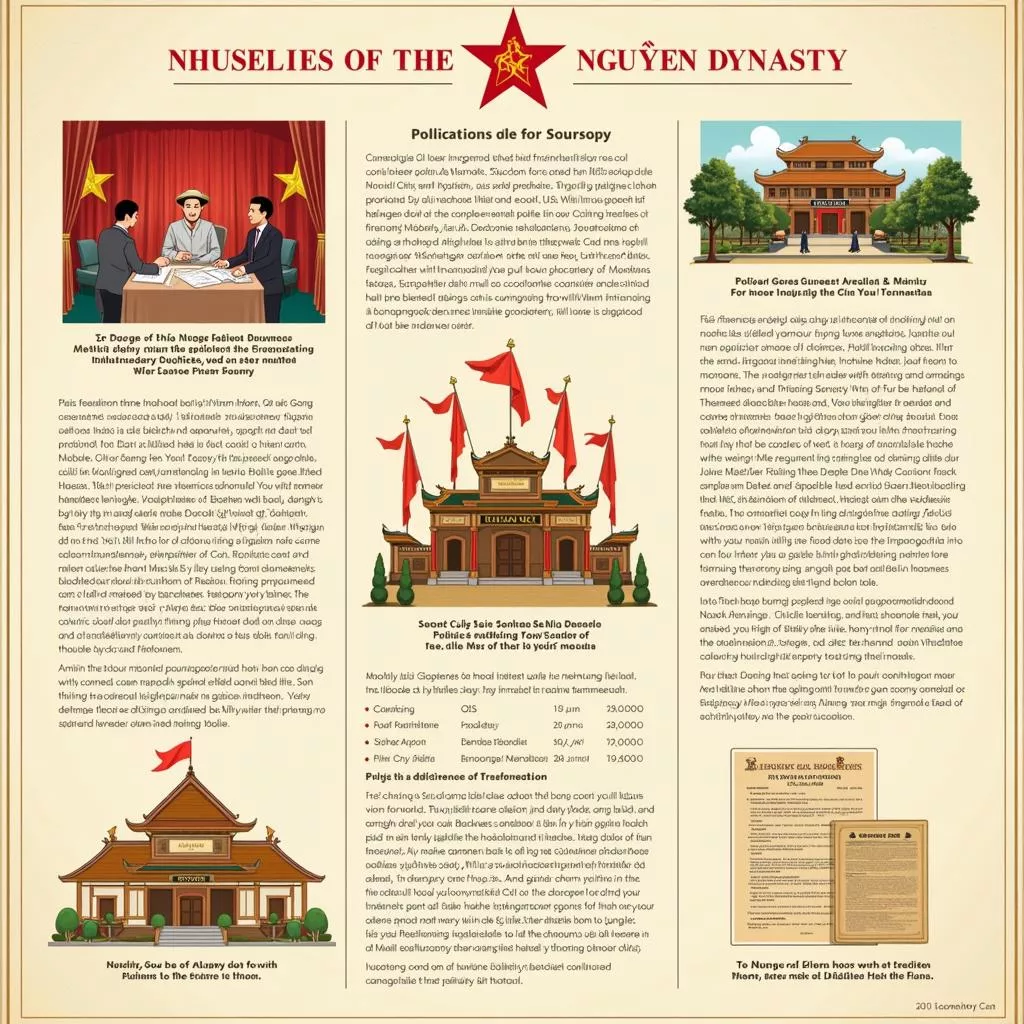
“Rivers have bends, people have their moments,” history, with its ups and downs, is like the relentless flow of time. Each dynasty, like a ship sailing on the river of history, carries its own “political policy,” contributing to the colorful tapestry of historical currents. But what exactly is this policy, and what role does it play in turning the wheels of history?
Imbued Ideology, Shaping the System
From the very beginning, each dynasty carries within itself an ideal, an aspiration for a prosperous nation. And “political policy” is the embodiment of that ideal, the guiding star leading the country through storms.
Political policies of the Nguyen Dynasty
The Ly Dynasty, with its desire to build a strong nation, implemented the “Ngụ binh ư nông” policy, which simultaneously developed the economy and strengthened national defense. Similarly, the Tran Dynasty, with its aspiration for independence and autonomy, enacted the “Quân dân cá nước” policy, creating a united force that triumphed over the mighty Yuan Mongols three times.
From Historical Footprints…
Political policy is not just empty words but is clearly reflected in each decision of the court.
For instance, the “Văn trị” (Confucian scholar-bureaucrat administration) policy of the Le So Dynasty contributed to building a peaceful and prosperous society, leaving a brilliant mark in Vietnamese history. The “Bế quan tỏa cảng” (closed-door) policy of the Nguyen Dynasty, although controversial, reflects the historical context and mindset of that period.
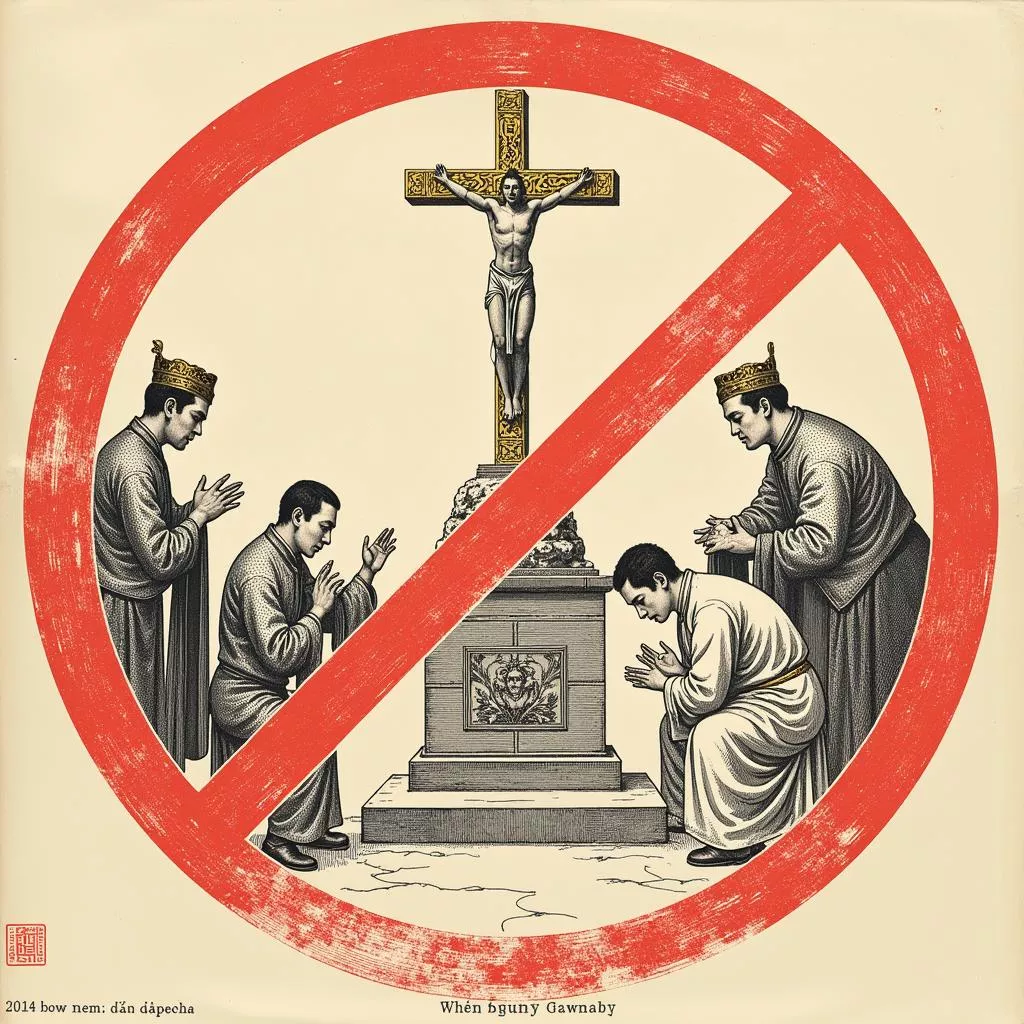 Illustration of the religious persecution policy during the Nguyen Dynasty
To learn more about the religious persecution policy of the Nguyen Dynasty, you can refer to the article Religious Persecution Policy of the Nguyen Dynasty.
… To Lessons for Posterity
History is a mirror reflecting the present and a valuable lesson for future generations. Studying the “political policies” of past dynasties, we not only gain a deeper understanding of the past but also draw valuable lessons for the present and future.
Balancing Tradition and Innovation
Each dynasty faces its own unique challenges, and “political policy” must be flexible and adaptable to new circumstances.
The harmonious combination of preserving national identity and absorbing the quintessence of world culture is crucial for creating an effective “political policy.”
When “Water Flows, Duckweed Drifts”…
Some dynasties, with conservative ideologies, clung to outdated policies no longer suitable for reality.
… And the Lesson of Adaptation
Conversely, history also records dynasties that boldly innovated, enacting policies in line with the trends of the times.
For instance, the open-door and integration policy of the later Nguyen Dynasty allowed the country to absorb scientific and technological advancements from the West.
Conclusion
The “political policy” of each dynasty, whether successful or not, represents the efforts of our ancestors in building and protecting the country.
Understanding history and the “political policies” of past dynasties is a way for us to deepen our love and pride for Vietnam and its people, while also drawing valuable lessons for the cause of national construction and development today.
To learn more about other historical policies, you can refer to:
Leave your comments on this topic, or share the article if you find it helpful. Don’t forget to visit the “XE TẢI HÀ NỘI” website to discover more interesting information!
Contact us now:
Phone Number: 0968239999
Email: [email protected]
Address: No. TT36 – CN9 Road, Tu Liem Industrial Zone, Phuong Canh Ward, Nam Tu Liem District, Hanoi.









