Choosing the right 35-seat bus for your needs can be challenging, especially when considering crucial dimensions. Mr. Tuan, a transportation business owner in Long Bien, Hanoi, shared, “When I first invested in buses, I only focused on seating capacity and overlooked dimensions. As a result, my buses often got stuck on narrow roads, inconveniencing both passengers and our company.”
So, how do 35-seat bus dimensions impact transportation operations? This article will provide the answers.
35-Seat Bus Dimensions: Why They Matter
The dimensions of a 35-seat bus encompass more than just length, width, and height. They are crucial factors influencing:
1. Maneuverability
Larger buses struggle to navigate urban areas, especially narrow, congested roads. Conversely, compact buses offer greater agility, easily maneuvering through streets and alleys, reducing travel time.
2. Passenger and Luggage Capacity
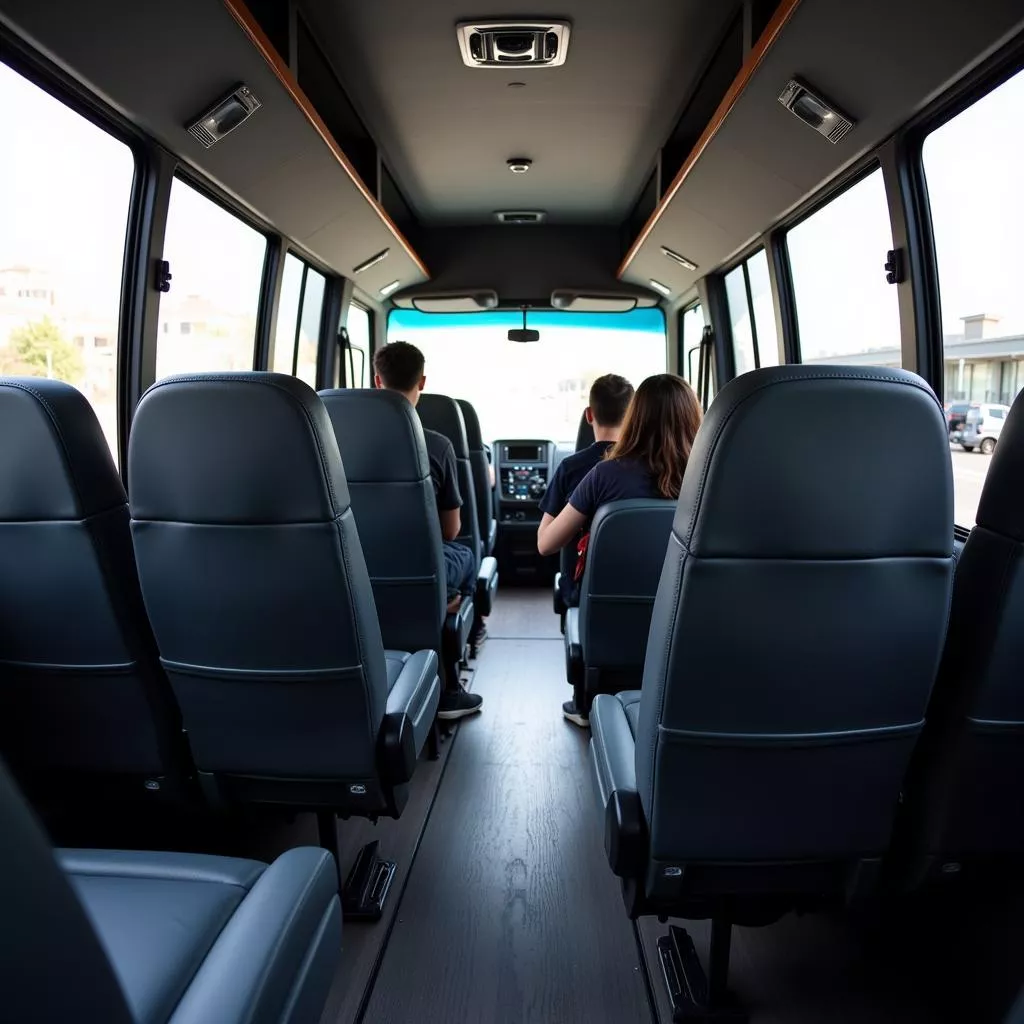
Bus dimensions directly affect interior space, including passenger and luggage compartments. Spacious buses provide passenger comfort and accommodate more luggage.
Spacious interior of a 35-seat bus
3. Fuel Consumption
Larger buses typically weigh more, requiring more engine power and leading to higher fuel consumption.
Dimensions of Common 35-Seat Buses
| Brand | Model | Length (mm) | Width (mm) | Height (mm) |
|---|---|---|---|---|
| Thaco | Town | 8,380 | 2,280 | 2,870 |
| Hyundai | County | 7,080 | 2,035 | 2,755 |
| Isuzu | Samco | 7,070 | 2,060 | 2,680 |
Note: Dimensions may vary depending on the specific version and manufacturer.
Expert Advice on Choosing the Right 35-Seat Bus Dimensions
Mr. Minh, owner of a truck dealership on Nguyen Van Cu Street, Long Bien, Hanoi, advises, “Many customers focus solely on price and neglect dimensions when buying a 35-seat bus. This can lead to problems later, such as incompatibility with routes, limited parking space, and operational difficulties.”
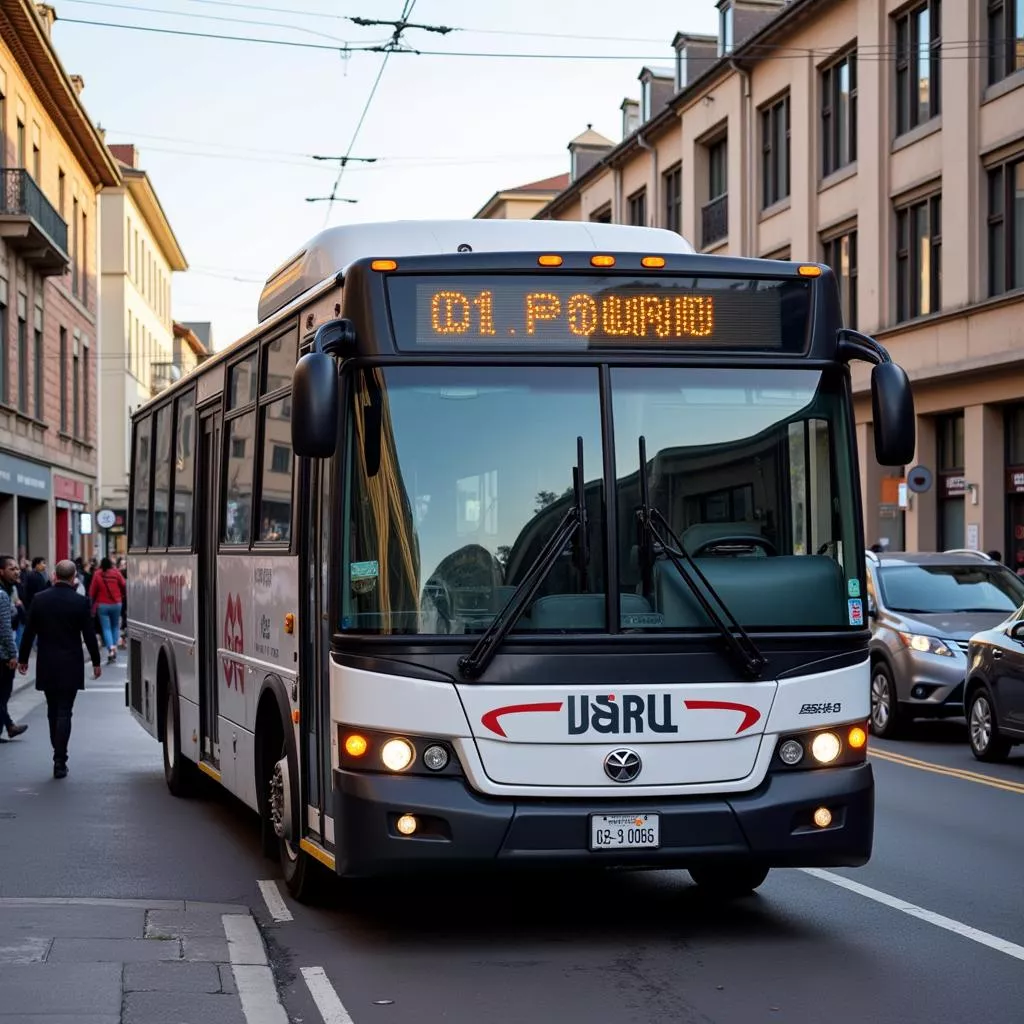 A 35-seat bus navigating a busy city street
To choose the right 35-seat bus dimensions, consider these factors:
- Define Your Needs: Determine the bus’s purpose: tourist transport, employee or student shuttle, or fixed routes? This clarifies suitable dimensions. For example, prioritize compact buses like the Hyundai County for navigating Hanoi’s inner city.
- Survey Your Routes: Choose dimensions that fit frequently traveled routes, especially considering maximum permissible width and height.
- Consult Experts: Seek advice from experienced individuals or truck specialists for informed decisions.









