Remember that exhilarating mix of nerves and excitement you felt the first time you gripped a steering wheel? It’s an incredible experience, but for those unfamiliar with manual transmissions, controlling this “iron horse” can be quite challenging. Understanding this, XE TẢI HÀ NỘI presents a comprehensive and easy-to-understand guide to driving a manual car, helping you confidently master your vehicle from A to Z.
The Importance of Mastering Manual Driving Techniques
Many believe that in the age of automatic transmissions, learning to drive a manual car is unnecessary. However, the reality is quite different. Mastering manual driving techniques offers several practical benefits, such as:
- Better Vehicle Control: Manual transmissions allow you complete control over the vehicle’s traction and speed, enabling you to handle unexpected situations on the road with greater flexibility.
- Fuel Efficiency: Compared to automatic cars, manual cars generally consume less fuel, saving you significant costs in the long run.
- Extended Engine Life: Proper shifting in a manual car reduces strain on the engine, extending the life of the vehicle’s “heart.”
- Increased Focus: Driving a manual car requires greater concentration, enhancing your reflexes and ability to handle situations in traffic.
Moreover, according to German driving expert Alexander Schmidt, author of “The Art of Manual Driving,” controlling a manual car “allows the driver to connect more deeply with the vehicle, feeling every breath of the engine and every movement of the wheels.”
A Step-by-Step Guide to Driving a Manual Car
1. Familiarize Yourself with the Car Parts
Before starting your journey, take some time to get acquainted with your “companion”:
- Steering Wheel: Controls the direction of the car.
- Pedals: Includes three pedals: clutch (left), brake (middle), and accelerator (right).
- Gear Shift: Used to change the gear ratio between the engine and the wheels.
- Ignition: Starts the engine and provides power to the car’s electrical systems.
2. Starting the Car and Shifting into First Gear
- Step 1: Fully depress the clutch pedal and ensure the gear shift is in neutral (0).
- Step 2: Insert the key into the ignition and turn it clockwise to start the engine.
- Step 3: Slowly release the clutch pedal until you feel the car begin to vibrate slightly (the biting point), then hold the clutch at that position.
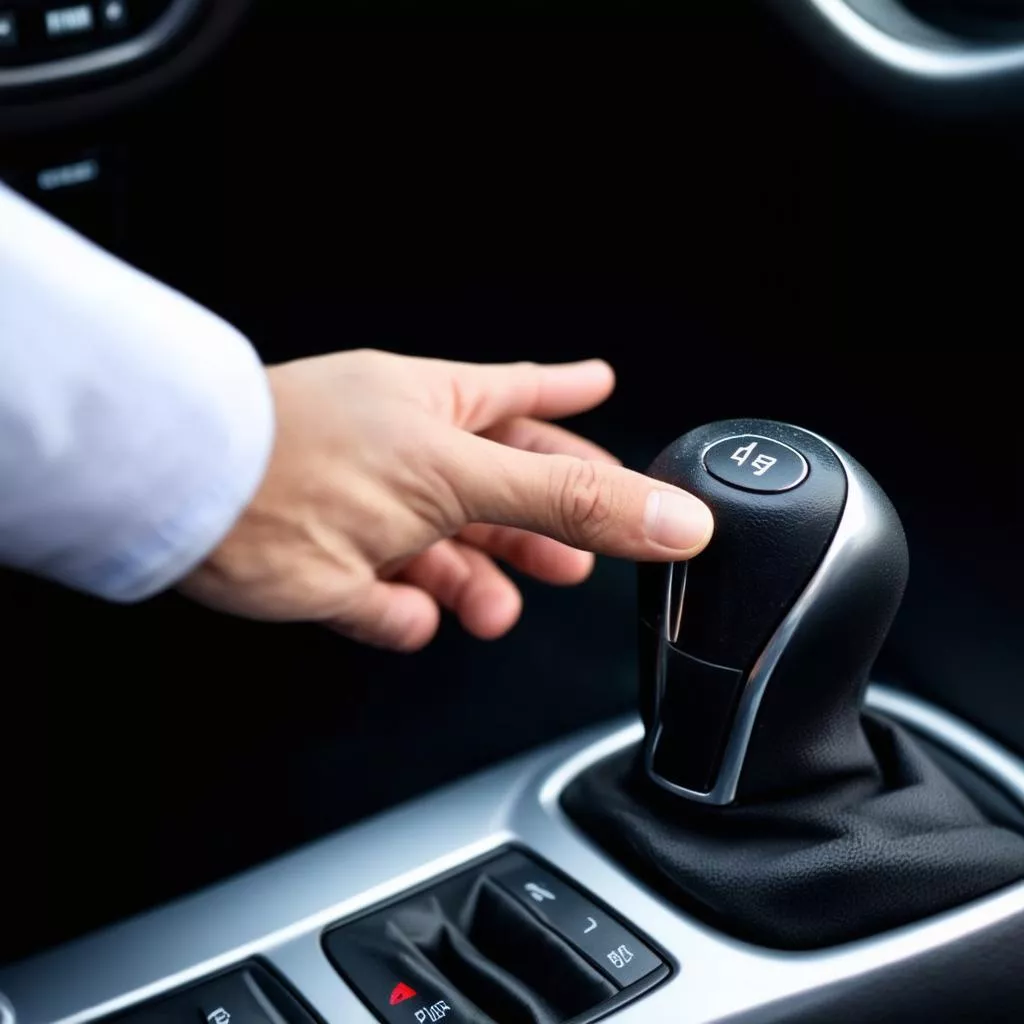
- Step 4: Shift into first gear by pushing the gear shift forward.
Shifting gears in a car
3. Driving and Shifting Gears
- Step 1: Gently press the accelerator to increase speed while slowly releasing the clutch pedal. Coordinate the accelerator and clutch smoothly to prevent jerking.
- Step 2: Once the car is moving steadily, continue accelerating and shift into gears 2, 3, 4, 5… depending on the speed and traffic conditions.
4. Stopping the Car
- Step 1: Release the accelerator and gently apply the brakes to reduce speed.
- Step 2: When the speed drops to about 10-15 km/h, fully depress the clutch and brake pedals to bring the car to a complete stop.
- Step 3: Shift into neutral (0) and engage the parking brake for safety.
Tips for Driving a Manual Car
- Practice Regularly: “Practice makes perfect” – practice frequently to master the techniques.
- Maintain a Safe Distance: Always keep a safe distance from the vehicle in front, especially in heavy traffic.
- Observe Carefully: Regularly check your rearview mirrors and blind spots to ensure safety.
Frequently Asked Questions
1. Why Does My Car Stall When I Release the Clutch?
Stalling usually occurs when you’re not yet familiar with the biting point, release the clutch too quickly, or haven’t given enough gas.
2. When Should I Shift Gears?
The optimal shifting time depends on the speed and engine RPM. Generally, you should shift when the RPM reaches around 2,000 – 3,000.
Related Questions
- Is driving a manual car in the city difficult?
- Tips for driving a manual car on long trips?
- How to handle a manual car on a downhill slope?
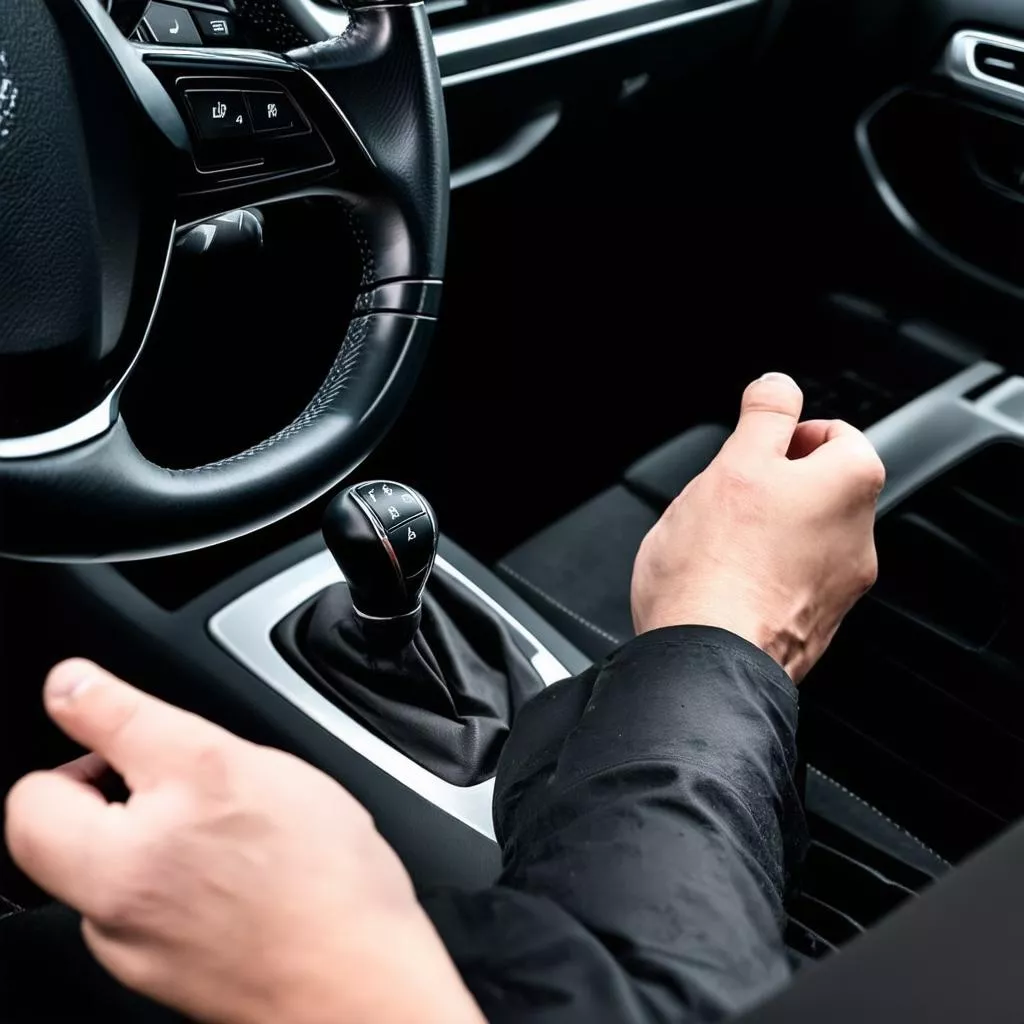 Driving a manual transmission car
Spirituality and Safe Driving
Vietnamese people often believe in the saying “respect the gods and avoid misfortune.” When driving, you can place a safety amulet in the car or light incense before starting your journey to pray for a smooth trip. However, remember that spirituality is only a supporting factor; the most important things are concentration and adherence to traffic laws.
Conclusion
Driving a manual car is an enjoyable and valuable skill. Hopefully, this guide to driving a manual car has provided you with helpful information. Practice persistently, and you’ll soon become a skilled driver!
For more information about trucks or assistance, please contact XE TẢI HÀ NỘI. We are always ready to assist you 24/7.
Hotline: 0968 239 999
Leave a comment below if you have any questions. Don’t forget to share this article with your friends if you find it helpful!









