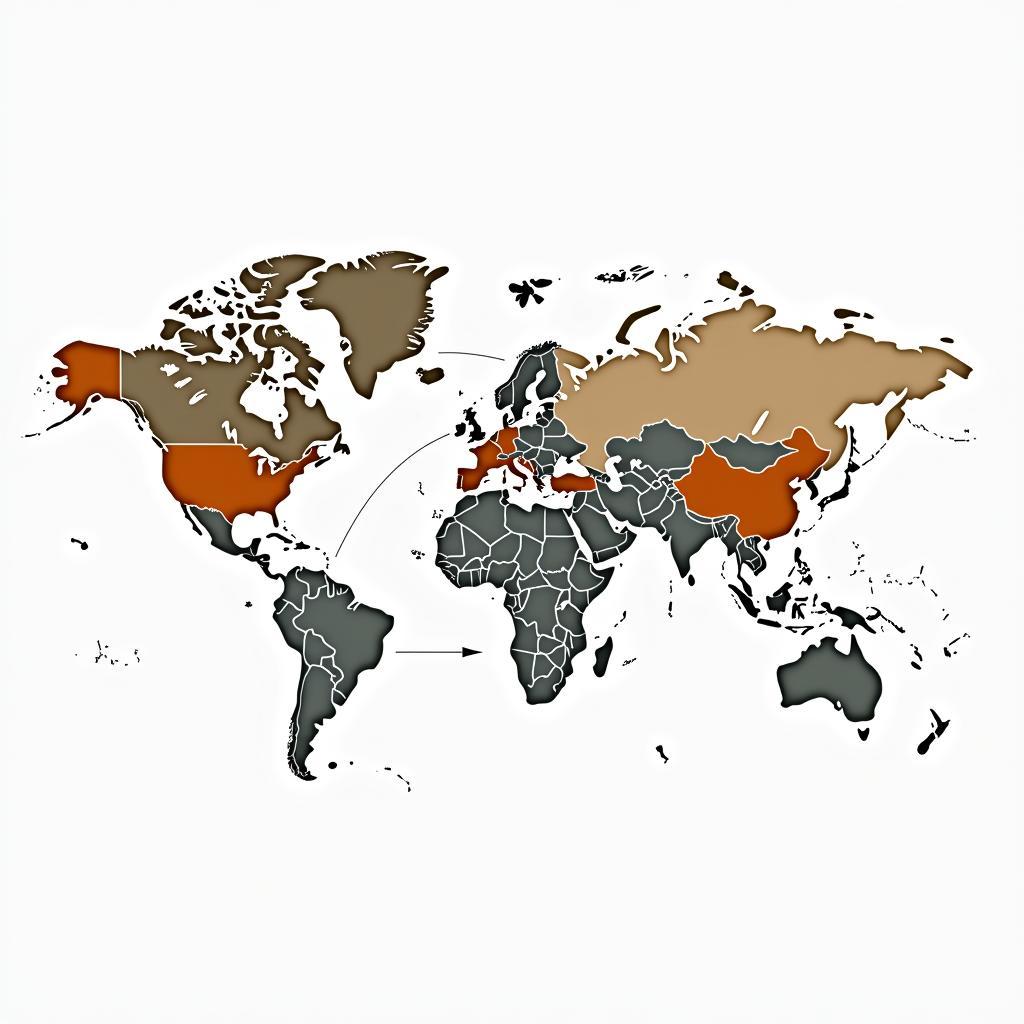
Foreign policy is the set of decisions and actions a nation takes in relation to other countries. A fundamental analysis of foreign policy helps to understand the motivations, objectives, and methods a nation employs to interact with the world. This analysis not only aids in predicting the behavior of nations but also provides insight into the global political landscape.
A nation’s foreign policy is shaped by numerous factors, including geography, history, culture, political system, and economy. Understanding these factors is key to effectively analyzing foreign policy.
Factors Influencing Foreign Policy
Geography and History
A nation’s geography and history play a crucial role in shaping its foreign policy. For example, countries sharing borders often have more complex relationships than geographically distant nations. A history of conflict or cooperation also influences how nations interact in the present.
The influence of geography on foreign policy
Political and Economic Systems
A nation’s political system, whether democratic or authoritarian, influences its foreign policy decision-making process. Similarly, a nation’s economic strength plays a significant role. Countries with strong economies often wield greater influence on the international stage.
“A nation’s economic and political systems are the foundation for all foreign policy decisions,” according to Nguyen Van A, Director of the Institute for International Policy Research.
Culture and Society
Culture and society also contribute to the formation of foreign policy. Values, beliefs, and societal norms can affect how a nation perceives and interacts with the outside world.
Objectives of Foreign Policy
A nation’s foreign policy typically aims to achieve several key objectives, including:
- Protecting national security
- Promoting economic growth
- Enhancing international prestige
- Protecting national interests abroad
“The ultimate goal of foreign policy is to protect and promote national interests,” according to Tran Thi B, Professor of International Relations.
Analyzing US Cold War Policy
To better understand the fundamental analysis of foreign policy, we can examine the US Cold War policy. This policy was shaped by fears of communist expansion and the desire to maintain US global influence.
 Analysis of US foreign policy
This policy led to a range of actions, from economic aid to allies to military intervention in various parts of the world. Analyzing the mechanics of US investment policy during this period also provides insights into how the US used its economic power to achieve its foreign policy objectives. Further research into human resources administration and employment policy literature from this era can provide a deeper understanding of the social and economic context. Additionally, examining 19th-century Vietnamese economic policy offers an interesting point of comparison.
Conclusion
A fundamental analysis of foreign policy is a complex but necessary process for understanding the global political landscape. By considering the factors that influence foreign policy and the objectives that nations pursue, we can gain deeper insights into the motivations and behaviors of nations on the international stage.
FAQ
- What is foreign policy?
- What factors influence foreign policy?
- What are the objectives of foreign policy?
- How do you analyze foreign policy?
- What is the importance of analyzing foreign policy?
- How does foreign policy affect our daily lives?
- How can I learn more about the foreign policy of a specific country?
For assistance, please contact us at Phone: 0968239999, Email: [email protected] or visit us at: TT36 – CN9 Road, Tu Liem Industrial Zone, Phuong Canh Ward, Nam Tu Liem District, Hanoi. We have a 24/7 customer service team.









