Choosing a vehicle, especially a van for family or business use, can be overwhelming. One of the most common questions customers ask XE TẢI HÀ NỘI is: “How many seats does a van have?” This article will answer that question in detail, providing a comprehensive overview and helping you choose the most suitable van.
The Significance of the Question “How Many Seats Does a Van Have?”
This seemingly simple question often reflects deeper needs and considerations:
- Usage Needs: Large families require spacious vans, while businesses prioritize cargo capacity.
- Traffic Laws: Each vehicle type has regulations regarding passenger capacity; understanding these helps avoid legal violations.
- Economic Factors: Seating capacity affects the vehicle’s price, fuel consumption, and maintenance costs.
The Answer: How Many Seats Do Vans Have?
There’s no single answer for all van types. Seating capacity depends on the specific model, design, and intended use.
- Family Vans: Typically offer 7-9 seats, with popular models like the Kia Sedona and Hyundai Solati, favored for their spaciousness and comfort.
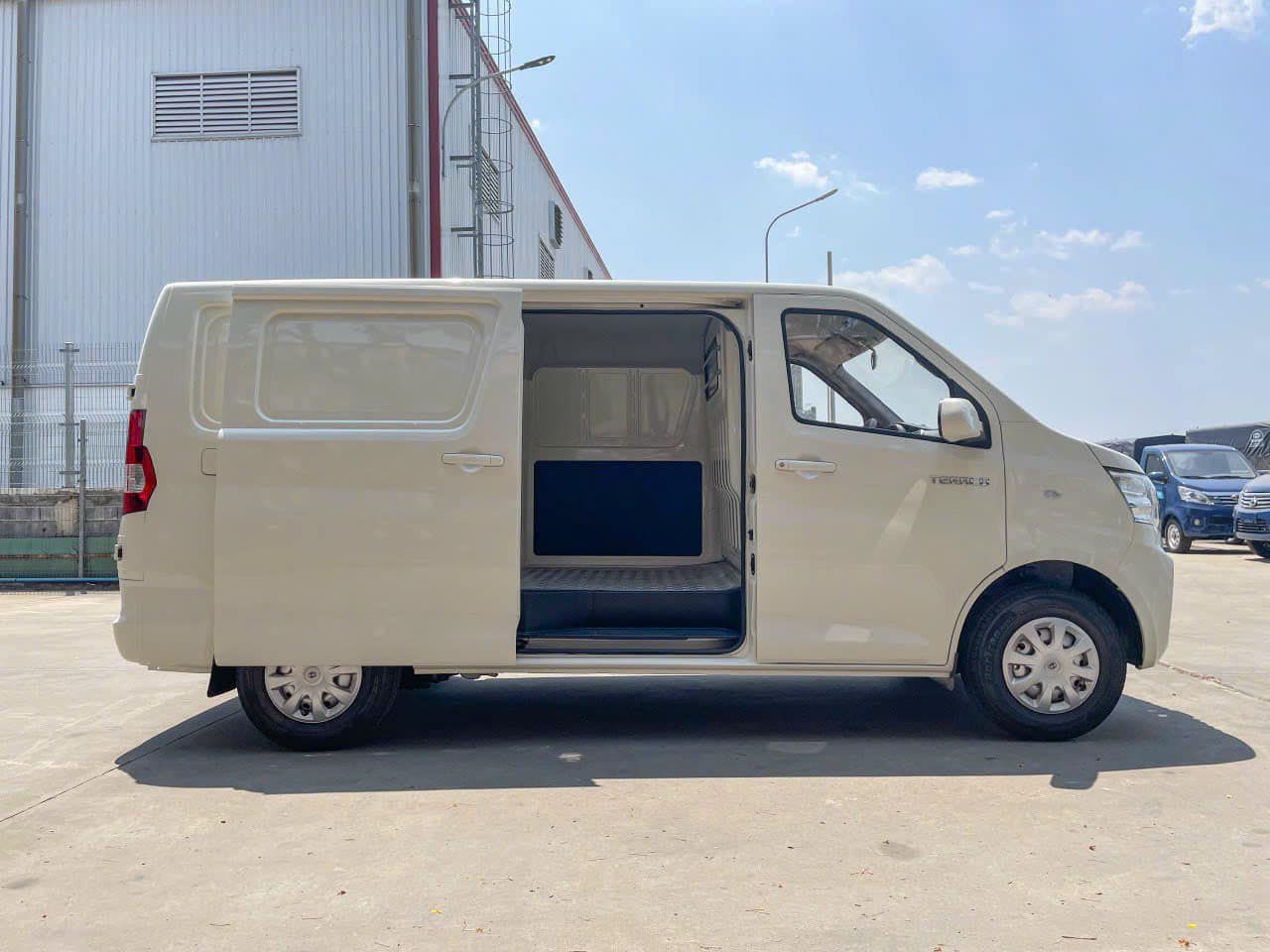
- Cargo Vans: Prioritize cargo space, usually with 2-3 seats, exemplified by the Dongben X30 and Suzuki Carry Truck.
- Pickup Trucks: Combine passenger and cargo transport, usually with 5 seats, like the Ford Ranger and Toyota Hilux.
Feng Shui Considerations When Choosing Van Seating Capacity
According to traditional beliefs, each number holds symbolic meaning. When choosing a van, some consider feng shui:
- Number 3: Represents stability and balance, considered lucky.
- Number 5: Represents the five elements, symbolizing growth and prosperity.
- Number 7: Associated with luck and good fortune in Eastern cultures.
However, these are just considerations; choosing a van based on needs and budget remains paramount.
A family van parked in front of a house.