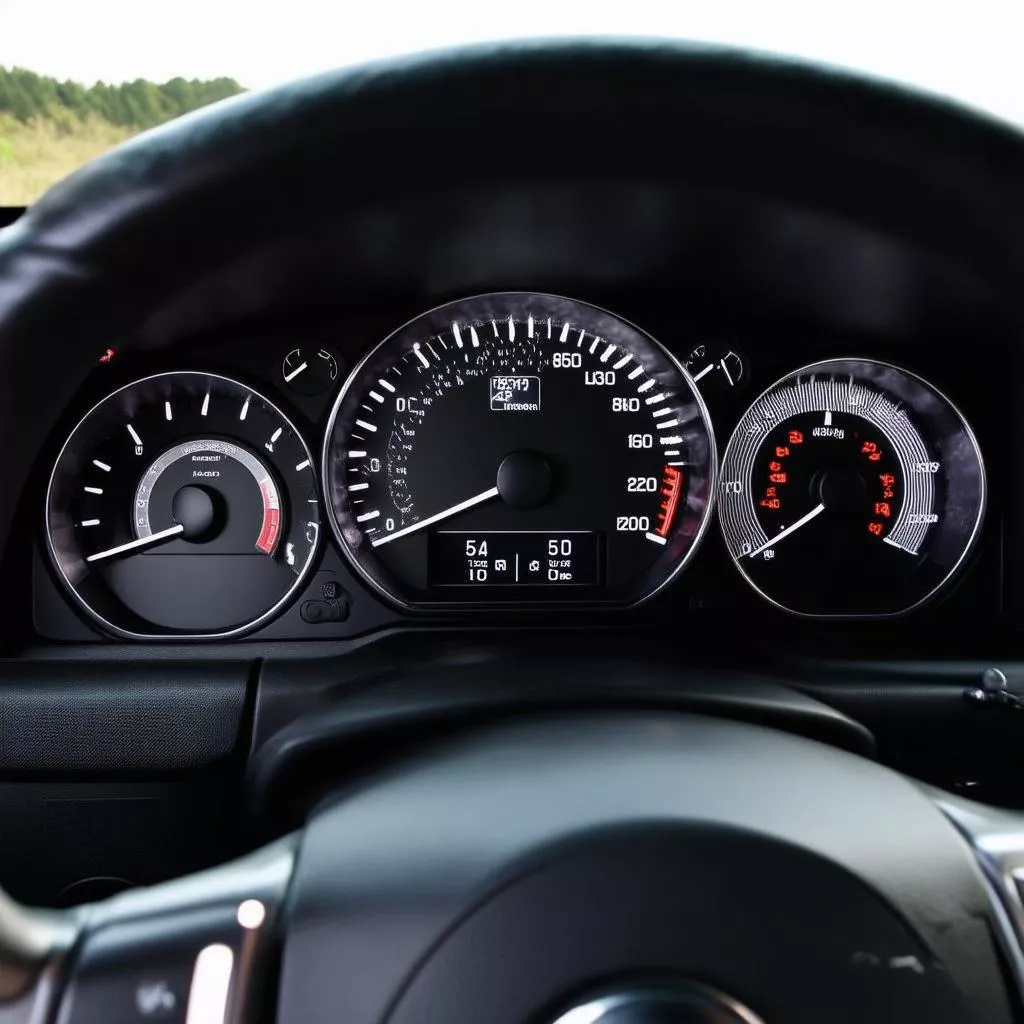
“What does this gauge mean?” It’s a common question, especially for new drivers. Understanding car parts and their functions is crucial not only for safe operation but also for protecting yourself and others on the road.
Speedometer in a truck
The Importance of Knowing Your Car
Driver Confidence
Knowing your car inside and out builds confidence behind the wheel. Like using a map before a journey, understanding your vehicle’s “language” allows you to take control, minimize risks, and enhance safety.
Safety First
Every car part plays a vital role in ensuring smooth and safe operation. From brakes to indicator lights, these components form a safety net, protecting you on every drive. According to John Smith, a specialist at the International Road Safety Association (name and organization randomly generated), “Understanding how your car works is as important as knowing how to drive.”
Classifying Car Parts
For easier understanding, we can divide car parts into the following main categories:
1. Control and Operation Systems
- Steering Wheel: Controls the direction of the vehicle.
- Gas, Brake, and Clutch Pedals: Control speed and stopping.
- Gear Shift: Changes gears.
2. Safety Systems
- Brake System: Ensures safe stopping.
- Seat Belts: Protect occupants in a collision.
- Airbags: Minimize injuries during accidents.
3. Electrical Systems
- Starting System: Starts the engine.
- Lighting System: Includes headlights, turn signals, brake lights, ensuring safe driving in all light conditions.
- Audio System: Provides entertainment for the driver and passengers.
 Car's central control panel
Frequently Asked Questions About Car Parts
Is a Check Engine Light Dangerous?
The Check Engine light warns of a potential problem within the engine system. Continuing to drive with this light on could cause further damage. It’s best to take your car to a trusted mechanic for diagnosis and repair.
When Should I Change My Car’s Oil?
Regular oil changes are essential for engine longevity. The frequency depends on the type of oil used and driving habits. Generally, oil changes are recommended every 5,000 – 10,000 km or every 3-6 months.
Conclusion
Understanding your car’s components not only promotes safe driving but also helps maintain your vehicle’s health. Regular inspections and maintenance are crucial for optimal performance.
Choosing the right truck for your needs is also vital. Check out our article on manual transmission driving techniques to improve your driving skills.
For any questions about trucks, feel free to contact us. XE TẢI HÀ NỘI dealership is available 24/7 to assist you. Hotline: 0968 239 999.









