Truck tire specifications are crucial factors that impact performance, safety, and tire lifespan. Understanding these parameters helps you choose the right tires, ensuring safe operation and cost savings. This article provides a detailed guide on how to read and understand truck tire specifications.
Decoding Truck Tire Specifications
Truck tires carry significantly heavier loads than passenger car tires, resulting in more complex specifications. Mastering these parameters will enable you to select the appropriate tire type for your vehicle’s load capacity and operating conditions. Choosing the correct tires not only guarantees safety but also improves fuel efficiency and extends tire life. A detailed understanding of tire specifications is essential, particularly for trucks.
Understanding Tire Markings
On the sidewall of a truck tire, you’ll find a sequence of characters comprising letters and numbers. Each symbol carries a specific meaning, providing information about the tire’s size, load capacity, maximum speed, and other characteristics. Understanding these markings allows you to accurately interpret tire pressure specifications.
Example: 11R22.5 14PR 152/148K
- 11R22.5: Tire size, including tire width (11 inches), tire type (R – radial), and rim diameter (22.5 inches).
- 14PR: Ply Rating, indicating the tire’s load-carrying capacity. The higher the number, the greater the load capacity.
- 152/148K: Load index and speed rating. 152/148 represents the dual load index for single and dual axles, and K indicates the maximum speed rating.
The Meaning of Each Parameter
Each parameter on a truck tire has a distinct meaning. Understanding each parameter is crucial for selecting the appropriate tire.
Tire Size
Tire size is represented by a sequence of numbers and letters, for example, 315/80R22.5. The first number (315) represents the tire width in millimeters. The second number (80) is the aspect ratio, representing the tire’s sidewall height as a percentage of its width. The letter “R” indicates a radial tire type, and the last number (22.5) is the rim diameter in inches.
Ply Rating
Ply Rating (PR) indicates the number of plies used in the tire’s construction. In the past, this number corresponded to the actual number of plies. However, with modern manufacturing techniques, PR is now an equivalent rating representing the tire’s load-carrying capacity.
Load Index
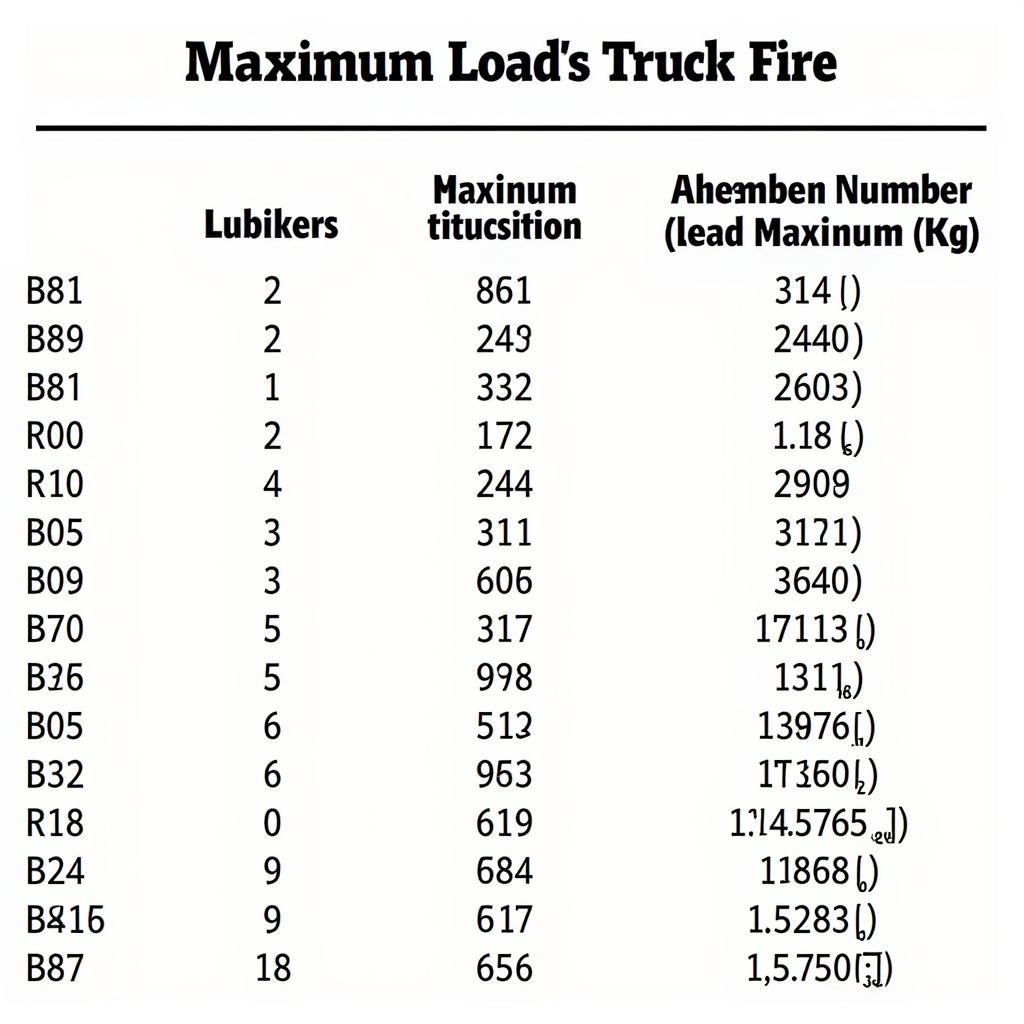
The load index is a number that represents the maximum load a tire can carry at a specified pressure. You can refer to a load index chart to determine the exact load corresponding to each index.
Load index chart helps determine the maximum load a truck tire can carry
Speed Rating
The speed rating is a letter that represents the maximum speed a tire can withstand under specified load conditions. Similar to the load index, you can refer to a speed rating chart to determine the maximum speed corresponding to each letter.
Choosing the Right Truck Tires
Selecting the right truck tires is crucial for ensuring safety and operational efficiency. Consider factors like load capacity, road conditions, and climate to choose the most suitable tire type.
Load Capacity
The vehicle’s load capacity is the most critical factor when selecting tires. Ensure the tire has a sufficient load index to handle the vehicle’s weight when carrying cargo.
Road Conditions
Road conditions also influence tire selection. If the vehicle frequently travels on rough roads, choose tires with appropriate tread patterns for enhanced traction.
Climate
Climate is another factor to consider. If the vehicle operates in cold climates, choose winter tires for optimal safety. If the vehicle operates in hot climates, regular car AC maintenance is recommended.
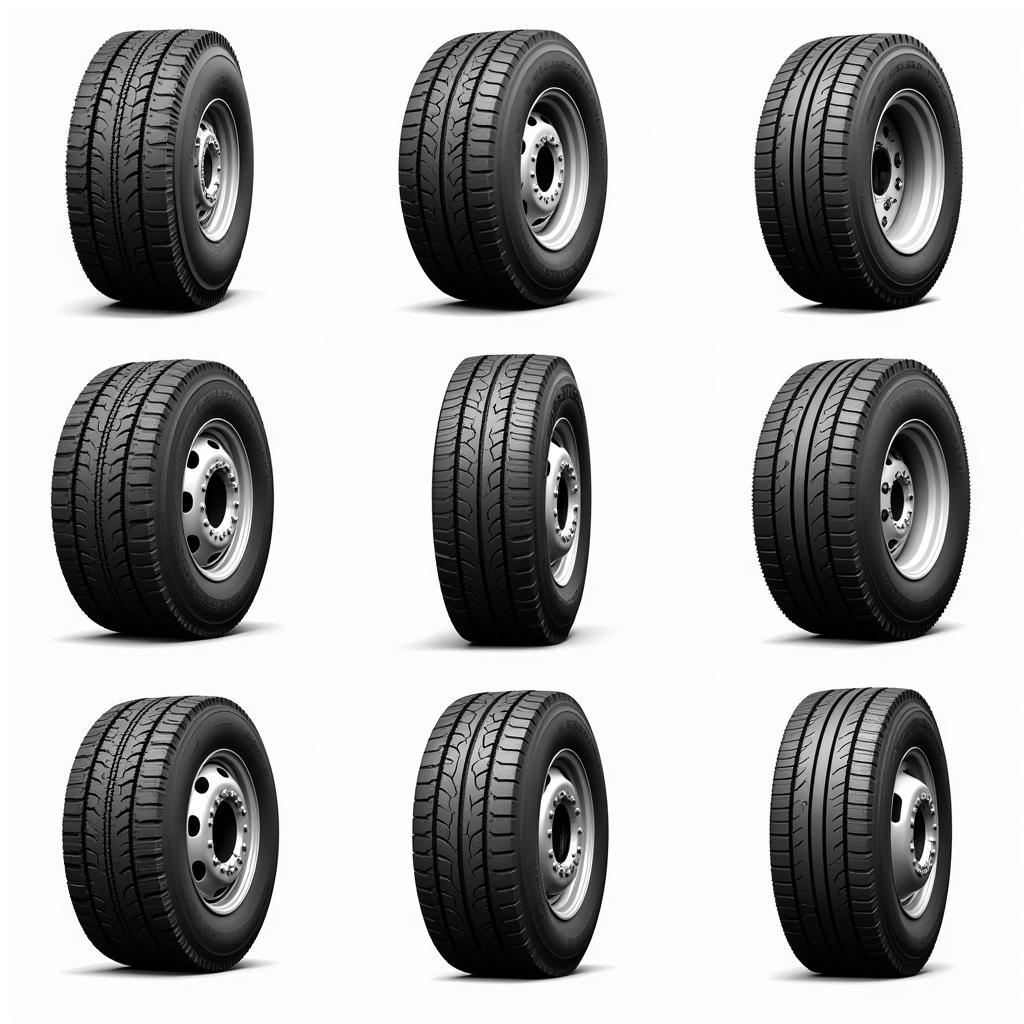 Choosing the right truck tires involves considering load, road conditions, and climate
Conclusion
Truck tire specifications are vital information for selecting the right tires for your vehicle. Understanding these parameters will help ensure safety, improve fuel efficiency, and extend tire lifespan.
FAQ
- How do I know when my truck tires need replacing?
- What do the load index and speed rating mean?
- Where should I replace my truck tires?
- What is the difference between radial and bias tires?
- What is the correct tire pressure for my truck?
- How do I properly maintain my truck tires?
- When should I rotate my truck tires?
Suggested Questions and Related Articles
You can learn more about car seat replacement or how to drive a car on our website.
For assistance, please contact us by phone: 0968239999, email: [email protected] or visit our address: TT36 – CN9 Road, Tu Liem Industrial Zone, Phuong Canh Ward, Nam Tu Liem District, Hanoi. We have a 24/7 customer support team.









