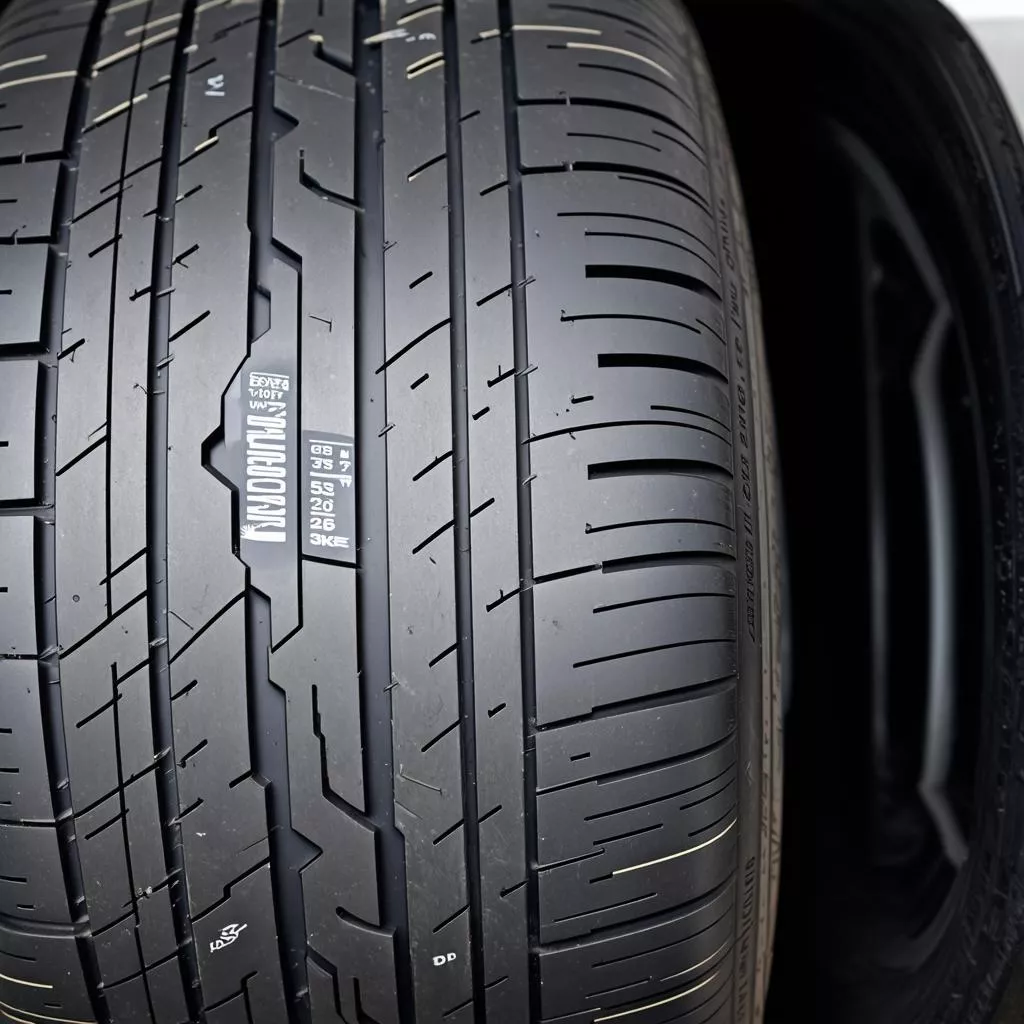
Have you ever wondered what the cryptic numbers and letters on your car tires mean? Don’t worry, you’re not alone! Most of us have seen them but don’t fully understand their significance. These markings are like a tire’s birth certificate, containing vital information about its capabilities and overall health.
Car Tire Sidewall Markings
Unraveling the Mystery: Tire Sidewall Markings Explained
Let’s break down each detail to help you understand these important markings.
1. Tire Size: The Perfect Fit for Your Vehicle
Just like choosing the right clothes, tire size needs to match your vehicle’s specifications. The size is usually displayed as a series of characters like “205/55R16”, where:
- 205: Tire width in millimeters.
- 55: Aspect ratio – the ratio of the tire’s sidewall height to its width (%).
- R: Radial construction (the most common type of tire).
- 16: Wheel diameter in inches.
Choosing the correct tire size not only ensures aesthetic appeal but also directly impacts handling, grip, and fuel efficiency.
2. Load Index: The Tire’s Strength Capacity
Each tire has a specific load capacity, indicated by the load index. This number represents the maximum weight a tire can support when inflated to its standard pressure. For example, a load index of 91 means the tire can carry a maximum load of 615kg (1356 lbs).
Experts emphasize the importance of using tires with a load index appropriate for your vehicle’s weight to ensure safety for you and your passengers.
3. Speed Rating: Safe Speed for Every Journey
Similar to the load index, the speed rating indicates the maximum speed a tire can sustain for a prolonged period. Speed ratings are usually represented by letters, for example:
- H: Maximum speed of 210 km/h (130 mph).
- V: Maximum speed of 240 km/h (149 mph).
- W: Maximum speed of 270 km/h (168 mph).
Choosing tires with the appropriate speed rating for your driving needs is crucial. John Smith, a tire expert at the American Automotive Research Institute (AARI), states: “Using tires with a lower speed rating than your vehicle’s operating speed for extended periods can lead to tire failure, posing a safety risk to the driver and passengers.”
4. Date Code: The Tire’s Expiration Date
Did you know tires have an expiration date? Generally, a tire’s lifespan is around 5 years from its manufacturing date. This information is usually represented by a 4-digit number within an oval on the tire sidewall.
For instance, the number “2223” indicates that the tire was manufactured in the 22nd week of 2023. Using expired tires can reduce grip and increase the risk of blowouts, especially in hot weather.
 Checking the Tire Date Code
Feng Shui and Tires: The Invisible Safety Factor
In Eastern philosophy, tires are considered an important component, influencing the owner’s safety and fortune. They symbolize stability, grounding, and progress in life. Maintaining tires in good condition, free from wear, cracks, or tears, is believed to attract prosperity, luck, and safety on every journey.
Conclusion:
Understanding tire sidewall markings not only helps you choose the right tires for your vehicle but also contributes to ensuring your safety and your family’s on every trip.
Be an informed consumer, always check the tire markings before purchasing and replace tires regularly to maintain your vehicle’s optimal performance.
Do you have any questions about tire markings? Leave a comment below or contact us via Hotline: 0968 239 999 for detailed advice. Don’t forget to visit xetaihanoi.edu.vn for more useful information about vehicles!
You can also refer to related articles:









