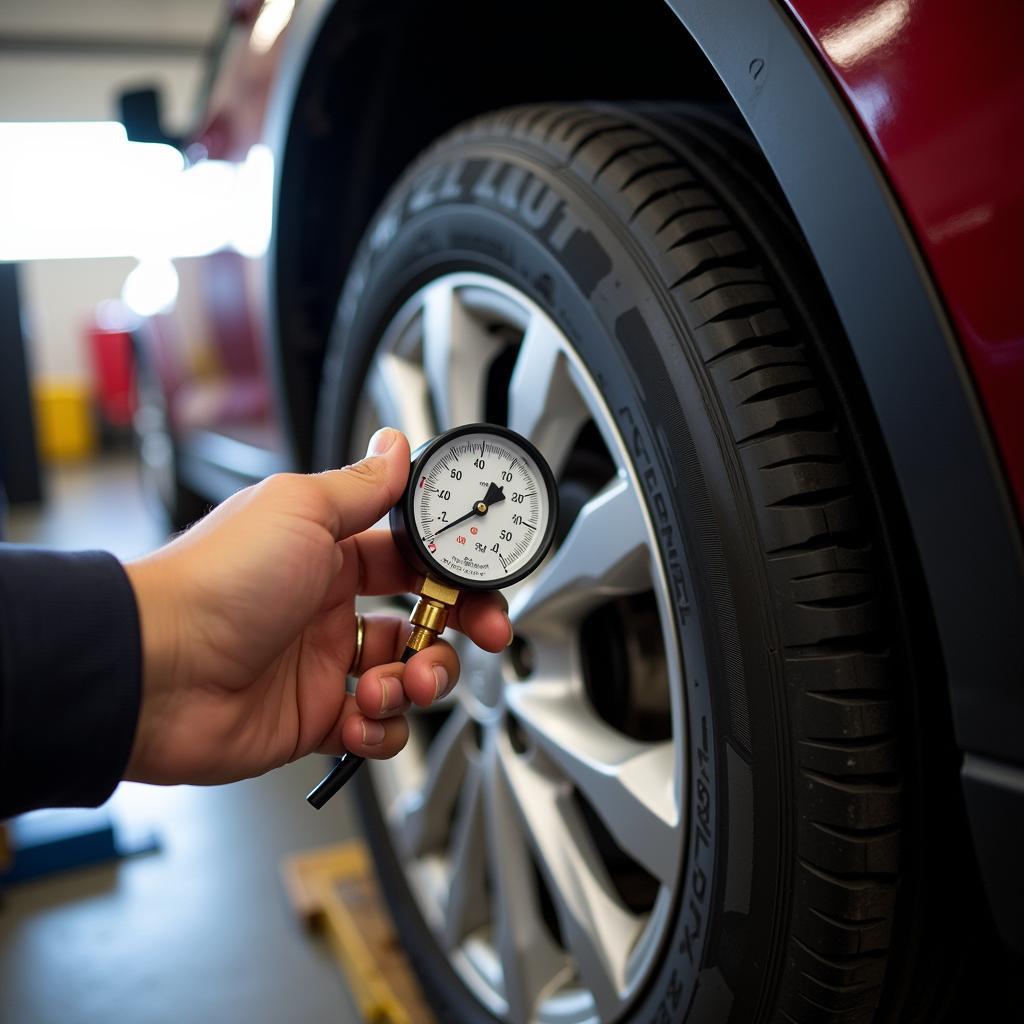
Patching a car tire is an essential skill for all drivers, especially those who frequently travel long distances. Understanding the process and important precautions will not only help you handle emergency situations effectively but also ensure the safety of yourself and your passengers. This article provides a detailed guide on how to patch a car tire correctly, along with important considerations.
When Do You Need to Patch a Car Tire?
Tire patching is a temporary solution when a tire is punctured or loses air due to a sharp object. You need to patch a tire when you notice unusual air loss or hear a hissing sound from the tire. However, not all punctures are patchable. If the tire has a large tear, sidewall damage, or is excessively worn, replacing the tire is a safer option. Patching a tire correctly allows you to continue driving to the nearest repair shop. Similar to finding the nearest tire repair shop, patching a truck tire also requires care and precision.
Methods for Patching Car Tires
There are various methods for patching car tires, but the most common are internal and external patches. Internal patches, also known as mushroom plugs, are applied from the inside of the tire, ensuring a tighter seal and greater durability. Conversely, external patches are only a temporary solution, typically used in emergencies. This method is less durable and can cause further tire damage if not handled correctly. Choosing the appropriate patching method depends on the extent of the damage and the specific circumstances. In some cases, you might need to search for services like tire repair in Vung Tau or tire repair in Da Lat if you’re in those areas.
How to Patch a Car Tire Using the External Patch Method
- Park Safely: Park your car on a level, safe surface away from traffic.
- Prepare Tools: Gather your tire patching kit, including tire sealant, a reamer, and patches.
- Locate the Puncture: Find the puncture by visual inspection or using soapy water.
- Clean the Puncture: Remove any debris and clean the puncture area with the reamer.
- Apply Sealant: Insert the sealant into the tire according to the product instructions.
- Apply the Patch: Place the patch over the puncture and press firmly.
- Inflate the Tire: Inflate the tire to the recommended pressure.
Important Considerations When Patching a Car Tire
- Check Tire Pressure Regularly: Regularly checking tire pressure helps detect tire problems early, including punctures.
- Avoid Patching Tires Excessively: Patching a tire multiple times reduces its durability and safety.
- After an External Patch, Visit a Garage for Internal Repair: External patches are temporary; an internal patch is necessary for long-term safety. You can also learn more about hand-stitched leather steering wheel covers to enhance your driving experience.
Checking car tire pressure
Conclusion
Patching a car tire is a crucial skill for handling roadside emergencies. However, patching is only a temporary fix. For guaranteed safety, visit the nearest repair shop for professional tire inspection and repair after patching. Learning about the Chien Thang Auto Assembly Plant can also provide insights into the car manufacturing process and the importance of tire maintenance.
FAQ
- Is patching a car tire safe? Patching is a temporary solution and is safe if done correctly.
- When should I replace a tire? Replace a tire when it’s severely damaged, patched multiple times, or too old.
- What’s the difference between internal and external patches? Internal patches are more durable and safer than external patches.
- Can I patch a car tire myself at home? Yes, but you need the right tools and skills.
- What should I do after patching a tire? Visit a garage for a tire inspection.
- What types of tire sealants are available? Various types exist; choose one suitable for your tire.
- How often should I check tire pressure? Check tire pressure at least once a month.
For assistance, please contact us at Phone: 0968239999, Email: [email protected] Or visit us at: TT36 – CN9 Road, Tu Liem Industrial Zone, Phuong Canh Ward, Nam Tu Liem District, Hanoi. We have a 24/7 customer service team.









