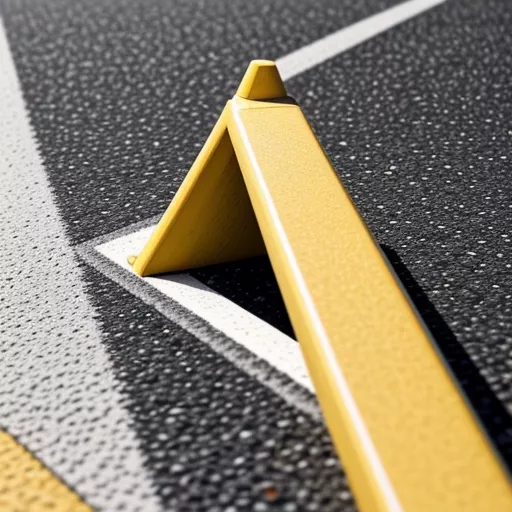
While strolling through Hanoi’s bustling Hang Ma Street, I ran into Mr. Trung, a familiar refrigerated truck driver who often delivers goods to the corner store. Noticing my curiosity about the unusual road markings, he chuckled, pointing to the zig-zag lines: “Those are ‘fishbone’ lines! Truck drivers like me have to know them by heart.” Mr. Trung’s words sparked my curiosity about these unique road markings. So, what exactly are “fishbone” lines, and what do they signify in traffic?
Unraveling the Mystery of “Fishbone” Lines
Definition and Identifying Characteristics
“Fishbone” lines is a colloquial term often used to describe the road markings indicating where vehicles must stop at traffic signals, also known as stop lines. These lines have a zig-zag pattern, are painted white on the road surface, run perpendicular to the direction of traffic, and usually appear before intersections with traffic lights.
Zig-zag stop line
The Significance of “Fishbone” Lines in Traffic
“Fishbone” lines play a crucial role in traffic regulation, ensuring safety for all road users, especially at busy intersections:
- Alerting drivers to stop: “Fishbone” lines signal drivers to stop when the traffic light turns red or yellow.
- Helping reduce traffic congestion: Stopping at the designated line creates space for other vehicles to move, preventing congestion, particularly at intersections.
- Promoting traffic awareness: Adhering to stop line regulations contributes to a more civilized and safe traffic environment.
Distinguishing “Fishbone” Lines from Other Road Markings
Many people often confuse “fishbone” lines with solid or broken lines. However, each type of road marking has its own distinct shape and meaning. “Fishbone” lines have a characteristic zig-zag pattern, indicating a stop at traffic signals, while solid and broken lines regulate overtaking and lane changes.
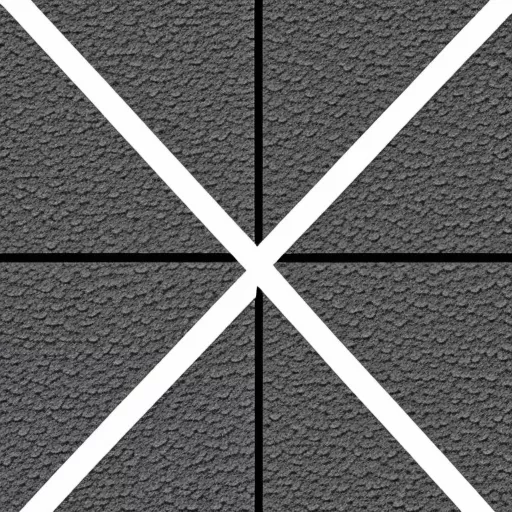 Different types of road markings
Frequently Asked Questions About “Fishbone” Lines
1. How to stop correctly at a “fishbone” line?
To ensure safety and comply with traffic laws, keep the following in mind:
- Observe traffic signals: Stop before the “fishbone” line when the traffic light turns red or yellow.
- Maintain a safe distance: Do not stop too close to or overlap the “fishbone” line of the vehicle in front.
- Avoid stopping mid-intersection: If the stop line is too short, you can stop behind it at a red light, but ensure you do not obstruct traffic.
2. What are the consequences of not complying with “fishbone” line regulations?
Failure to stop correctly at a “fishbone” line may result in administrative fines according to traffic laws. More seriously, non-compliance can cause traffic congestion, collisions, and unfortunate accidents.
Hanoi Truck – Your Partner on Every Road
Understanding traffic laws is the key to a safe journey. We hope this article has answered your questions about “fishbone” lines and provided helpful tips for navigating traffic. Visit the Hanoi Truck website for more informative articles on traffic laws, truck driving tips, and to explore a range of quality trucks to suit your needs.
For detailed consultation on trucks and vans, please contact Hanoi Truck via our hotline or visit our website https://xetaihanoi.edu.vn/.
Related articles:
Hanoi Truck – Your Trusted Partner!









