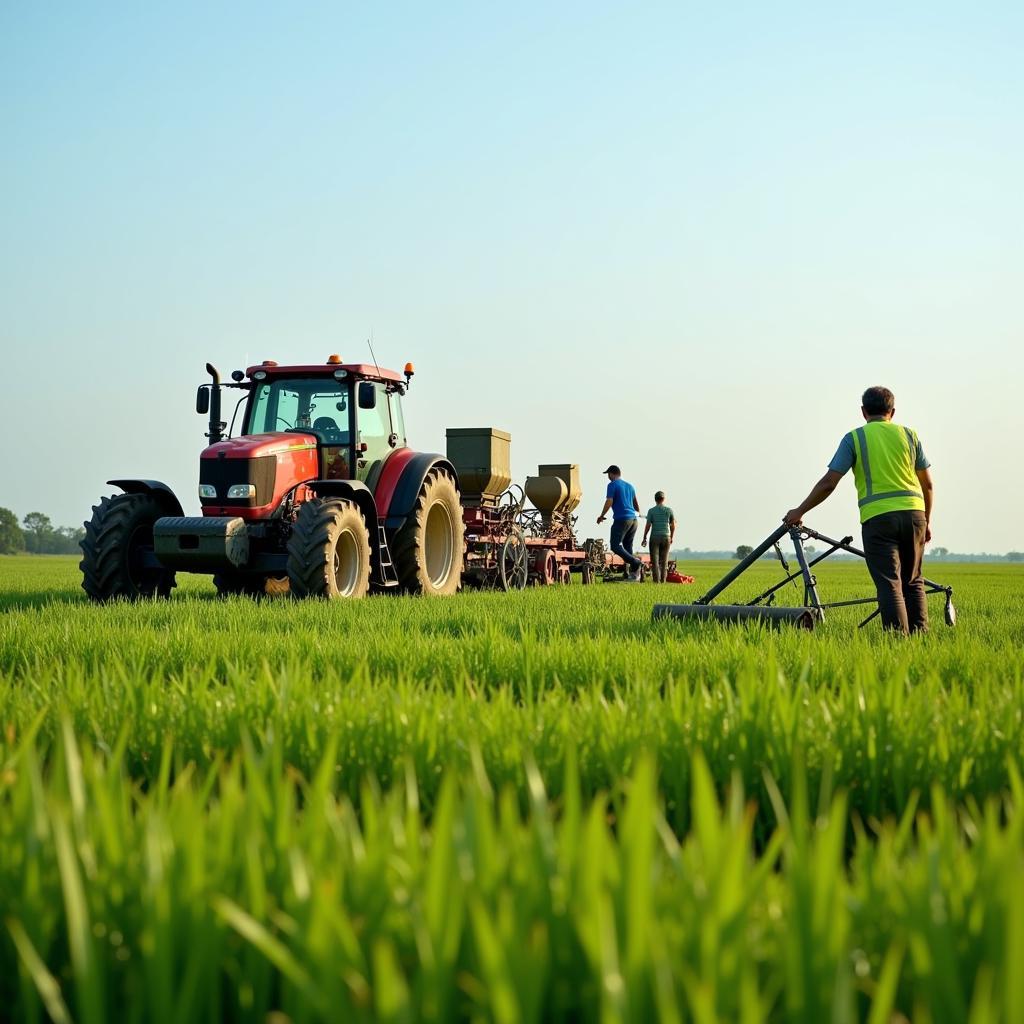
Agricultural and rural credit policies play a crucial role in fostering economic development in rural areas, contributing to improving people’s living standards and ensuring national food security. This article will delve into the role of these policies, their current benefits, and challenges.
The Role of Agricultural and Rural Credit Policies
Agriculture and rural development are vital economic sectors, accounting for a significant proportion of the GDP in many countries, especially developing nations. However, this sector often faces difficulties in accessing credit due to the specific nature of production, high risks, and unstable income. Agricultural and rural credit policies are designed to address this complex issue.
- Promoting Production: Providing timely and adequate capital enables farmers to invest in production, enhancing productivity and product quality.
- Developing Rural Areas: Supporting the formation of concentrated production areas, applying high technology, creating jobs, and improving people’s income.
- Ensuring Food Security: Contributing to stabilizing agricultural production, meeting domestic food demand, and enhancing competitiveness in the international market.
Agricultural credit policies stimulate agricultural production
Benefits of Agricultural and Rural Credit Policies
To encourage individuals and businesses to invest in agriculture and rural development, the Government has issued numerous attractive preferential policies:
- Preferential Loan Interest Rates: Lower than conventional loan interest rates, reducing the financial burden on borrowers.
- Flexible Loan Terms: Adaptable to agricultural production cycles, enabling farmers to proactively manage their production and business plans.
- Simplified Loan Procedures: Minimizing complexities, facilitating quick and easy access to credit for individuals.
Challenges of Agricultural and Rural Credit Policies
Despite the achieved results, agricultural and rural credit policies still face some limitations and challenges:
- Limited Financial Capacity: Many farmers and cooperatives struggle to demonstrate their financial capacity and provide sufficient collateral.
- Risks in Agricultural Production: Climate change and diseases are increasingly complex, affecting productivity and output, making loan repayment challenging.
- Lax Monitoring and Management Mechanisms: There are still instances of loans being granted to ineligible individuals or used for unintended purposes, leading to bad debts and wasted resources.
Solutions to Enhance the Effectiveness of Agricultural and Rural Credit Policies
To maximize the effectiveness of agricultural and rural credit policies, the following solutions need to be implemented comprehensively:
- Diversifying Capital Sources: Encouraging credit institutions and commercial banks to participate in agricultural and rural lending, creating abundant capital sources and healthy competition.
- Improving the Legal Framework: Issuing comprehensive legal regulations on agricultural and rural credit, ensuring transparency and creating a solid legal corridor.
- Raising Public Awareness: Strengthening communication and disseminating knowledge about credit, helping people understand their rights and obligations when borrowing and using loans effectively.
- Applying Information Technology: Building a modern agricultural and rural credit information system, connecting relevant agencies and units, and enhancing management and monitoring efficiency.
Conclusion
Agricultural and rural credit policies play a vital role in driving economic development in rural areas. For these policies to achieve optimal effectiveness, the joint efforts of all levels, sectors, and society as a whole are required.
Kien Giang Policy Bank is a prime example of the effective implementation of agricultural and rural credit policies.
Frequently Asked Questions
- Who are eligible for agricultural and rural credit policies?
- What are the loan procedures under agricultural and rural credit policies?
- What are the loan interest rates under agricultural and rural credit policies?
- What are the loan terms under agricultural and rural credit policies?
- How to effectively utilize loans under agricultural and rural credit policies?
Common Scenarios
- Difficulty in Proving Income: Farmers often lack proper records of their income, making it difficult to obtain loans.
- Lack of Collateral: Many households lack sufficient collateral to qualify for loans.
- Natural Disaster and Disease Risks: The impact of climate change and diseases poses significant risks to agricultural production, affecting the ability to repay loans.
Suggested Further Reading
You can learn more about other support policies at:
Contact Us
For assistance, please contact us by phone: 0968239999, Email: [email protected] Or visit our address: No. TT36 – CN9 Road, Tu Liem Industrial Zone, Phuong Canh Ward, Nam Tu Liem District, Hanoi. We have a 24/7 customer service team.









