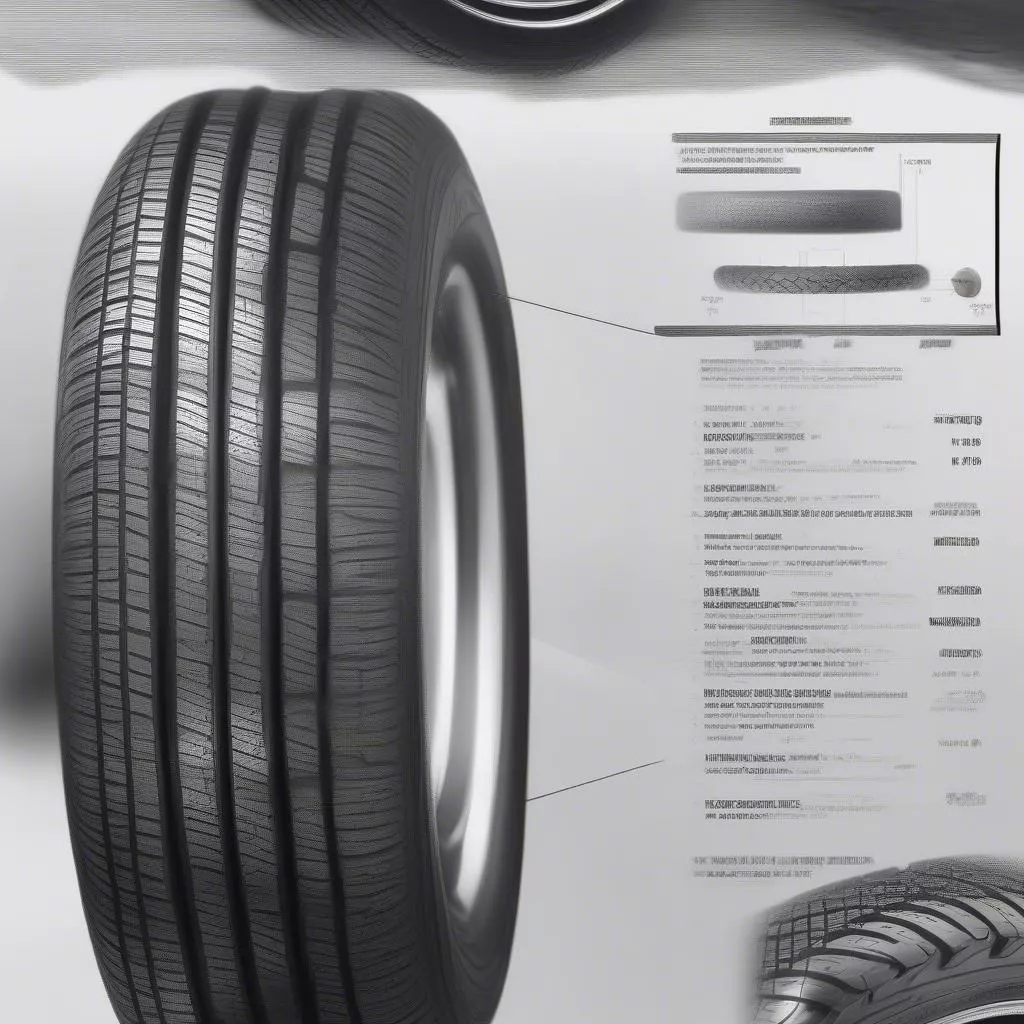
Are you unsure how to check your car tire specifications? Don’t worry, this article provides a comprehensive guide on understanding the essential parameters on your tires, empowering you to confidently choose and maintain them.
Why Check Car Tire Specifications?
We’ve all heard stories about drivers who neglected tire checks. One such driver, Tuan from Ha Dong, known for his meticulousness, once skipped a pre-trip inspection. His truck tire blew out mid-journey. Luckily, no one was hurt. Since then, Tuan emphasizes the importance of checking tire specifications.
Checking car tire specifications not only ensures your safety and the safety of your passengers but also:
- Ensures proper tire selection: Each car model requires specific tire types. Checking specifications helps you choose tires compatible with your vehicle, load capacity, and road conditions, preventing vibrations and handling issues.
- Extends tire lifespan: Using tires with the correct specifications distributes weight evenly, reducing friction and extending tire life.
- Improves fuel efficiency: Properly matched tires ensure smooth driving, reduce rolling resistance, and improve fuel economy.
Detailed Guide to Checking Car Tire Specifications
Tire specifications are usually embossed on the tire sidewall. Here’s an example: “205/55R16 91V” and how to understand it:
1. Tire Size:
- 205: Tire width in millimeters.
- 55: Aspect ratio, the ratio of tire height to width (%). A higher number indicates a taller tire; a lower number indicates a shorter tire.
- R: Tire construction, usually “R” for Radial.
- 16: Rim diameter in inches.
2. Load Index:
- 91: Maximum weight the tire can carry (refer to the load index chart). For example, 91 corresponds to 615kg/tire.
3. Speed Rating:
- V: Maximum speed the tire is rated for (refer to the speed rating chart). For example, “V” corresponds to a maximum speed of 240 km/h (149 mph).
Note:
- Choose tires that match the manufacturer’s recommendations. This information is usually found on the doorjamb or in the owner’s manual.
- Avoid using tires with significantly different specifications than recommended.
Car tire specifications
Frequently Asked Questions About Checking Car Tire Specifications
1. How Often Should Car Tires Be Replaced?
Tire lifespan depends on factors like road conditions, driving habits, and tire type. However, experts recommend replacing tires every 5-6 years or when the tread wears down to the wear indicators.
2. Should I Use Different Sized Tires on My Car?
Using different sized tires can affect handling, safety, and the accuracy of electronic systems. It’s best to use tires that match the manufacturer’s recommendations.
3. What’s the Correct Tire Pressure for My Car?
The recommended tire pressure is usually found on the doorjamb or in the owner’s manual. Regularly check and inflate your tires to the correct pressure.









