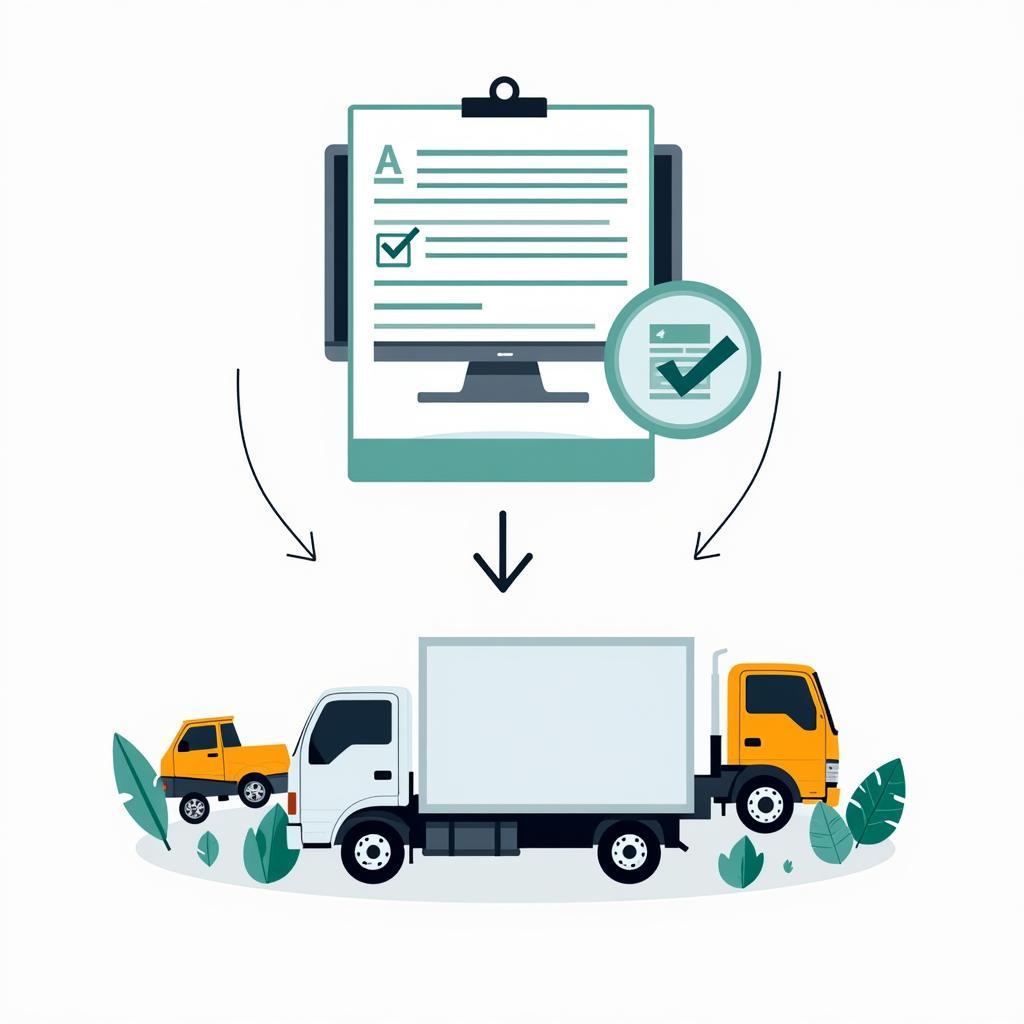
Circular 133 significantly impacts accounting practices for businesses, especially in the transportation sector. Understanding this circular helps Hanoi trucking companies, operating various trucks (box trucks, vans, 1-ton, 2-ton, 3.5-ton, and 8-ton trucks), optimize financial operations and ensure legal compliance.
Understanding Circular 133
Circular 133/2016/TT-BTC guides accounting practices for small and medium-sized enterprises (SMEs), replacing Circular 200/2014/TT-BTC. This circular applies to most trucking companies in Hanoi, except for large, publicly listed companies. Proper implementation of Circular 133 ensures efficient financial management, transparency, and minimizes legal risks.
Circular 133 Accounting for Trucking Companies
Key Changes in Circular 133
Compared to Circular 200, Circular 133 introduces significant changes that directly impact accounting procedures. Key changes include methods for calculating fixed asset depreciation, revenue and expense recognition, and handling receivables and payables. Trucking companies must update and adjust their accounting processes accordingly to comply with Circular 133.
Applying Circular 133 to Trucking Companies
Applying Circular 133 offers numerous benefits for Hanoi trucking companies. It simplifies accounting processes, reduces costs and time, and ensures compliance, avoiding penalties and enhancing credibility with regulatory authorities. Circular 133 supports sustainable business growth for trucking companies.
 Applying Circular 133 to Trucks
Building Accounting Policies under Circular 133
To establish accounting policies compliant with Circular 133, trucking companies should follow these steps:
- Step 1: Assess current business operations.
- Step 2: Identify accounting transactions.
- Step 3: Select appropriate accounting methods.
- Step 4: Develop a chart of accounts.
- Step 5: Implement and enforce the accounting policies.
Benefits of Complying with Circular 133
Compliance with Circular 133 provides several benefits for trucking businesses:
- Financial Transparency: Clear and accurate financial information.
- Effective Management: Cost control and profit optimization.
- Legal Compliance: Reduced risk of penalties.
- Enhanced Reputation: Increased trust with partners and customers.
Conclusion
Circular 133 is crucial for the efficient and sustainable operation of trucking companies. Understanding and implementing its regulations enables businesses to optimize finances, comply with laws, and enhance their market reputation.
FAQ
- Who is subject to Circular 133? Small and medium-sized enterprises.
- When should Circular 133 be applied? Since 2016.
- Which circular does Circular 133 replace? Circular 200.
- What is the main content of Circular 133? Guidance on accounting practices.
- What are the benefits of applying Circular 133? Financial transparency and effective management.
- How to build accounting policies according to Circular 133? Refer to the Ministry of Finance’s guidelines.
- Does Circular 133 apply to trucking companies? Yes.
Suggested Questions and Related Articles
- Which box truck suits my cargo transportation needs?
- Comparing 1-ton and 2-ton trucks: Which one to choose?
- Buying used trucks: Important considerations.
For assistance, contact us at Phone: 0968239999, Email: [email protected] or visit us at: TT36 – CN9 Road, Tu Liem Industrial Zone, Phuong Canh Ward, Nam Tu Liem District, Hanoi. We offer 24/7 customer support.









