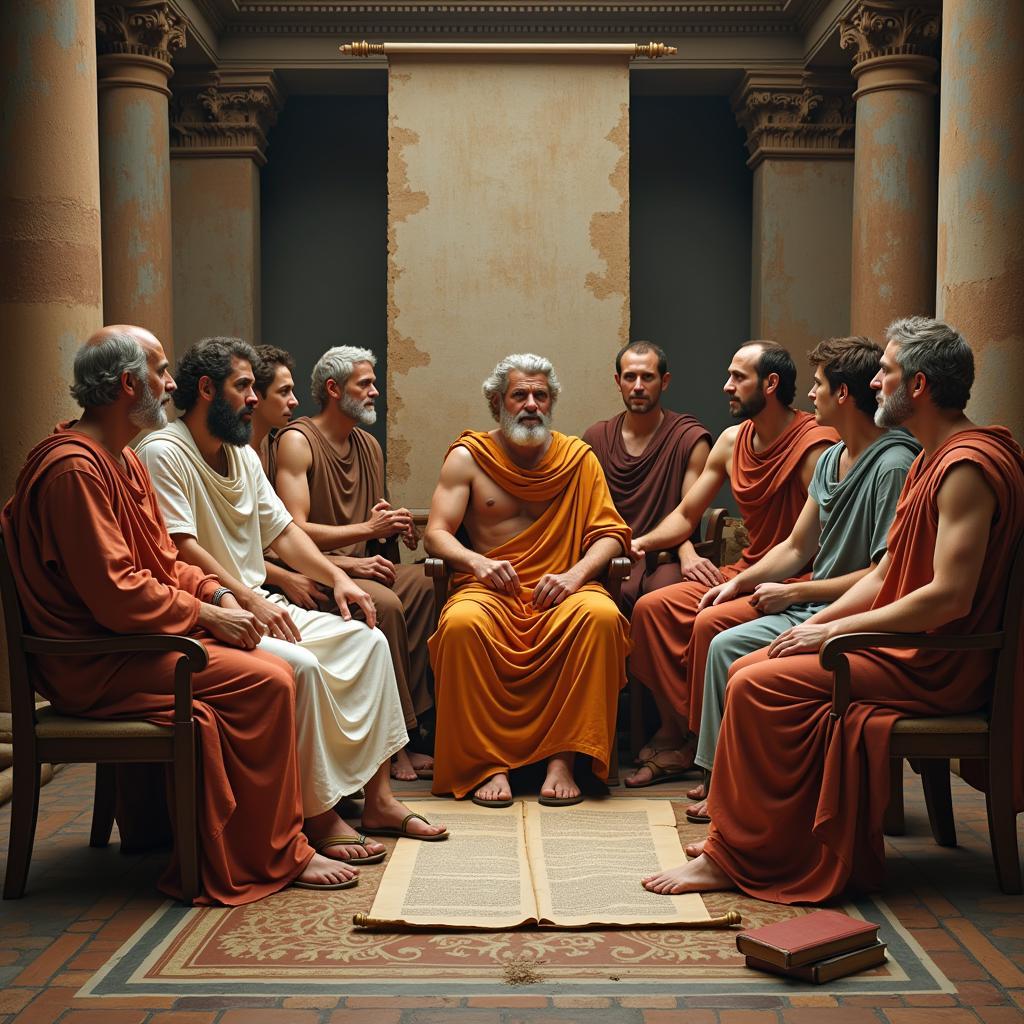
The history of political philosophy is a long and complex journey, reflecting the evolution of human thought on power, justice, and governance. From antiquity to the present day, philosophers have used books to explore and debate fundamental questions about social organization and the nature of political life. This article will delve into this history, from classic texts to contemporary theories.
Policy for People with Disabilities
Ancient Greek Origins
The foundations of Western political philosophy were laid by ancient Greek thinkers like Plato and Aristotle. In The Republic, Plato envisioned an ideal society ruled by philosopher-kings, possessing superior intellect and morality. Aristotle, in Politics, focused on analyzing different forms of government, from monarchy to democracy, seeking the best form for humanity. These works posed fundamental questions about justice, power, and the citizen’s role in society, profoundly influencing subsequent political philosophy.
Ancient Greek political philosophy
The Middle Ages and the Rise of Political Theology
The Middle Ages witnessed the rise of political theology, with thinkers like Augustine and Thomas Aquinas seeking to reconcile Christian faith with political philosophy. In The City of God, Augustine argued that the earthly state was temporary, and humanity’s ultimate goal was salvation in God’s kingdom. Aquinas, in Summa Theologica, sought to reconcile Aristotelian reason with Christian doctrine, arguing that natural law was the foundation for law and politics. Political philosophy during this period was heavily influenced by religion, raising questions about the relationship between church and state, and the nature of law and authority.
The Renaissance and Enlightenment
The Renaissance and Enlightenment marked a turning point. Niccolò Machiavelli, in The Prince, offered a more pragmatic view of politics, focused on maintaining power by any means necessary. Enlightenment thinkers like John Locke, Jean-Jacques Rousseau, and Montesquieu emphasized reason, natural rights, and the separation of powers, laying the groundwork for modern democracies. In Two Treatises of Government, Locke argued for natural rights to life, liberty, and property, with government obligated to protect them.
The 19th and 20th Centuries: Modern Thought
The 19th and 20th centuries saw the development of modern political thought, from liberalism to socialism and communism. John Stuart Mill, in On Liberty, championed individual freedom, arguing that government should only intervene in individual lives to prevent harm to others. Karl Marx, in Das Kapital, critiqued capitalism and proposed a classless communist society. These ideas shaped 20th-century political debates and continue to influence the world today.
Contemporary Political Philosophy
Contemporary political philosophy continues to grapple with fundamental questions about justice, power, and the role of the state. Thinkers like John Rawls, Robert Nozick, and Martha Nussbaum have contributed to debates on social justice, individual rights, and multiculturalism. In A Theory of Justice, Rawls argued that a just society is one where everyone has equal opportunity and the least advantaged are given special consideration.
Preferential Policies for Island Communities
Conclusion
The history of political philosophy is a rich and diverse intellectual journey, reflecting the evolution of human thought on social organization and the nature of political life. From Plato and Aristotle to Rawls and Nussbaum, philosophers have used books to explore and debate fundamental questions about justice, power, and the citizen’s role in society. Studying this history not only helps us understand the past but also provides crucial tools for addressing the political challenges of the present and future.
 The enduring legacy of political philosophy
Google Ads Drug Policy Violations
FAQ
- What is political philosophy? Political philosophy is the branch of philosophy that studies fundamental concepts in politics, such as justice, power, and freedom.
- Which works are considered foundational to Western political philosophy? Plato’s The Republic and Aristotle’s Politics.
- What is the main difference between ancient and modern political philosophy? Ancient political philosophy often focused on finding the best form of government, while modern political philosophy is often concerned with individual rights and social justice.
- Who were some important political thinkers of the Enlightenment? John Locke, Jean-Jacques Rousseau, and Montesquieu.
- What is liberalism? Liberalism is a political ideology that emphasizes individual freedom and limited government intervention.
- What is socialism? Socialism is a political ideology that advocates for social and economic equality.
- Who is the author of A Theory of Justice? John Rawls.
Support Policy for Medicinal Plant Cultivation
For assistance, please contact us by phone: 0968239999, Email: [email protected] Or visit our address: No. TT36 – CN9 Road, Tu Liem Industrial Park, Phuong Canh Ward, Nam Tu Liem District, Hanoi. We have a 24/7 customer service team.









