This article analyzes the hypothetical public policy MPP8, its potential effects on the truck market, and key considerations for transportation businesses.
What is MPP8?
MPP8 represents a hypothetical public policy. Since “MPP8” is not an actual policy, this article will assume it relates to supporting transportation businesses in upgrading older trucks to reduce environmental pollution. This policy is presumed to encourage the use of box trucks, light trucks, vans, and trucks with capacities of 1 ton, 2 tons, 3.5 tons, and 8 tons that meet the latest emission standards.
Impact of MPP8 on the Truck Market
MPP8 is expected to stimulate demand for new trucks, particularly environmentally friendly models. This policy could create competition among truck manufacturers, leading to lower prices and improved product quality. This benefits transportation businesses by reducing investment and operating costs.
Impact on Different Truck Segments
- Box Trucks: MPP8 could encourage the use of box trucks that meet high emission standards, contributing to reduced pollution in freight transport.
- Light Trucks: With policy support, owning compliant light trucks will be easier, suitable for small and medium-sized businesses.
- Vans: The versatility of vans combined with MPP8 incentives would be an attractive option for urban transportation.
- 1 Ton, 2 Ton, 3.5 Ton, and 8 Ton Trucks: Depending on transportation needs, businesses can choose suitable trucks and benefit from the MPP8 policy.
Benefits of Implementing MPP8
MPP8 not only offers economic benefits to transportation businesses but also contributes to environmental protection. Using trucks that meet new emission standards will reduce harmful emissions and improve air quality.
Benefits for Businesses
- Reduced investment and operating costs.
- Enhanced corporate image.
- Contribution to environmental protection.
Benefits for Society
- Improved air quality.
- Mitigation of climate change impacts.
- Sustainable development of the transportation industry.
Benefits of the MPP8 policy for transportation businesses
Considerations for Implementing MPP8
Transportation businesses should thoroughly understand the regulations and conditions of the MPP8 policy to maximize benefits. Choosing the right truck model to suit transportation needs is also crucial.
Choosing the Right Truck
- Determine cargo capacity.
- Select the appropriate truck body type.
- Consider road conditions.
“The MPP8 policy is a significant step in modernizing the transportation industry. Businesses need to proactively grasp information and take advantage of this opportunity,” says Nguyen Van A, a logistics expert in Hanoi.
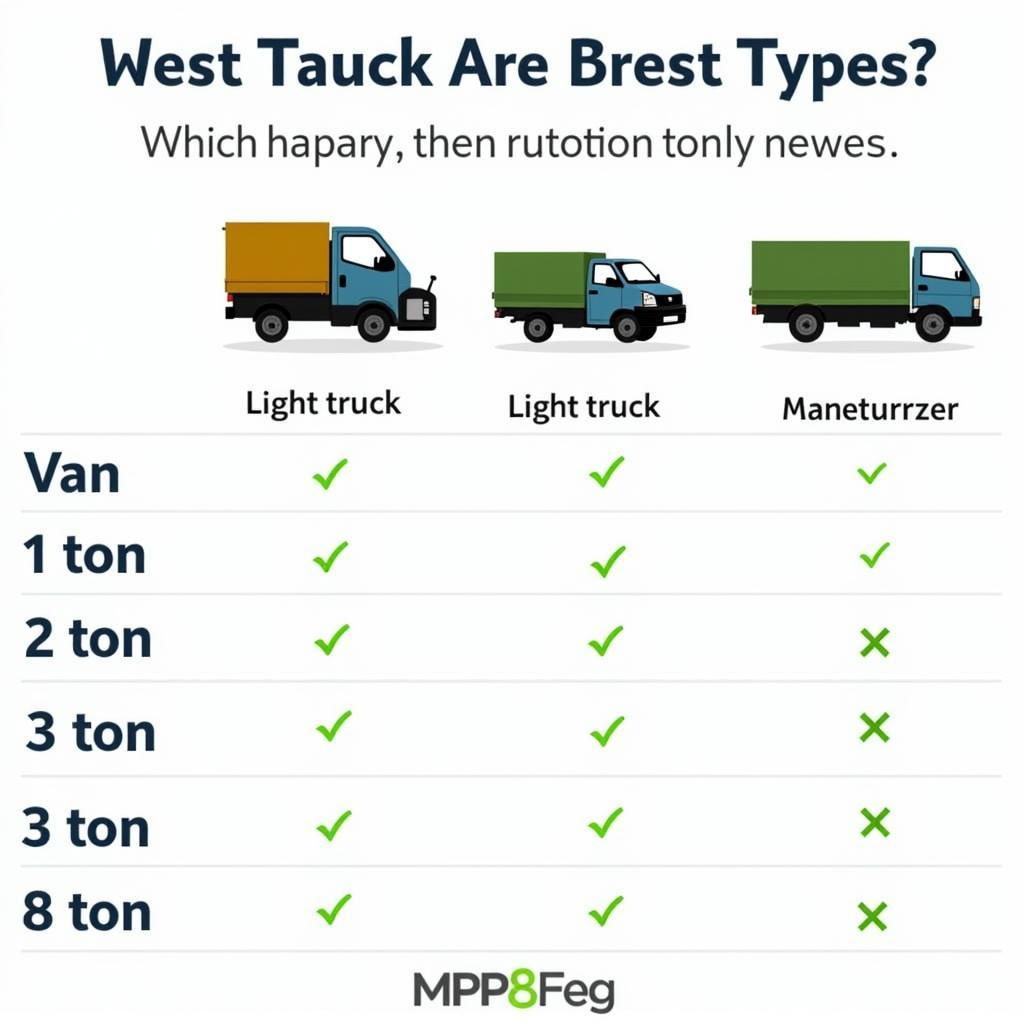 Choosing the right truck under the MPP8 policy
Conclusion
Analysis of the hypothetical MPP8 policy indicates its potential to benefit both transportation businesses and society. Implementing MPP8 would contribute to the sustainable development of the transportation industry, towards a cleaner environment.
FAQ
- Which types of trucks does MPP8 apply to? (All types of trucks, including box trucks, light trucks, vans, and trucks with capacities of 1 ton, 2 tons, 3.5 tons, and 8 tons).
- How to register for the MPP8 policy? (Since MPP8 is a hypothetical policy, there is no specific registration process).
- Does MPP8 provide financial support for businesses? (Hypothetically, yes, there is financial support).
- What is the duration of the MPP8 policy? (Hypothetically, it applies for 5 years).
- Where can I find more information about MPP8? (Contact XE TẢI HÀ NỘI for consultation).
Frequently Asked Questions
- Customers want to know what percentage of the cost of buying a new vehicle is supported by the MPP8 policy.
- Customers inquire about the procedures for registering to participate in the MPP8 policy.
- Customers need advice on choosing the right truck to suit their transportation needs.
Suggested Related Articles and Questions
- Comparison of 1 ton, 2 ton, and 3.5 ton trucks.
- Advice on buying used trucks.
- Safe truck driving tips.









