Anh Tuan, a small grocery store owner in Hanoi’s Old Quarter, decided to expand his business. Facing increasing inventory, he considered renting a small truck for easier transportation. A friend referred him to Chu Long in Cau Giay, who owned a 2.5-ton Dongfeng truck available for rent.
Since they were connected through a mutual acquaintance, Anh Tuan and Chu Long trusted each other and opted for a verbal agreement for convenience. Initially, things went smoothly, but problems arose with frequent vehicle breakdowns and Chu Long arbitrarily increasing the rental price, causing Anh Tuan significant stress.
Anh Tuan’s story highlights the importance of a clear and detailed written “private car rental agreement.” What does such an agreement entail, and what key points should be considered? Let’s delve into the details in this article.
What is a Private Car Rental Agreement?
A private car rental agreement is a contract between two individuals, where the lessor (the individual who owns the car) agrees to let the lessee (the individual who needs to use the car) rent the vehicle for a specific period for the lessee’s intended use, and the lessee is obligated to pay the agreed-upon rental fee.
Car rental agreement
Essential Clauses in a Private Car Rental Agreement
1. Information about the Parties Involved:
- Full name, address, and ID card/Citizen ID/Passport number of both the lessor and lessee.
2. Vehicle Information:
- License plate number, chassis number, engine number, make, and model of the vehicle.
- Vehicle’s technical condition and insurance details.
3. Rental Period:
- Clearly state the start and end dates of the agreement.
4. Rental Fee and Payment Method:
- Rental fee per day/month/year.
- Payment method (cash/bank transfer).
- Additional costs (if any), such as tolls, parking fees, etc.
5. Rights and Obligations of the Parties:
- The lessor is responsible for delivering the vehicle on time and ensuring it is in good working order.
- The lessee is responsible for using the vehicle for its intended purpose, maintaining it carefully, and paying the rent in full and on time.
6. Liability for Damages:
- Clearly define the responsibility for compensation in case of vehicle damage or traffic accidents.
7. Other Terms:
- Other agreements regarding vehicle repair and maintenance during the rental period.
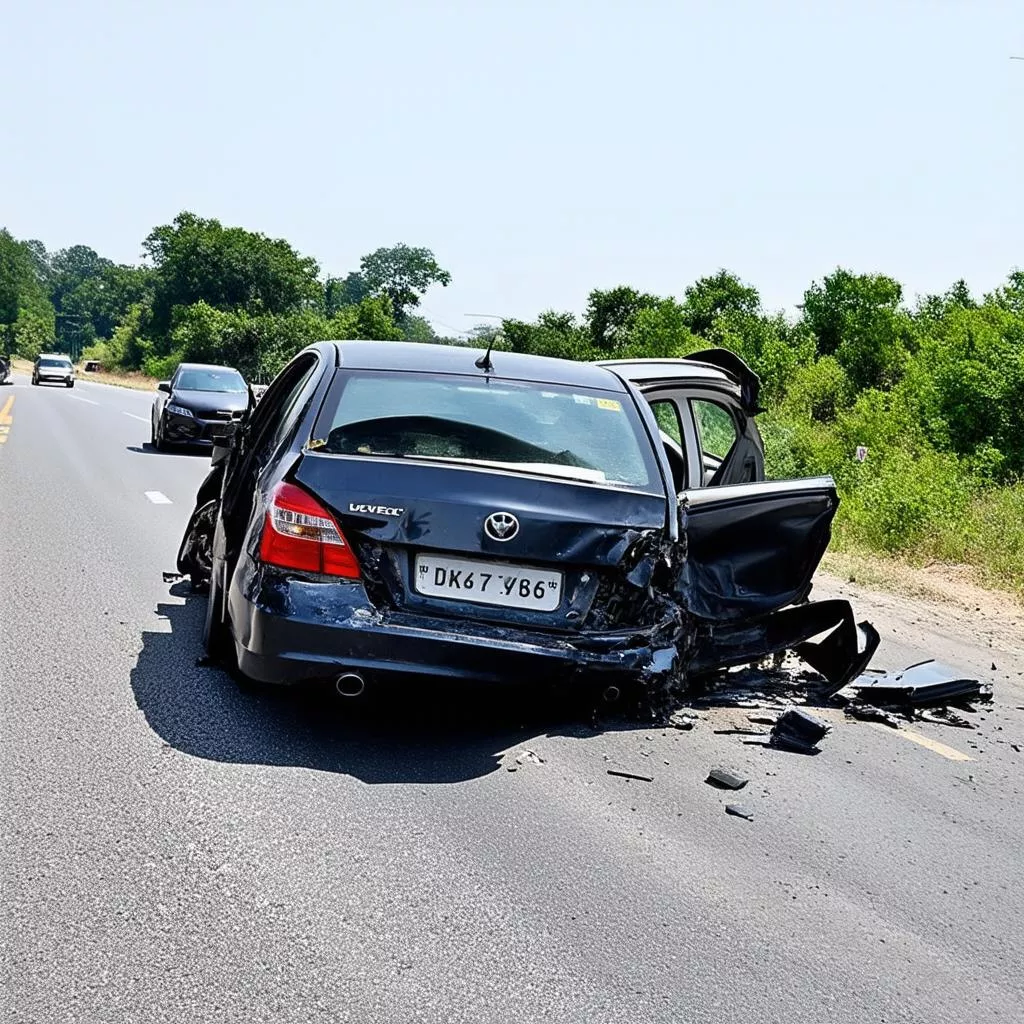 Traffic accident
Important Considerations When Signing a Private Car Rental Agreement
- Thoroughly inspect the vehicle and its documentation before signing the agreement.
- Take a test drive to assess the vehicle’s operating condition.
- Clearly outline agreements regarding vehicle repair and maintenance during the rental period.
- Choose a reputable car rental service provider. Consider XE TẢI HÀ NỘI, with years of experience in the transportation industry, we offer high-quality truck rental services at reasonable prices.
Frequently Asked Questions about Private Car Rental Agreements
1. Does a private car rental agreement need to be notarized?
Currently, notarization is not mandatory for private car rental agreements. However, to ensure legal validity and avoid future disputes, it is recommended to have the agreement notarized by a competent authority.
2. In case of a traffic accident, who is responsible?
The driver responsible for causing the accident is liable. However, liability for damages will be determined based on the terms agreed upon in the rental contract.
Conclusion
Signing a private car rental agreement is crucial to protect the rights of both the lessor and lessee. We hope this article has provided you with valuable information on this topic. If you have any questions, please leave a comment below or contact XE TẢI HÀ NỘI directly for detailed advice.









