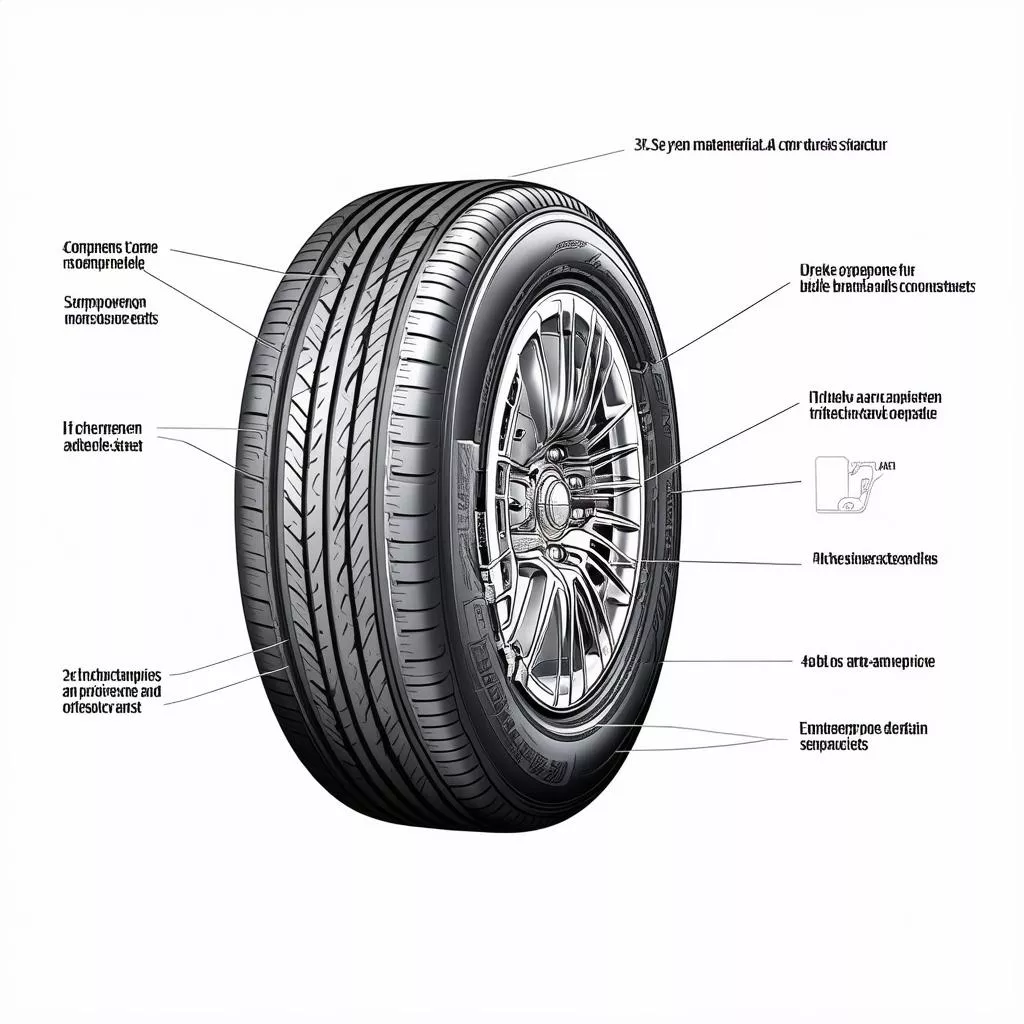
“The wheels on the bus go round and round…” This familiar tune highlights the importance of wheels, and tires are the crucial component that makes direct contact with the road, ensuring a smooth journey. But do you truly understand the structure of a car tire? Today, let’s dissect each part with Hanoi Truck, explore their roles, and uncover the secrets of this “silent hero.”
What’s Inside a Car Tire?
Car Tire Construction
If you imagine a tire as a sandwich, the internal layers are the filling that creates its unique flavor. Each layer is made from specialized materials, each with a distinct function:
1. Tire Tread – The Anti-Slip “Armor”
As the outermost layer in direct contact with the road, the tire tread plays a vital role in:
- Enhancing road grip: The tread pattern is specifically designed to create friction, helping the vehicle grip the road better, especially in slippery conditions caused by rain, snow, or gravel.
- Dispersing water and mud: The grooves in the tread act as small channels, facilitating quick water drainage and preventing hydroplaning, ensuring stable vehicle movement.
Did you know that the shape and size of the tread also affect the vehicle’s performance? For instance, heavy truck tires usually have larger and deeper treads for enhanced grip on rough terrain, while racing car tires have smaller and shallower treads to reduce friction and increase speed.
2. Carcass – The Protective “Shield”
Located beneath the tread, the carcass acts as the tire’s “skeleton,” supporting its entire structure. Made from interwoven steel or textile cords, the carcass is responsible for:
- Load bearing: Ensuring the tire can withstand the weight of the vehicle and cargo, even at high speeds.
- Maintaining air pressure: Preventing air leakage and maintaining stable tire pressure for a smooth ride.
- Impact resistance: Protecting the inner layers from road hazards like stones and potholes.
The thicker the carcass, the higher the tire’s load capacity. This is why truck and construction vehicle tires typically have much thicker carcasses than passenger car tires.
3. Steel Belts – The Tire’s “Backbone”
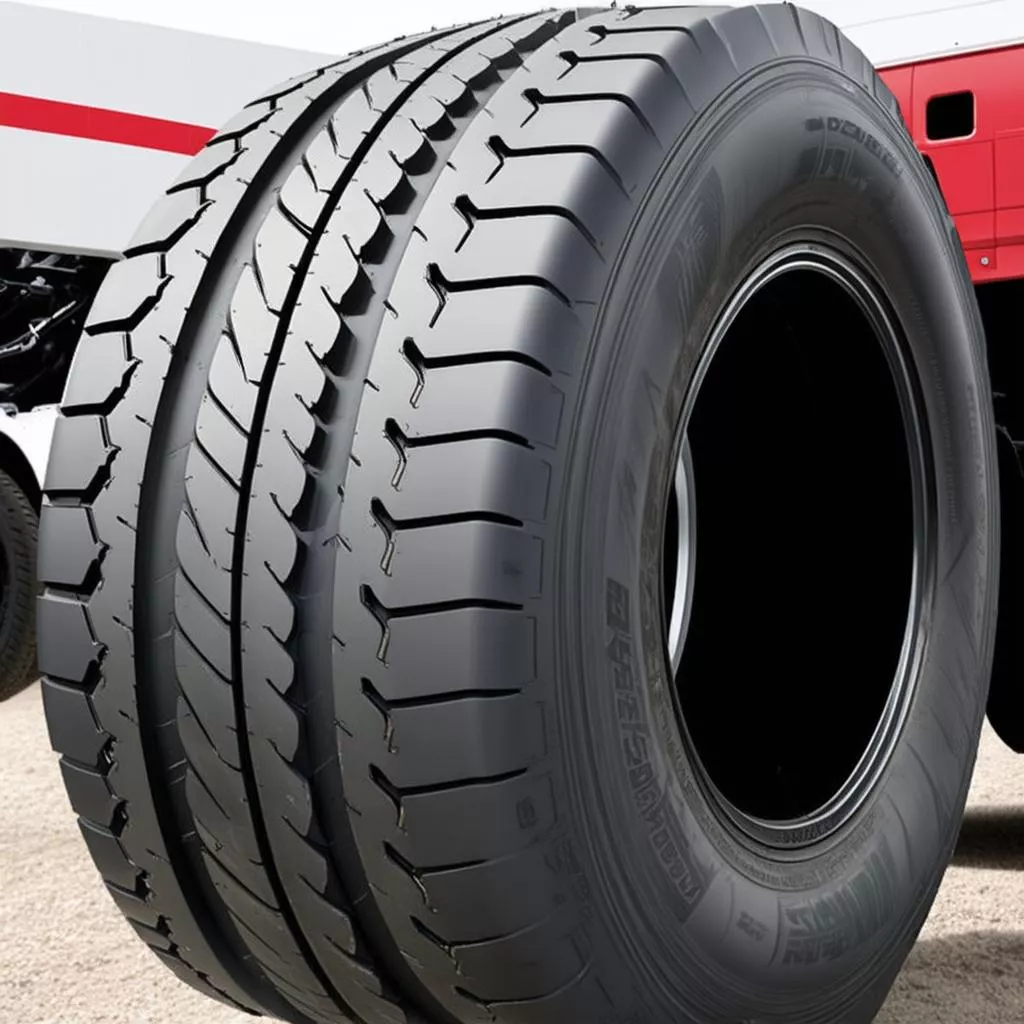 Heavy Truck Tire
Hidden within the tire are steel belts made of thin, strong steel wires, which function to:
- Reinforce rigidity: Helping the tire maintain its shape under the immense pressure from the vehicle’s weight and centrifugal force during movement.
- Reduce friction: Limiting direct contact between the tire and the road surface, reducing friction and improving fuel efficiency.
- Dissipate heat: Friction with the road generates heat in the tire. Steel belts help distribute this heat evenly, preventing overheating and potential hazards.
4. Sidewall – The Tire’s “Identity Card”
The sidewall is the area connecting the tread to the wheel rim, containing essential information about the tire, such as size, type, load capacity, and pressure. This is the section to examine for detailed tire specifications.
Important Considerations for Choosing and Using Car Tires
To ensure your safety and the safety of others, keep these points in mind when selecting and using tires:
- Choose tires that suit your vehicle type and driving needs.
- Regularly check tire pressure, especially before long trips.
- Replace tires when the tread is worn or the tire has exceeded its lifespan.
- Avoid exceeding the tire’s maximum load capacity.
Frequently Asked Questions About Car Tire Construction
1. How many kilometers can I drive before needing to replace my car tires?
There’s no specific number; tire replacement depends on various factors like road conditions, driving habits, and tire type. However, you should replace tires when the tread depth reaches the legal limit (1.6mm) or the tire is older than five years.
2. How many types of car tires are there?
Car tires are categorized in various ways, most commonly by construction: bias ply and radial ply. Each type has its own advantages and disadvantages, suitable for different vehicles and usage needs.
3. How should I store car tires?
To extend tire lifespan:
- Store tires in a cool, dry place away from direct sunlight.
- Avoid contact with oil, grease, and chemicals.
- Rotate tires periodically as recommended by the manufacturer.
Hanoi Truck – Your Trusted Source for Quality Tires
Looking for a reliable supplier of quality car tires in Hanoi? Look no further than Hanoi Truck – we proudly distribute genuine tires from leading global brands.
With our experienced and knowledgeable team, Hanoi Truck is committed to providing you with the best products and services.
- Address: [Specific address of the store in Hanoi]
- Hotline: [Phone number]
- Website: https://xetaihanoi.edu.vn/
Related Products
Besides car tires, Hanoi Truck also offers a wide range of other products and services, such as:
- Auto parts
- Lubricants
- Vehicle maintenance and repair
- [Other products and services offered by Hanoi Truck]
We hope this article has provided valuable insights into the structure of car tires. Please like, share this article, and follow Hanoi Truck for more informative content about vehicles!









