
The foreign policy of the Soviet Union was a complex and evolving subject, undergoing numerous transformations from its inception in 1922 to its dissolution in 1991. It was heavily influenced by communist ideology, the global geopolitical landscape, and the USSR’s national interests.
đâu không phải chính sách ngoại giao của liên xô
Early Years: Building and Defending the Soviet State
In the years following the October Revolution, Soviet foreign policy focused on consolidating the power of the nascent Soviet state and countering hostility from Western powers. The USSR advocated for world revolution and supported international communist movements.
The Cold War Era: Confrontation and Competition
After World War II, Soviet foreign policy entered the Cold War era, marked by intense confrontation with the Western Bloc led by the United States. What characterized Soviet foreign policy during this period? It was a combination of military, economic, and ideological competition, creating a bipolar world. The USSR established the Warsaw Pact, extending its influence in Eastern Europe and other regions.
Soviet foreign policy during the Cold War
The Post-Stalin Era: Reform and Adjustment
Following Stalin’s death, Soviet foreign policy underwent certain adjustments. Under Khrushchev and Brezhnev, the USSR pursued a policy of “peaceful coexistence” with the West, while maintaining competition and intervening in regional conflicts.
nhận xét chính sách đối ngoại của nhà nguyễn
The Final Chapter: Dissolution and Collapse
In the late 1980s, under Gorbachev, Soviet foreign policy shifted significantly with the policies of Perestroika (restructuring) and Glasnost (openness). What defined Soviet foreign policy in this final phase? It was a move towards international cooperation, reducing tensions with the West, and withdrawing troops from Afghanistan. These changes contributed to the fall of the Berlin Wall and ultimately the dissolution of the USSR in 1991.
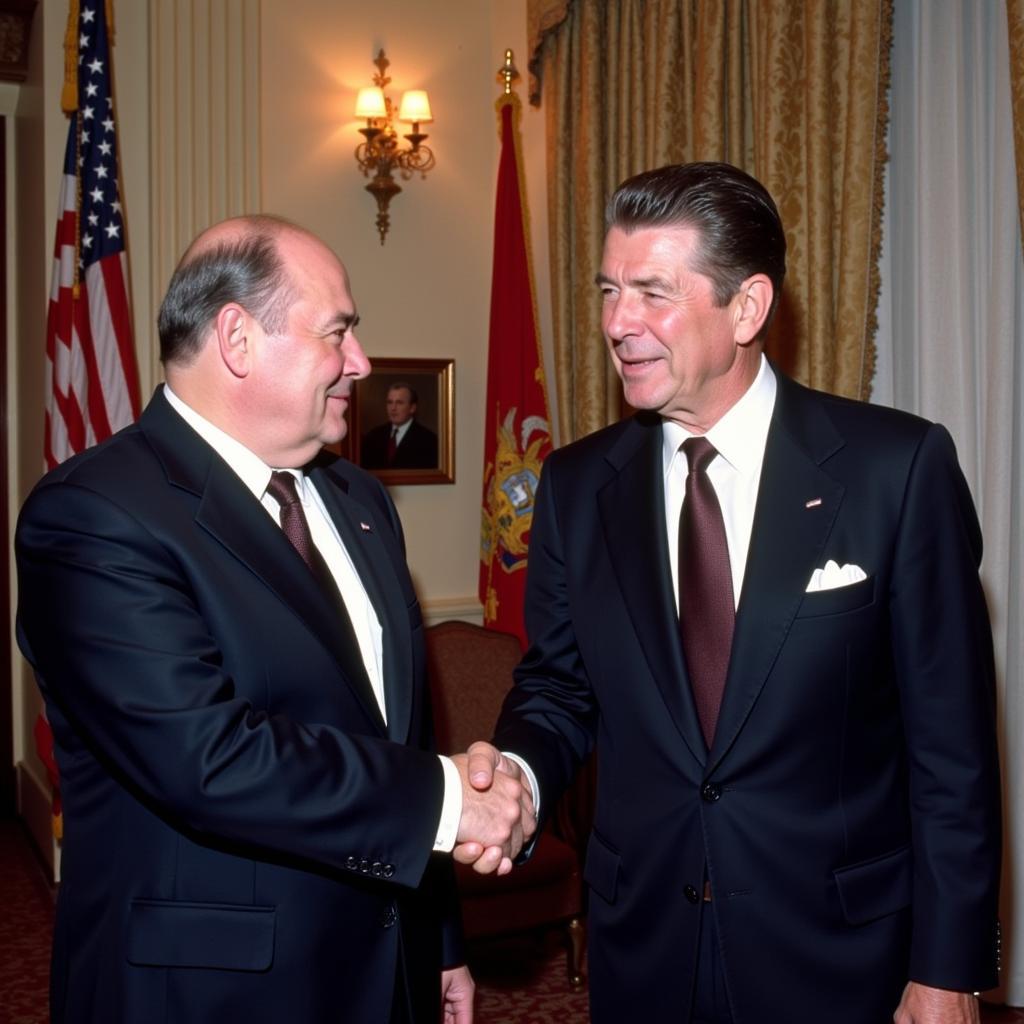 Soviet foreign policy under Gorbachev
Factors Influencing Soviet Foreign Policy
- Communist Ideology: The initial aim was to spread communist revolution worldwide.
- National Security: Protecting borders and national interests from external threats.
- Power Competition: Vying with the United States and other Western powers for global influence.
đánh giá chính sách dân tộc thiểu số
Expert Quote: Nguyen Van A, a specialist in Soviet history, states: “The foreign policy of the Soviet Union was always a complex reflection of the international context and the internal factors of the country.”
Conclusion
The foreign policy of the Soviet Union was a complex and turbulent journey, reflecting the global historical and geopolitical landscape. From defending a fledgling state to Cold War confrontation and eventual collapse, Soviet foreign policy left a profound mark on world history.
chính sách ngoại giao từ 1945 đến 1990
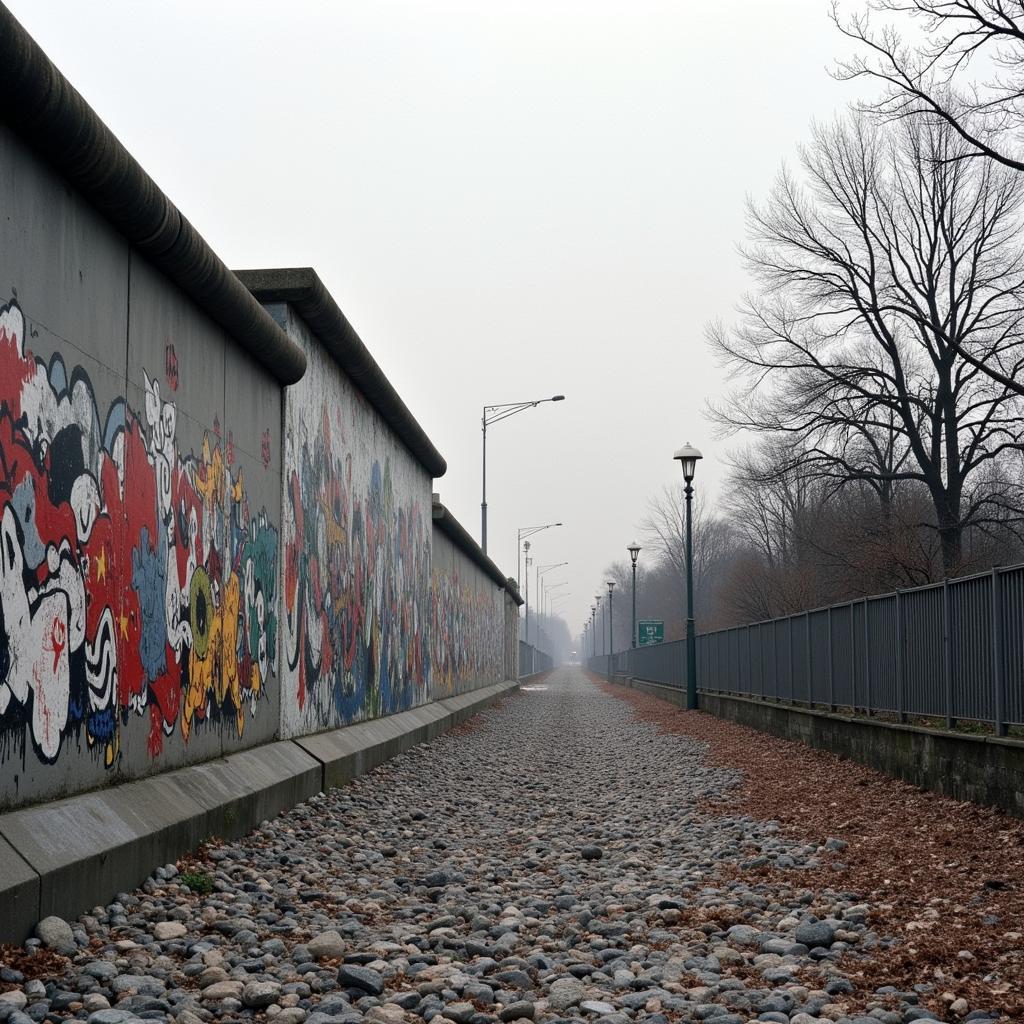 The collapse of the Soviet Union
FAQ
- What was the Soviet Union’s foreign policy under Stalin?
- What led to the changes in Soviet foreign policy under Gorbachev?
- How did the Cold War influence Soviet foreign policy?
- How did the relationship between the Soviet Union and China evolve throughout history?
- What was the Soviet Union’s role in regional conflicts?
- What role did the Warsaw Pact play in Soviet foreign policy?
- What lessons can be learned from the Soviet Union’s foreign policy?
For assistance, please contact us by phone: 0968239999, Email: [email protected] Or visit us at: TT36 – CN9 Road, Tu Liem Industrial Zone, Phuong Canh Ward, Nam Tu Liem District, Hanoi. We have a 24/7 customer support team.









