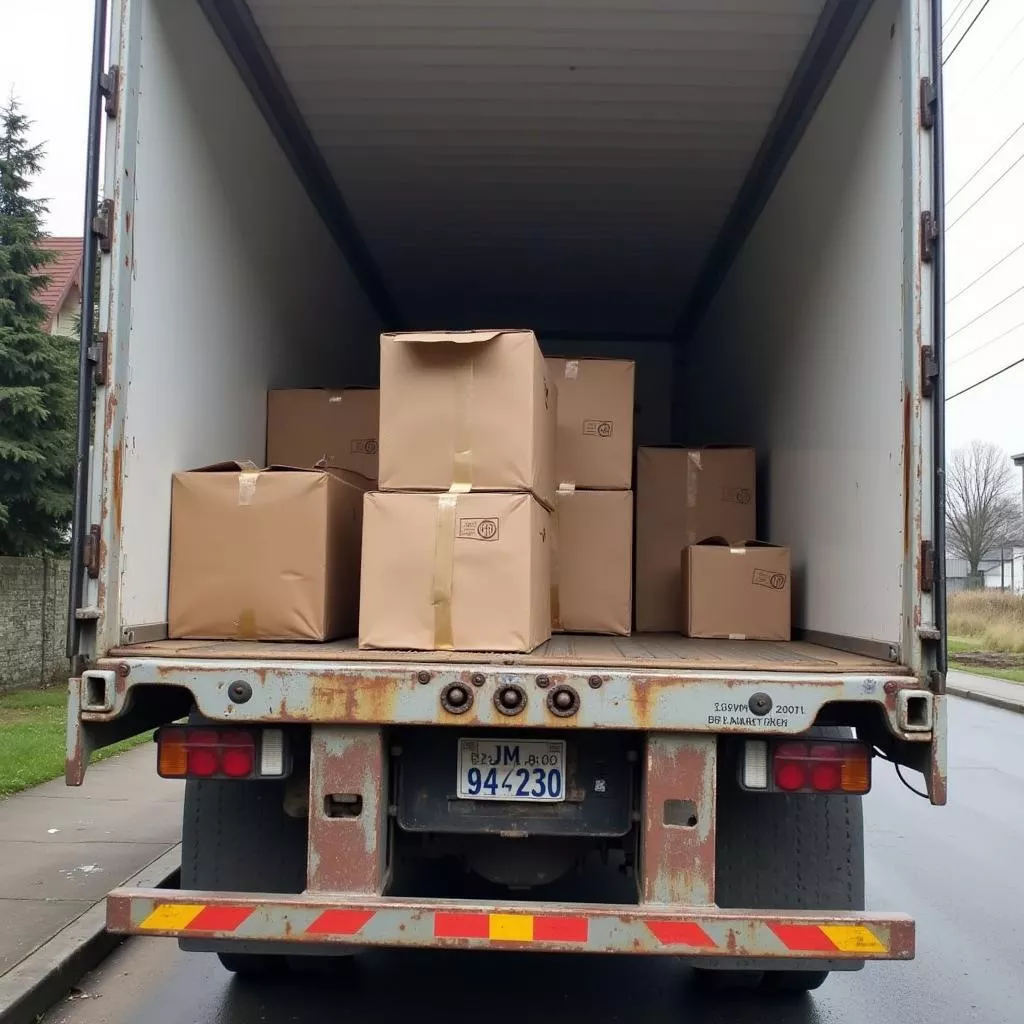
The old saying “Eating at home, carrying the village’s drum” speaks to the historical hardships of transporting goods. Today, thanks to advancements in logistics, shipping has become significantly easier. However, ensuring smooth customs clearance requires a thorough understanding of Vietnam’s customs regulations. What are these regulations, and what key points should you be aware of? Let XE TẢI HÀ NỘI guide you through the details in this article!
Understanding Vietnam Customs Regulations: Concepts and Roles
What are Vietnam Customs Regulations?
Simply put, Vietnam customs regulations are a set of government rules regarding procedures, documentation, taxes, and more, applied to specific goods during import or export.
For instance, a friend of mine in Cau Giay plans to import a 2-ton truck from China for his business. He must thoroughly research the specific customs regulations for this type of vehicle, including import taxes, required documents, and quality inspection procedures.
Importing a 2-ton truck
The Role of Customs Regulations
Customs regulations play a crucial role in import and export activities, specifically:
- Protecting the Economy: Strict control over incoming and outgoing goods prevents prohibited and substandard items, protecting consumers and domestic businesses.
- Promoting Trade: Simplifying customs procedures facilitates import and export activities, contributing to economic growth.
- Ensuring National Security: Tight control over sensitive items and weaponry contributes to maintaining national security.
Classification of Customs Goods
By Level of Control
- Prohibited Goods: Absolutely forbidden from any import or export activities (e.g., narcotics, military weapons).
- Restricted Goods: Allowed for import and export but subject to strict regulations (e.g., tobacco, alcohol).
- General Goods: Permitted for normal import and export, subject to general regulations.
By Nature and Intended Use
- Commercial Goods: Imported or exported for commercial purposes, trading, and sales.
- Non-Commercial Goods: Imported or exported for personal use, not for business purposes.
Important Considerations Regarding Vietnam Customs Regulations
To avoid unnecessary complications during the import and export process, consider the following:
- Accurate Goods Classification: Each type of goods has specific regulations. Misclassification can lead to fines or even confiscation of goods.
- Complete Documentation: All documents must be complete, valid, and officially translated as required.
- Accurate Customs Declaration: All declared information must be truthful and accurate.
- Stay Updated on New Regulations: Customs regulations can change over time.
Frequently Asked Questions
How can I look up Vietnam customs regulations?
You can search directly on the General Department of Vietnam Customs website or contact logistics service providers for advice.
What are the penalties for violating customs regulations?
Depending on the severity of the violation, penalties can range from a few million to hundreds of millions of Vietnamese Dong, or even criminal prosecution.
Contact XE TẢI HÀ NỘI
Need more advice on Vietnam customs regulations or other transportation services? Contact XE TẢI HÀ NỘI at 0968239999 or email [email protected].
Address: No. TT36 – CN9 Road, Tu Liem Industrial Park, Phuong Canh Ward, Nam Tu Liem District, Hanoi.
Our team of professionals is ready to assist you 24/7!
You can also refer to related articles on our website:
- White Australia Policy – Chính Sách Người Da Trắng Của Úc
- Vốn pháp định của Ngân hàng Chính sách xã hội
We hope this article has provided you with useful information!









