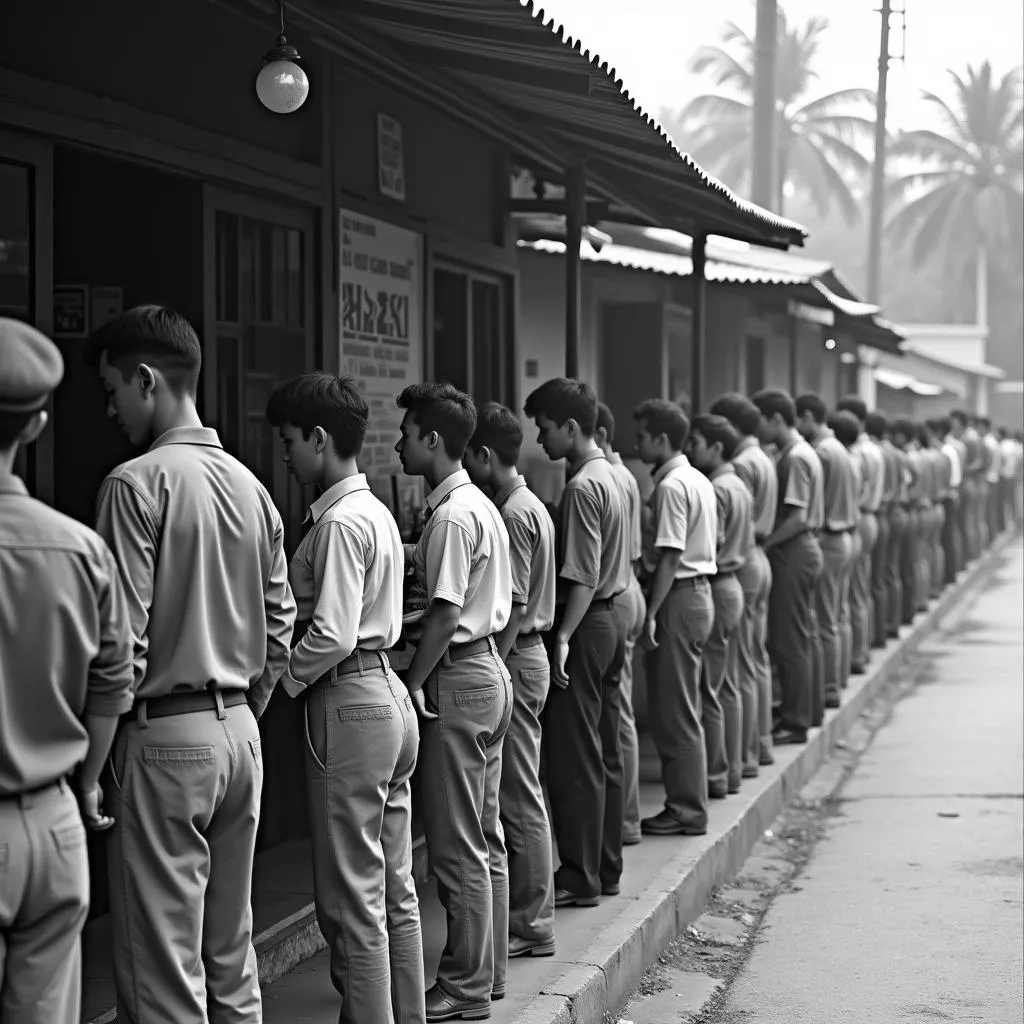
“Collective meals, shared beds” – this familiar phrase evokes the subsidy period, a time when Vietnam’s pre-Doi Moi policies permeated every aspect of life.
People queuing for food rations during the subsidy period
The Economic Landscape: The Burden of Subsidies and Their Consequences
The economic policies of this period focused on heavy industry development, agricultural cooperatives, and a centrally planned, subsidized economy. According to Nguyen Van A, an economist who lived through this era, while the subsidy policy had humanitarian intentions, ensuring basic necessities for the people, it created stagnation and a lack of motivation for development. The economy lacked vitality, production stagnated, goods were scarce, and people had to queue for hours to buy essential commodities.
The Story of a Rickety Truck and the Dream of a Better Life
Bui Van B, a rice truck driver in Hanoi in the 1980s, recalls: “Back then, I drove a rickety truck, transporting rice from Nam Dinh to Hanoi. The roads were rough, the truck often broke down, and each trip was a challenge. The driver’s salary was meager, barely enough to eat, let alone dream of a better life.” Mr. B’s story offers a glimpse into the hardships faced by ordinary people during that time.
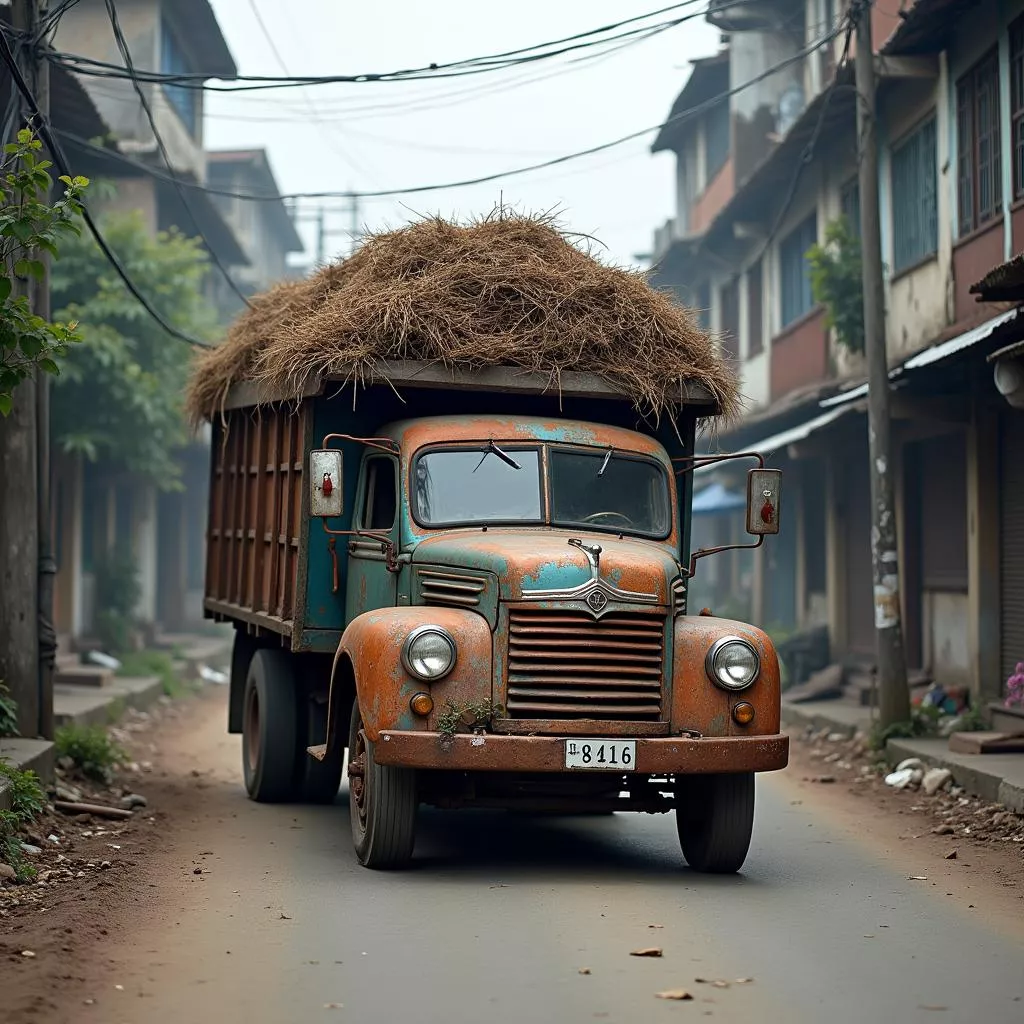 An old truck carrying goods on the streets of Hanoi during the subsidy period
Social Life: Amidst the Somber Hues, Glimmers of Laughter
Despite facing countless difficulties, the Vietnamese people maintained their optimism, solidarity, and spirit of sharing. In the evenings, under the dim light of oil lamps, laughter echoed from cramped collective housing units.
Spiritual Beliefs: A Source of Faith and Hope
In the context of economic hardship, spiritual life became even more important for the people. They sought solace in temples and pagodas, praying for health, peace, and good fortune.
Towards a New Chapter: The Desire for Change and Transformation
Vietnam’s pre-Doi Moi policies left behind valuable lessons. Recognizing the limitations of the old system, the Sixth Party Congress in 1986 introduced the Doi Moi policy, opening a new chapter for the country.
From “Xe Tho” to “Xe Tai”: A Remarkable Journey of Transformation
After Doi Moi, the Vietnamese economy experienced remarkable growth. Trade flourished, transportation demand increased, leading to the emergence of many trucking companies like XE TẢI HÀ NỘI. Modern trucks replaced rudimentary “xe tho” (handcarts) and “xe bo” (ox carts), contributing to socio-economic development.
Looking for a quality truck at a reasonable price? Contact XE TẢI HÀ NỘI now – Phone: 0968239999, Email: [email protected] Or visit us at: TT36 – CN9 Road, Tu Liem Industrial Zone, Phuong Canh Ward, Nam Tu Liem District, Hanoi. We have a 24/7 customer service team.
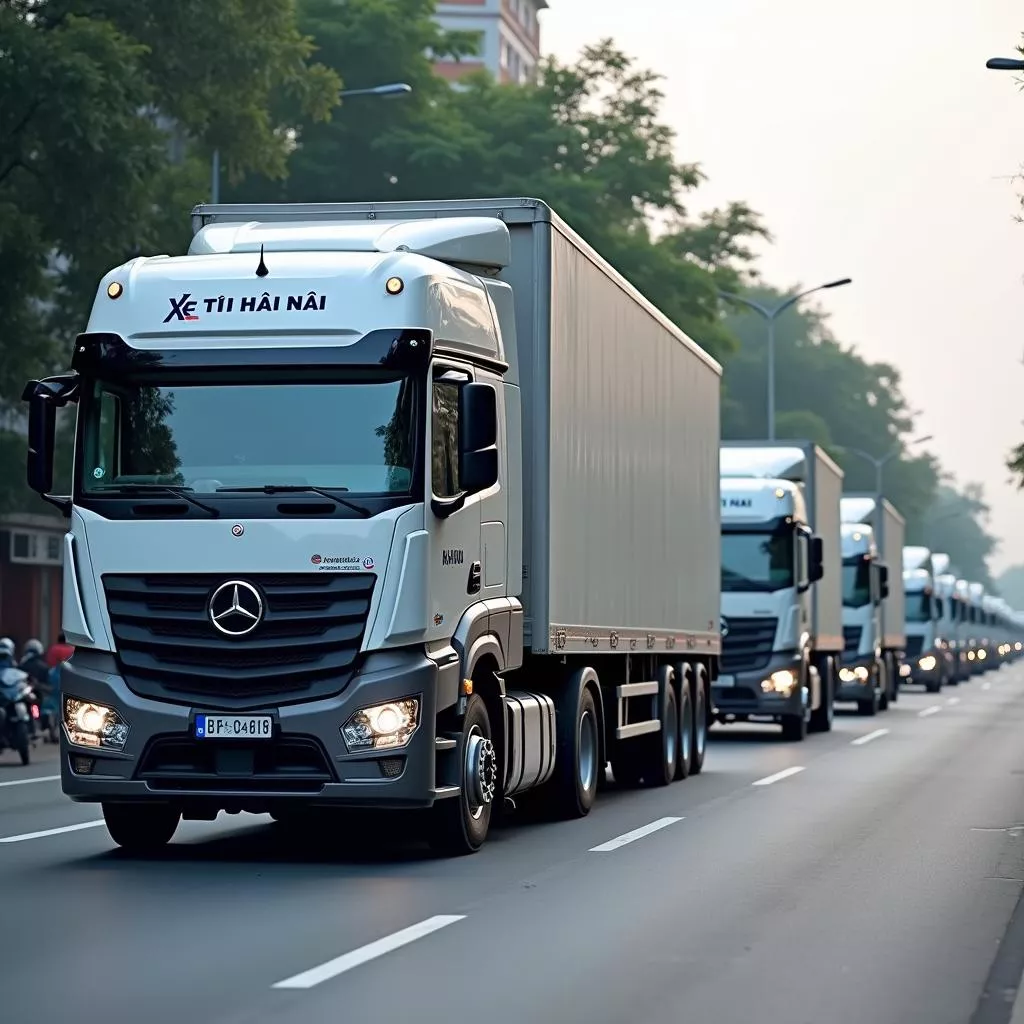 Modern trucks of XE TẢI HÀ NỘI on the streets of Hanoi
Vietnam’s pre-Doi Moi policies are an unforgettable part of history. Lessons from the past serve as motivation to continue building a prosperous and civilized Vietnam.









