Vietnam’s tire import policy is a topic of interest for many businesses and consumers. This article provides a detailed analysis of this policy, including regulations, tariffs, procedures, and its impact on the domestic tire market.
Overview of Tire Import Policy
Vietnam’s tire import policy is governed by WTO rules and regulations, as well as the government’s trade policies. The main objectives are to protect the domestic tire manufacturing industry while ensuring a diverse supply of tires at reasonable prices for consumers. Vietnam is a large tire market, making tire import management crucial. This directly affects transportation businesses, from box trucks and pickup trucks to vans and trucks ranging from 1 ton, 2 tons, 3.5 tons, and 8 tons.
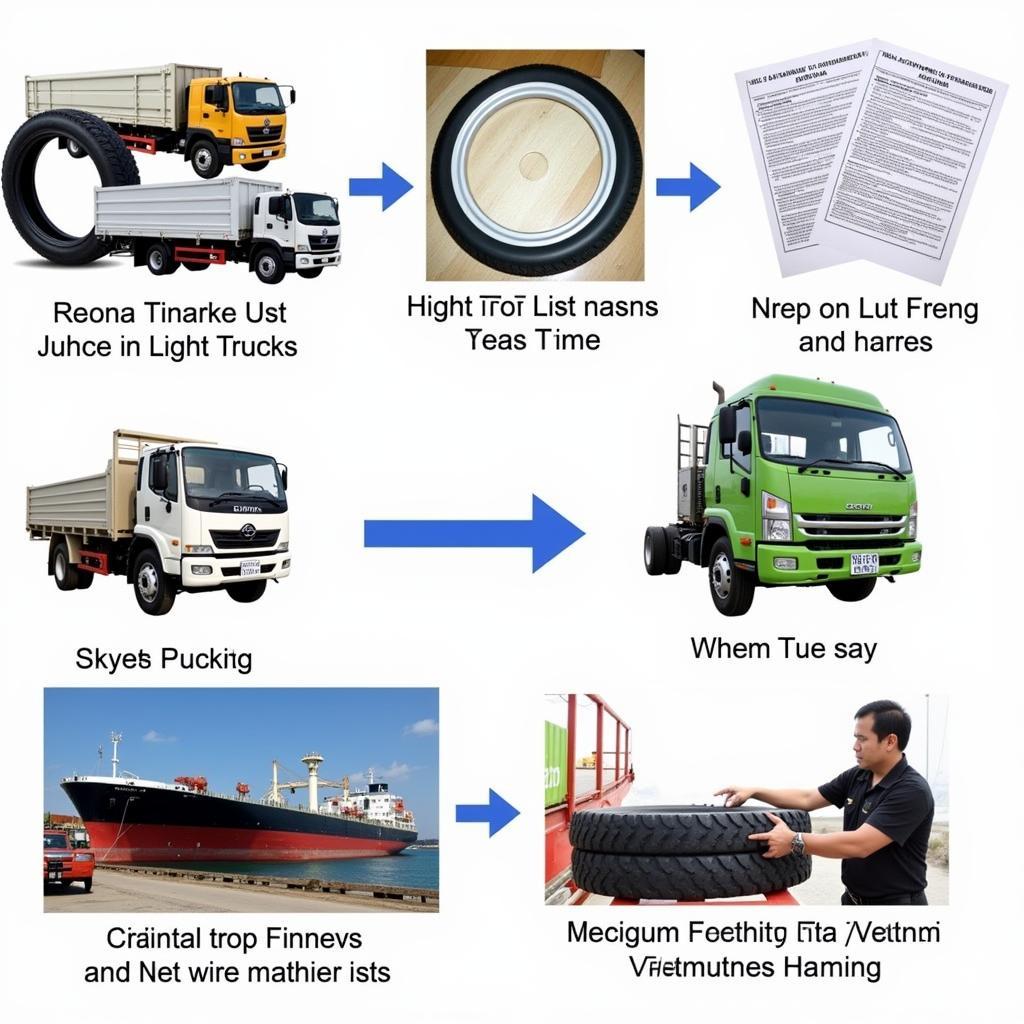
Truck tire import policy in Vietnam
Tariffs and Regulations on Tire Imports
Tire import tariffs depend on the origin and type of tire. For tires from ASEAN countries, tariffs are generally lower than those from other countries. In addition, regulations on quality, technical standards, and labeling are strictly enforced to ensure user safety. Understanding these regulations is crucial to avoid problems and costs during the import process. This affects shipping costs, a significant factor when choosing a truck, especially for box trucks, pickup trucks, vans, and trucks of 1 ton, 2 tons, 3.5 tons, and 8 tons.
Types of Tire Import Taxes
- Preferential import tariffs: Applied to tires imported from countries with free trade agreements with Vietnam.
- Ordinary import tariffs: Applied to tires imported from other countries.
- Value Added Tax (VAT): Applied to all imported tires.
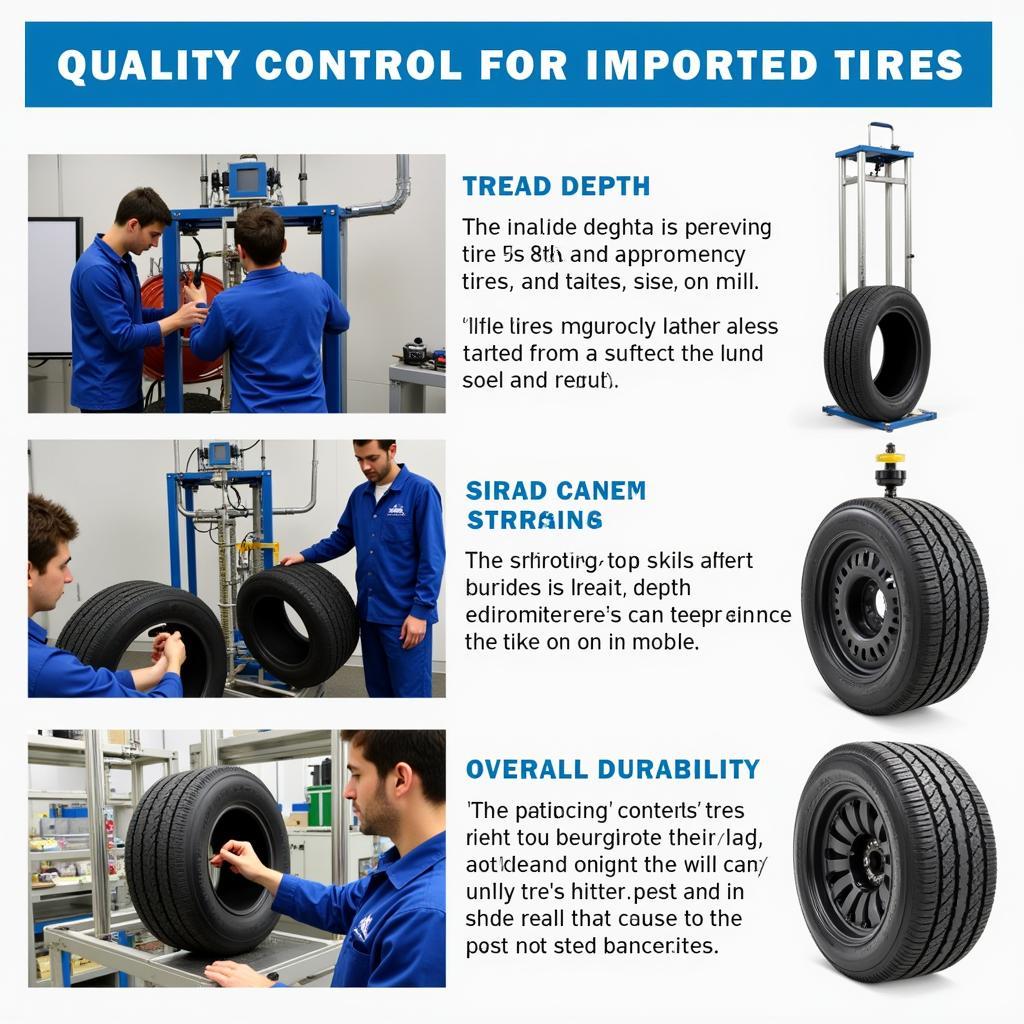 Quality inspection process for imported tires
Impact of Tire Import Policy on the Domestic Market
The tire import policy significantly impacts the domestic tire market. It creates competition between imported and domestically produced tires, providing consumers with more choices and competitive prices. However, this policy also challenges domestic tire manufacturers to improve quality and compete on price. Similar to [the concept of cultural policy], the tire import policy needs to be adjusted to suit the actual situation.
Conclusion
Vietnam’s tire import policy plays a vital role in regulating the tire market. Understanding the regulations, tariffs, and impact of this policy will help businesses and consumers make informed decisions. Staying updated on changes in tire import policy is also essential. To learn more about [the role of policy planning], you can refer to the related article.
FAQs about Vietnam Tire Import Policy
- What is the tire import procedure?
- Which types of tires are allowed to be imported into Vietnam?
- What are the current tire import tariffs?
- How to check the quality of imported tires?
- How does the tire import policy affect domestic tire prices?
- Where can I find information on tire import policy?
- Are there any incentives for tire importing businesses?
For support, please contact Phone Number: 0968239999, Email: [email protected] Or visit us at: TT36 – CN9 Road, Tu Liem Industrial Park, Phuong Canh Ward, Nam Tu Liem District, Hanoi. We have a 24/7 customer support team.









