
Do you own a car in Vietnam and need to understand car inspection regulations? Want to ensure your vehicle meets safety standards and complies with the law? This comprehensive guide will explain everything you need to know about car inspection regulations in Vietnam.
The Importance of Car Inspections
Car inspections are crucial for the safety of drivers, passengers, and everyone on the road. Vietnamese law mandates periodic inspections to assess a vehicle’s technical condition, identify and fix potential problems, and minimize accident risks.
Understanding the Regulations
Current regulations require periodic car inspections based on the vehicle type and specific timelines.
Vehicle Types Requiring Periodic Inspections
- Passenger vehicles: Annual inspection required.
- Cargo trucks: Annual inspection required, or as specified for particular truck types.
- Specialized vehicles: Annual inspection required, or as specified for particular vehicle types.
Car Inspection Checklist
Car inspections typically cover the following areas:
- Engine inspection: Examination of the engine, fuel system, lubrication system, cooling system, and exhaust system.
- Brake inspection: Evaluation of brake effectiveness, brake condition, and brake assist system.
- Steering inspection: Assessment of the steering wheel, steering column, steering linkage, and steering mechanism.
- Lighting inspection: Verification of headlights, signal lights, and brake lights.
- Electrical system inspection: Examination of the vehicle’s electrical system, including the battery, alternator, and wiring.
- Chassis and suspension inspection: Assessment of the chassis condition, suspension system, tires, and shock absorbers.
- Vehicle body inspection: (Applicable to trucks) Examination of the truck body and its components.
Where to Get Your Car Inspected
Car inspections can be conducted at certified vehicle inspection centers authorized by the Ministry of Transport.
Validity and Accuracy of Information
- The Vietnam Road Traffic Law clearly outlines regulations for periodic car inspections.
- Vehicle inspection centers are licensed and operate under the Ministry of Transport’s regulations.
- Car inspection standards are based on scientific principles and international best practices.
Common Scenarios and Questions
- Vehicles with mechanical issues require repairs before passing inspection.
- Vehicles with expired inspection certificates must undergo inspection for roadworthiness.
- Minor issues not affecting road safety may still result in inspection failure.
Addressing Common Issues and Providing Guidance
- Regular car inspections are recommended to ensure road safety.
- Choose reputable vehicle inspection centers for accurate assessments.
- Inspect your vehicle before the official inspection to identify and fix potential issues.
Related Questions on Car Inspections
- Latest car inspection regulations
- Are there fees for periodic car inspections?
- Where can I find a reliable car inspection center?
- Regulations regarding car license plates
- What vehicle defects lead to inspection failure?
- How to register a newly purchased car
Related Products and Services
- Vehicle inspection services
- Car repair services
- Auto parts
- Car insurance
- Different types of cars
More Resources on XE TẢI HÀ NỘI
Call to Action
Have questions about car inspection regulations? Contact us for a free consultation! XE TẢI HÀ NỘI is available 24/7 to assist you. Call our hotline at 0968 239 999 for immediate support!
Conclusion
Regular car inspections are essential for road safety. Vietnamese law provides clear regulations for car inspections. Let’s contribute to road safety by adhering to these regulations!
Periodic car inspection
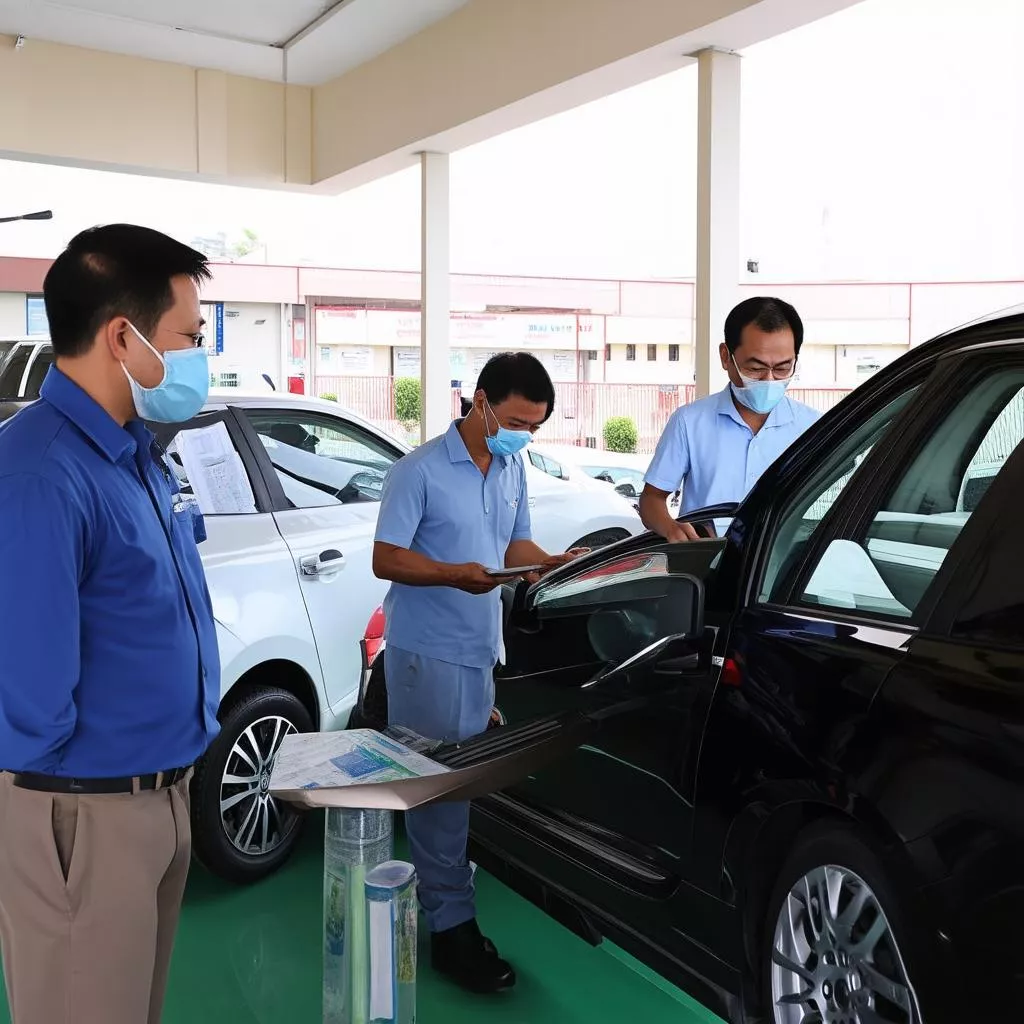 Vehicle inspection center









