The current exchange rate policy plays a crucial role in stabilizing the macro-economy and supporting import-export activities. This article will delve into this policy and its impact on transportation businesses, particularly those utilizing box trucks, light trucks, vans, and trucks with capacities of 1 ton, 2 tons, 3.5 tons, and 8 tons.
Exchange Rates and Their Impact on the Transportation Industry
Fluctuations in exchange rates directly affect the import costs of raw materials and truck parts, as well as the selling prices of exported goods. This volatility creates both opportunities and challenges for transportation businesses. When exchange rates rise, the cost of importing trucks and parts such as tires and engines for box trucks, light trucks, vans, and trucks with capacities of 1 ton, 2 tons, 3.5 tons, and 8 tons will increase. This can reduce business profits. Conversely, a decrease in exchange rates can facilitate truck imports and business expansion. Similar to budgetary financial resource conditions, exchange rates are a crucial factor to consider in a company’s financial planning.
The State Bank of Vietnam’s Exchange Rate Management Policy
The State Bank of Vietnam implements a flexible exchange rate management policy aimed at macroeconomic stability and inflation control. This policy is based on various factors, including domestic and international economic conditions, trade balance, and foreign exchange reserves. Understanding what foreign exchange policy is will help transportation businesses proactively plan their business strategies.
Challenges and Opportunities for Transportation Businesses
Exchange rate fluctuations pose numerous challenges but also present opportunities for transportation businesses. Companies need to adapt their business strategies, seek flexible supply sources, and negotiate prices with partners. Opportunities arise from expanding export markets and leveraging exchange rate advantages for competitive gains. The current exchange rate policy facilitates businesses exporting goods, including transportation services.
Detailed Analysis of the Current Exchange Rate Management Policy
The current exchange rate policy focuses on market stabilization and supporting economic growth. The State Bank utilizes various tools to regulate exchange rates, including buying and selling foreign currencies, adjusting interest rates, and implementing other administrative measures. This policy has a ripple effect across many industries, including transportation. For instance, when the USD/VND exchange rate increases, the cost of importing trucks rises, impacting freight rates. Understanding what the one-vote-one-share policy is also helps businesses grasp changes in the business environment.
Coping with Exchange Rate Fluctuations
To cope with exchange rate fluctuations, transportation businesses should:
- Closely monitor exchange rate movements.
- Diversify supply sources.
- Utilize exchange rate risk mitigation tools.
- Optimize operating costs.
- Enhance competitiveness.
How Can Transportation Businesses Predict Exchange Rate Fluctuations?
Accurately predicting exchange rate fluctuations is challenging. However, businesses can refer to analytical reports from economic experts, monitor macroeconomic indicators, and utilize technical analysis tools.
How Do Exchange Rates Affect Truck Prices?
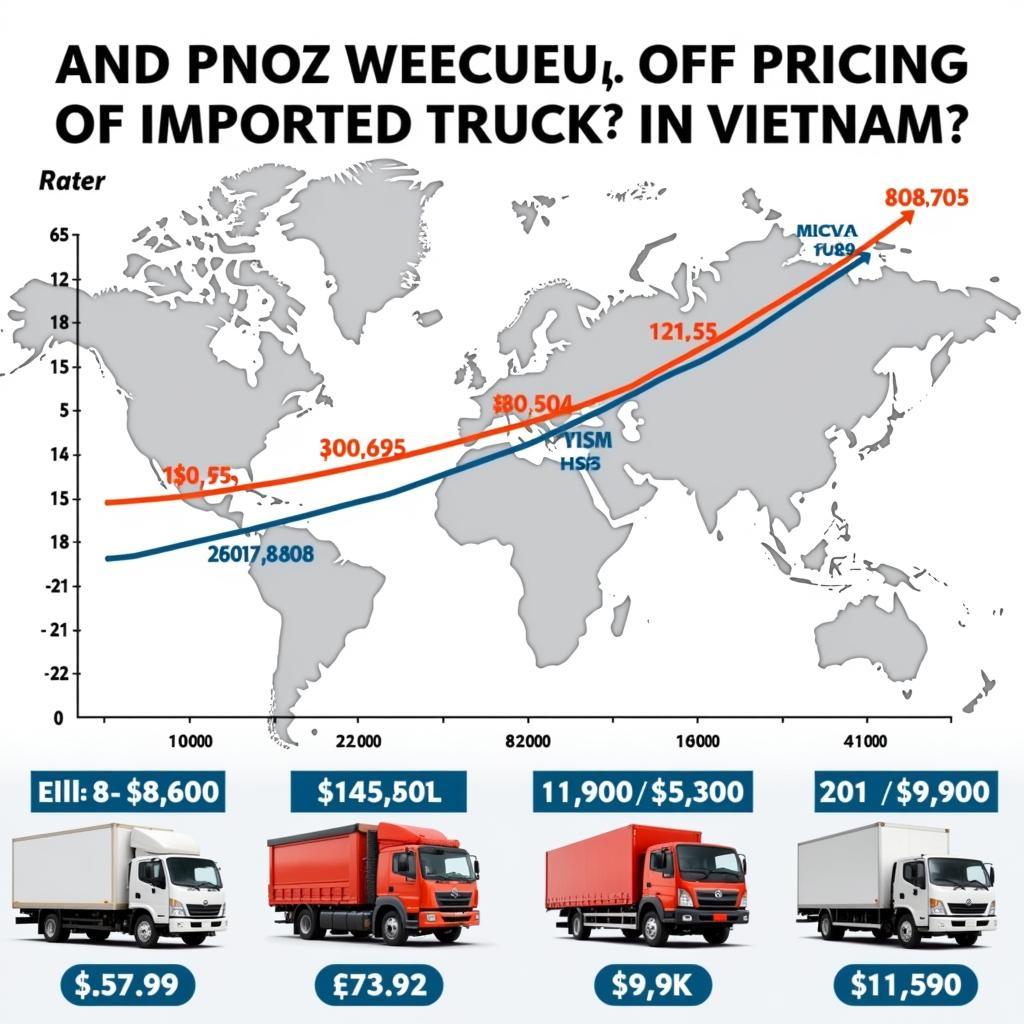
Exchange rates directly impact the price of imported trucks. When exchange rates rise, imported truck prices also increase. This affects the investment costs of transportation businesses.
Exchange Rate Fluctuations and Truck Prices
Conclusion
The current exchange rate policy significantly impacts the transportation industry. Businesses need to understand this policy, analyze its effects, and develop appropriate business strategies to capitalize on opportunities and overcome challenges. Understanding information about loan policies for the Vincity project in District 9 can also be beneficial for managing business finances.
FAQs
- What is the current exchange rate policy?
- How do exchange rates affect the transportation industry?
- What should transportation businesses do to cope with exchange rate fluctuations?
- What tools does the State Bank use to regulate exchange rates?
- Do exchange rates affect freight rates?
- How can exchange rate fluctuations be predicted?
- How do exchange rates affect truck prices?
For assistance, please contact us by phone: 0968239999, Email: [email protected] Or visit our address: No. TT36 – CN9 Road, Tu Liem Industrial Park, Phuong Canh Ward, Nam Tu Liem District, Hanoi. We have a 24/7 customer service team.