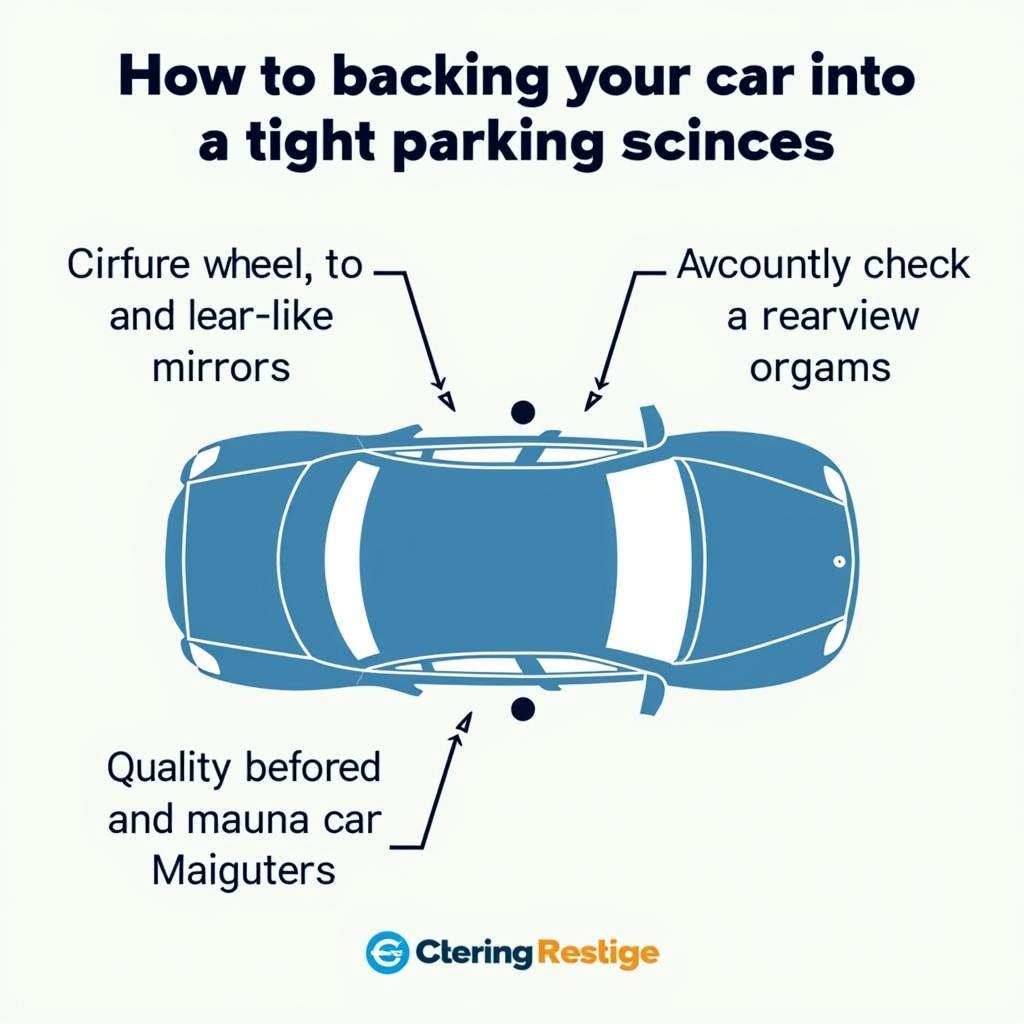
Reverse parking, while a fundamental skill, is crucial for every driver. Proficiency in this technique not only ensures safe and efficient parking but also prevents unnecessary collisions. This article provides a detailed guide to reverse parking, boosting your confidence behind the wheel.
Precise Steps for Reverse Parking
Reverse parking demands precision and attention to detail. Here’s a breakdown of the fundamental steps for a smooth maneuver:
- Observation and Assessment: Before initiating the reverse parking process, thoroughly scan your surroundings. This includes evaluating the parking space dimensions, identifying potential obstacles, and gauging the distance from other vehicles. This preliminary step is paramount for ensuring safety and preventing collisions.
- Vehicle Positioning: Position your vehicle parallel to the parking space, maintaining a distance of approximately 50-70cm (1.5-2 feet). This distance may vary based on the size of your vehicle and the parking space.
- Commence Reversing: Fully turn the steering wheel towards the desired parking space. Keep a close eye on your rearview mirrors and gradually release the clutch, allowing the vehicle to slowly reverse.
- Steering Wheel Adjustment: As your vehicle begins entering the parking space, monitor your mirrors and adjust the steering wheel accordingly to maintain the correct trajectory.
- Vehicle Alignment: Once your vehicle is mostly within the parking space, straighten the steering wheel and continue reversing until the vehicle is fully and neatly parked.
- Final Check: After completing the parking maneuver, double-check your vehicle’s position to ensure it’s properly aligned within the space and doesn’t obstruct other vehicles.
Reverse Parking in Tight Spaces: Tips for Drivers
Navigating tight parking spaces can be challenging for many drivers. However, these simple tips can make the process significantly easier.
- Patience and Focus: Reverse parking in confined spaces requires patience and unwavering concentration. Avoid rushing; instead, proceed cautiously and methodically.
- Utilize Mirrors Effectively: Your rearview and side mirrors are invaluable tools when reverse parking in tight spots. Regularly check them to maintain awareness of your vehicle’s position and proximity to obstacles.
- Flexible Steering Wheel Adjustments: Throughout the reversing process, make subtle steering wheel adjustments to maintain the desired path.
Reverse parking in a tight space: Helpful tips for drivers
Common Reverse Parking Mistakes and Solutions
Many drivers encounter these common errors when reverse parking:
- Reversing Too Quickly: Excessive speed while reversing increases the risk of collisions. Maintain a slow and controlled pace, diligently observing your surroundings.
- Neglecting Mirrors: Failing to utilize mirrors hinders your ability to accurately gauge your vehicle’s position.
- Aggressive Steering Wheel Movements: Abrupt steering wheel movements make the vehicle difficult to control.
To overcome these mistakes, practice regularly and focus on observation, making gentle and precise steering adjustments.
Conclusion
Mastering the art of reverse parking is an essential skill for all drivers. Consistent practice and applying the tips outlined in this article will enhance your confidence when maneuvering into parking spaces, especially in tight areas. Proficient reverse parking skills prevent avoidable collisions, ensuring the safety of yourself and others.
FAQ
- How to determine a safe distance when reversing?
- When should I start turning the steering wheel while reverse parking?
- How can I avoid collisions when reversing into tight spaces?
- Should I use a rearview camera for reverse parking?
- What should I do if I accidentally hit something while reversing?
- What’s the difference between parallel parking and perpendicular parking?
- Where can I find reverse parking practice exercises?
Explore more articles on our website about beautiful car models and obtaining a B1 driver’s license. Similar to having a car music player, mastering safe driving skills is equally crucial. For a better understanding of 10-inch car screens, you can refer to other articles on our website. A detailed example of a driving lesson plan is…
For assistance, please contact us at Phone: 0968239999, Email: [email protected] or visit us at: TT36 – CN9 Road, Tu Liem Industrial Park, Phuong Canh Ward, Nam Tu Liem District, Hanoi. We have a 24/7 customer support team.









