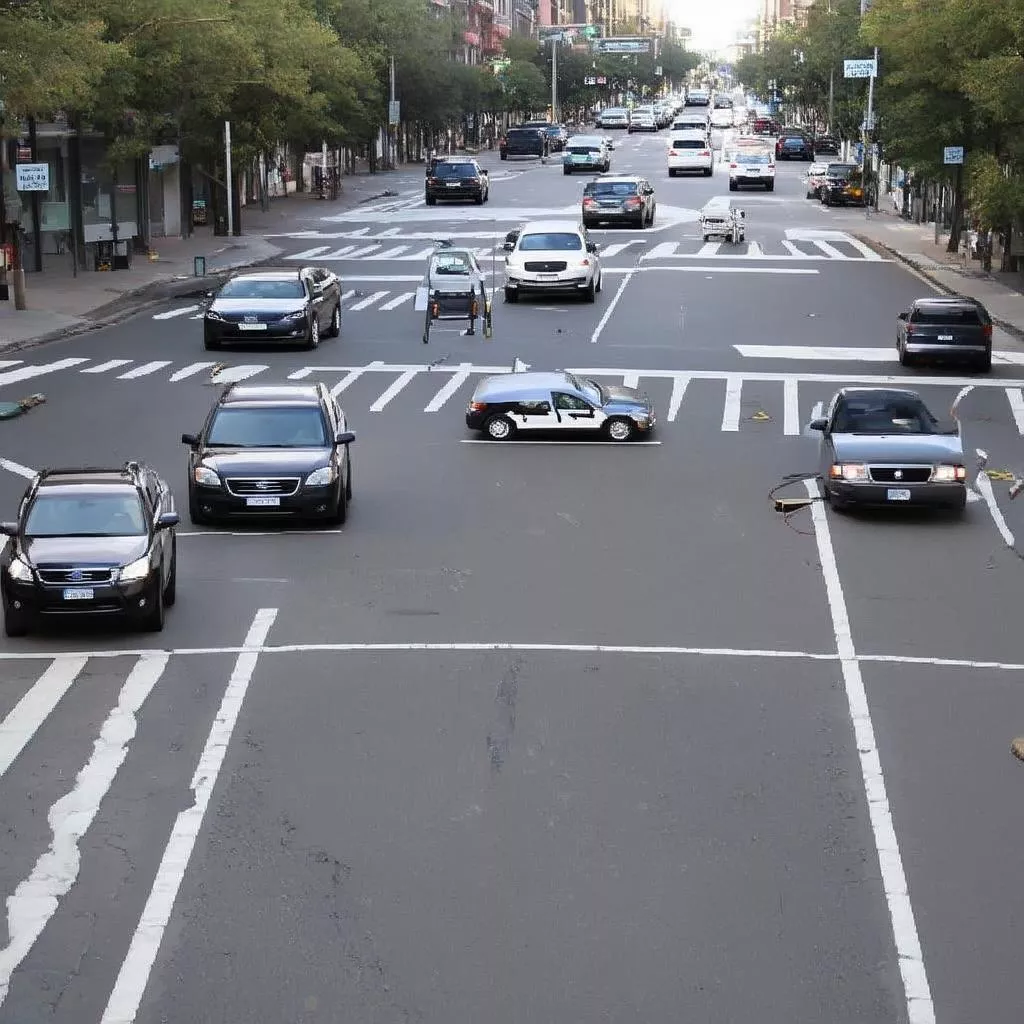
Ba, owner of a large truck parking lot in Hanoi’s outskirts, struggles with manual entry/exit management. Each vehicle requires time-consuming recording and checks. Intrigued by “deep learning license plate recognition,” he wonders if it’s truly revolutionary and can solve his management woes.
What is Deep Learning License Plate Recognition?
In Ba’s words, it’s like a trained “brain” that “sees” and “understands” license plates. Using Deep Learning algorithms, this technology can automatically:
- Detect license plates in images or videos.
- Extract information from plates, including letters and numbers.
- Process information as needed, such as storage, classification, and searching.
Benefits of Deep Learning License Plate Recognition
Like installing a “magic” camera for his parking lot, this technology offers tangible benefits:
- Automation: Eliminates manual management, saving time and effort.
- High Accuracy: Reduces errors compared to manual data entry.
- Superior Efficiency: Processes information quickly, meeting large-scale management needs.
- Versatile Applications: From parking lot management and traffic control to security and order.
How Does Deep Learning “Learn” to Recognize License Plates?
Imagine teaching a child to read. The learning process is similar:
- Data Collection: A vast amount of diverse license plate images is needed to “teach” the system.
- Model Training: The system analyzes and “learns” license plate characteristics from the data.
- Testing and Evaluation: The model’s accuracy is assessed on new data.
- Deployment:
Factors Affecting Recognition Effectiveness
- Image Quality: Clear images with good lighting enhance accuracy.
- License Plate Complexity: Blurred, distorted, or obscured plates are harder to recognize.
- Model Capabilities: A well-trained model yields better results.
Applications of Deep Learning License Plate Recognition
- Smart Traffic Management: Monitoring speed, detecting traffic violations.
- Security and Order: Identifying vehicles, tracking criminals.
- Smart Parking: Automating entry/exit management, enabling automatic payment.
- Logistics and Transportation: Tracking vehicles, managing fleets efficiently.
Smart Traffic Management System
Choosing the Right License Plate Recognition Solution
Many solutions exist. How do you choose the right one?
- Actual Needs: Define your purpose and specific requirements.
- Accuracy: Choose a solution with high accuracy that meets your needs.
- Integration Capabilities: Opt for a solution that easily integrates with existing systems.
- Cost: Consider the balance between effectiveness and investment cost.
Frequently Asked Questions about Deep Learning License Plate Recognition
1. Can this technology recognize all types of license plates?
Currently, it can recognize most common types. However, accuracy can be affected by factors like image quality, plate type, and lighting conditions.
2. Is it expensive to deploy a Deep Learning License Plate Recognition system?
Deployment costs depend on factors like system scale, camera quantity, and hardware requirements.
3. Does this technology violate privacy?
Image data collection and use must comply with data protection and privacy regulations.
Related Technologies
- Image Processing: Enhances image quality, supporting the recognition process.
- Artificial Intelligence (AI): Automates information analysis and processing.
- Internet of Things (IoT): Connects devices, collects real-time data.
 Modern Truck
Want to Learn More About Smart Truck Solutions?
Contact XE TẢI HÀ NỘI today for a free consultation on smart truck solutions to optimize your transportation operations!
Hotline: 0968 239 999
Website: xetaihanoi.edu.vn
Conclusion: Deep Learning License Plate Recognition is a technology with high application potential, promising positive societal changes. Understanding and applying this technology will contribute to the development of a smarter society in the future.









