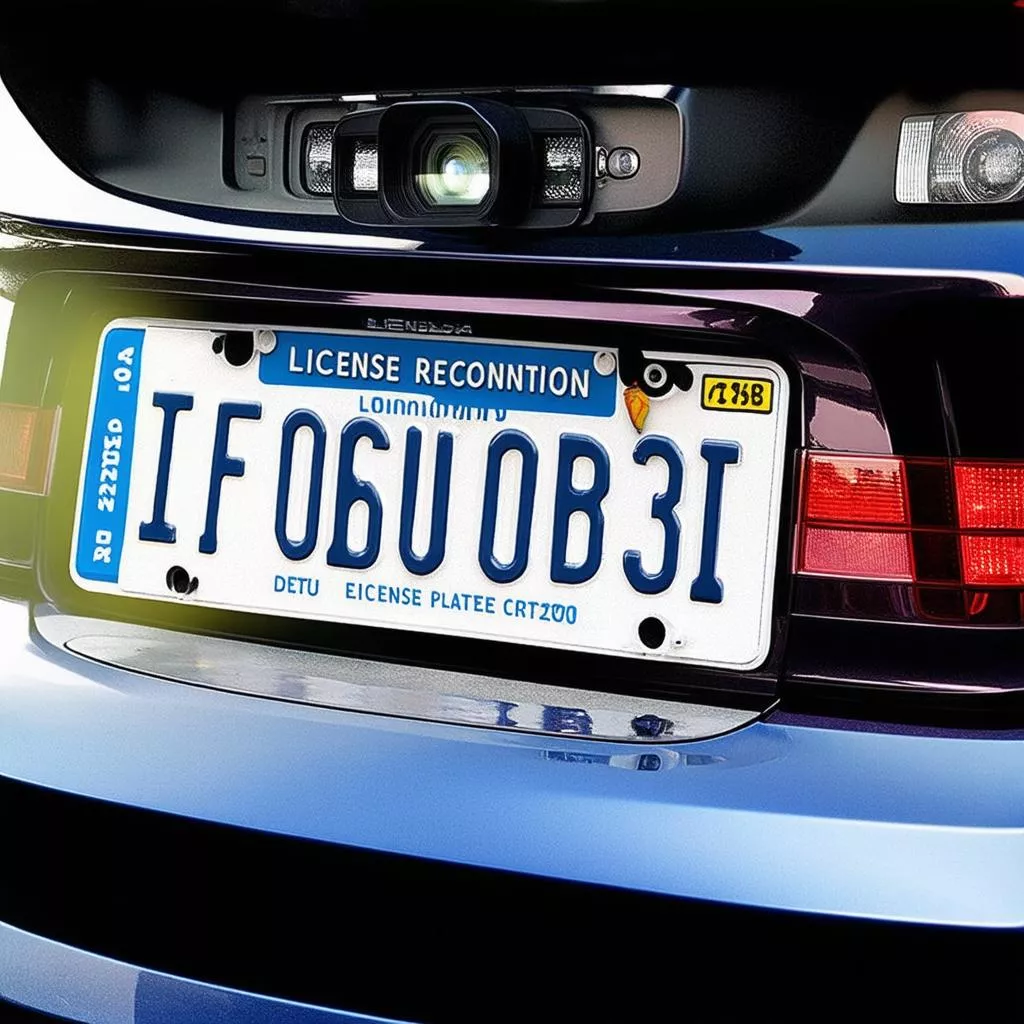
Have you ever wondered how intelligent transportation systems can recognize license plates, manage traffic flow, and process violations quickly and accurately? The secret lies in Automatic License Plate Recognition (ALPR) using OpenCV, a breakthrough in Artificial Intelligence (AI). What is OpenCV? How does the OpenCV dataset for license plate recognition work? This article will help you decode these questions.
The Significance of ALPR with OpenCV
OpenCV (Open Source Computer Vision Library) is a leading open-source library for computer vision and machine learning. Its applications are vast, ranging from facial recognition and object detection to video analysis.
In the field of transportation, ALPR with OpenCV plays a crucial role in:
- Traffic Monitoring and Management: Identifying license plates helps track traffic flow, detect congestion, and regulate traffic effectively.
- Traffic Violation Processing: Automatically recording instances of speeding, red light running, wrong-way driving, etc.
- Parking Lot Automation: Recognizing license plates for automatic entry and exit, and parking fee calculation.
Decoding the Mechanism
To “read” a license plate, an ALPR system using OpenCV goes through complex image processing steps:
- Image Acquisition: The license plate image is captured by a camera.
- Image Processing: Noise is removed, and contrast is enhanced to highlight the license plate.
- License Plate Detection: Algorithms are used to locate the license plate within the image.
- Character Segmentation: Individual characters on the license plate are separated.
- Character Recognition: Optical Character Recognition (OCR) algorithms are used to “read” and convert the characters into text.
The OpenCV dataset for license plate recognition is crucial for training AI algorithms. This dataset contains thousands, even millions, of different license plate images, carefully labeled. By “learning” from this massive dataset, the AI system can accurately recognize license plates in various real-world conditions.
License plate recognition
Benefits and Applications
ALPR with OpenCV offers many practical benefits, contributing to a smarter and safer transportation system:
- Enhanced Traffic Management Efficiency: Reduces congestion and optimizes traffic flow.
- Improved Public Safety: Assists in tracking vehicles involved in incidents.
- Enhanced User Experience: Automates manual processes, saving time for citizens.
Frequently Asked Questions
Q: What is the accuracy of ALPR with OpenCV?
A: Accuracy depends on factors like image quality, lighting conditions, and camera angle. However, with modern technology, accuracy can exceed 95%.
Q: Can I build my own ALPR system using OpenCV?
A: Absolutely. OpenCV is an open-source library, allowing you to learn and develop your own system.
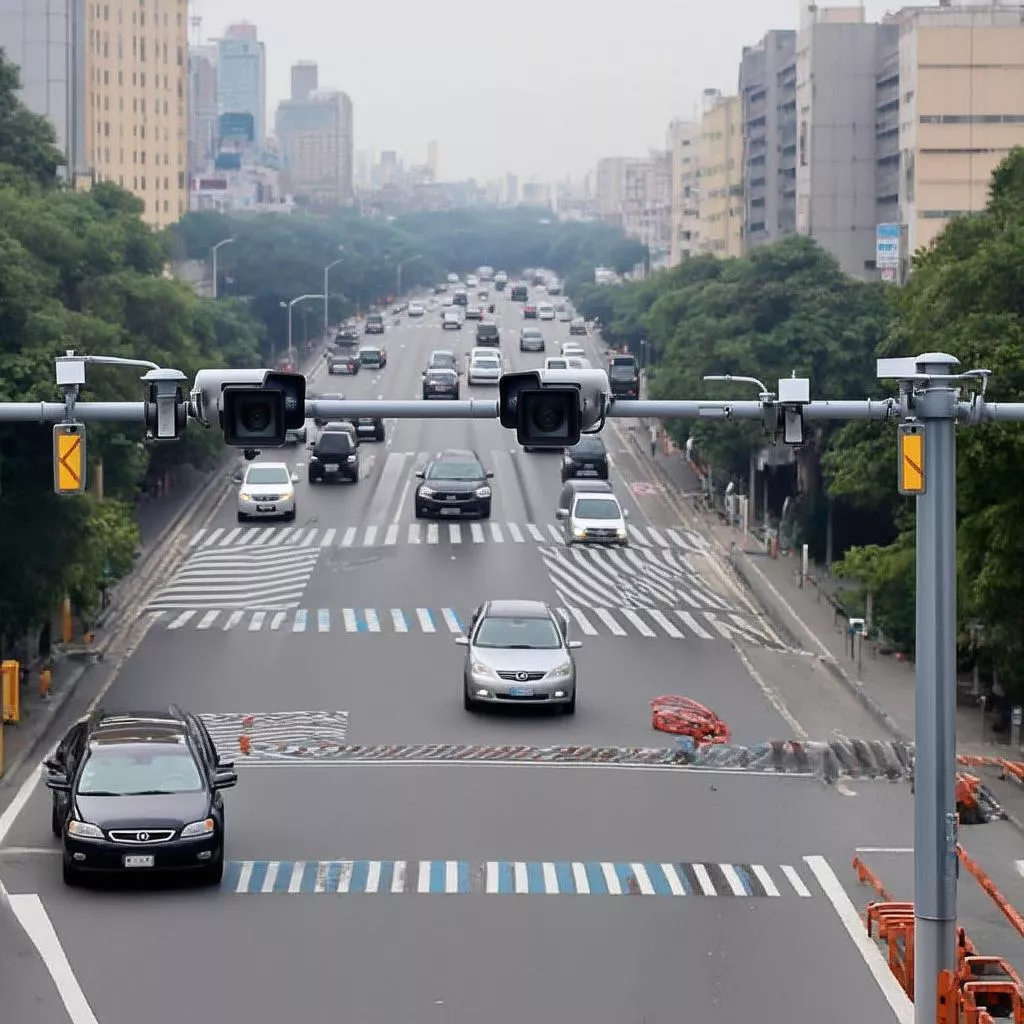 Traffic camera installation
Conclusion
ALPR with OpenCV is a groundbreaking technology with vast potential in transportation. With the continuous development of AI, we can expect a smarter, safer, and more efficient transportation future.
To learn more about technologies applied in the trucking industry, visit xetaihanoi.edu.vn.
Do you have any other questions about ALPR with OpenCV? Leave a comment below!
If you are looking to purchase a truck, contact XE TẢI HÀ NỘI Dealership or Hotline: 0968 239 999 for 24/7 consultation and support.