Vietnam’s agricultural policies play a crucial role in the sustainable development of the country’s agricultural sector. These policies directly impact the livelihoods of farmers and the stability of the agricultural market. This article will delve into the various policies supporting agricultural production and consumption, and their impact on the economy.
Support for Agricultural Production
The Vietnamese government has implemented numerous policies to support agricultural production, including financial assistance, technical training, and improved crop and livestock varieties. Specifically, preferential credit programs provide farmers with easier access to capital for investment in production. The transfer of technology and training in advanced farming techniques are also prioritized, enhancing productivity and quality. Furthermore, support for high-quality crop and livestock varieties strengthens the competitiveness of Vietnamese agricultural products in the international market.
Government policies also address input costs such as fertilizers and pesticides, aiming to reduce production expenses for farmers. This contributes to stabilizing product prices and ensuring income for producers.
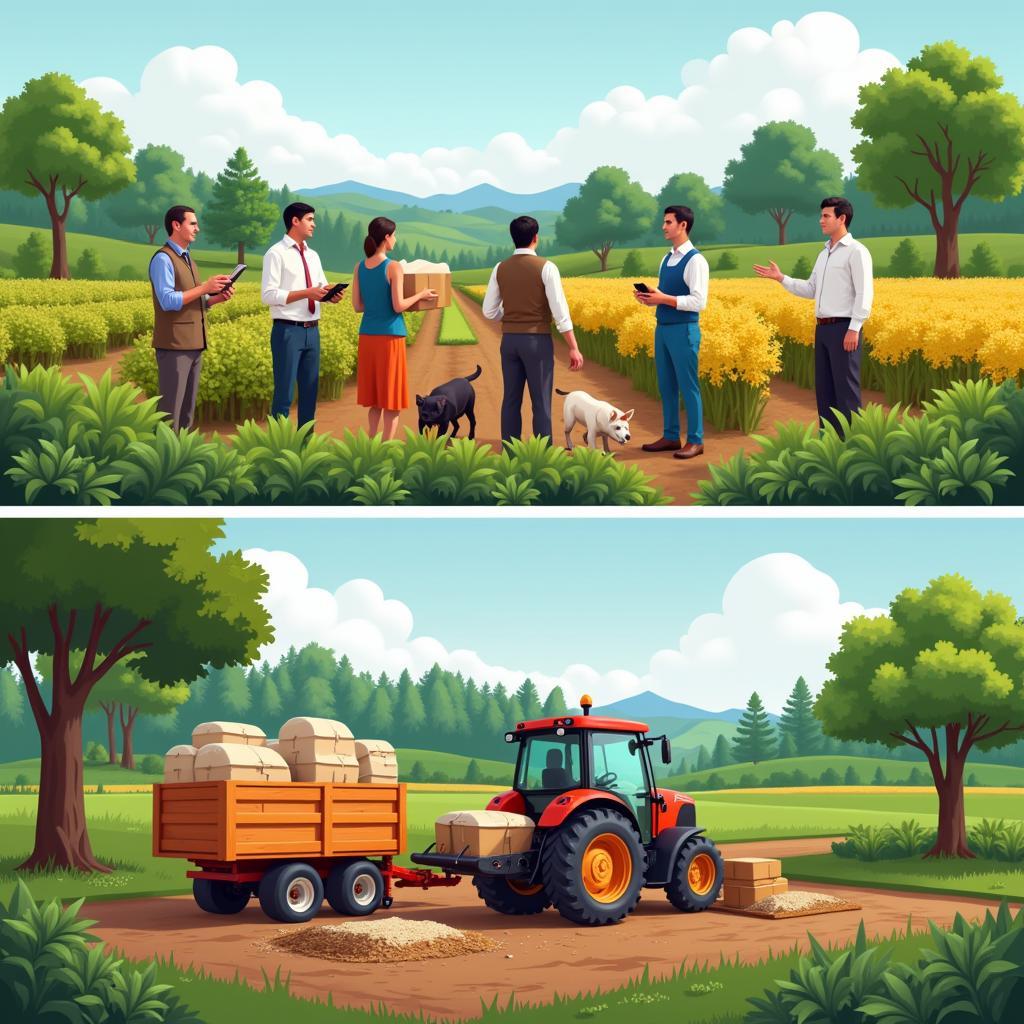
Farmers working in a field.
Policies on Agricultural Consumption
In addition to production support, government policies focus on promoting consumption. The development of wholesale markets, supermarkets, and convenience stores connects producers and consumers. Domestic and international promotion programs and trade fairs are actively implemented to expand market access for Vietnamese agricultural products.
The government also encourages the development of production and consumption linkages between businesses and farmers. Cooperative models and partnerships provide farmers with stable outlets for their products while ensuring quality and supply for businesses.
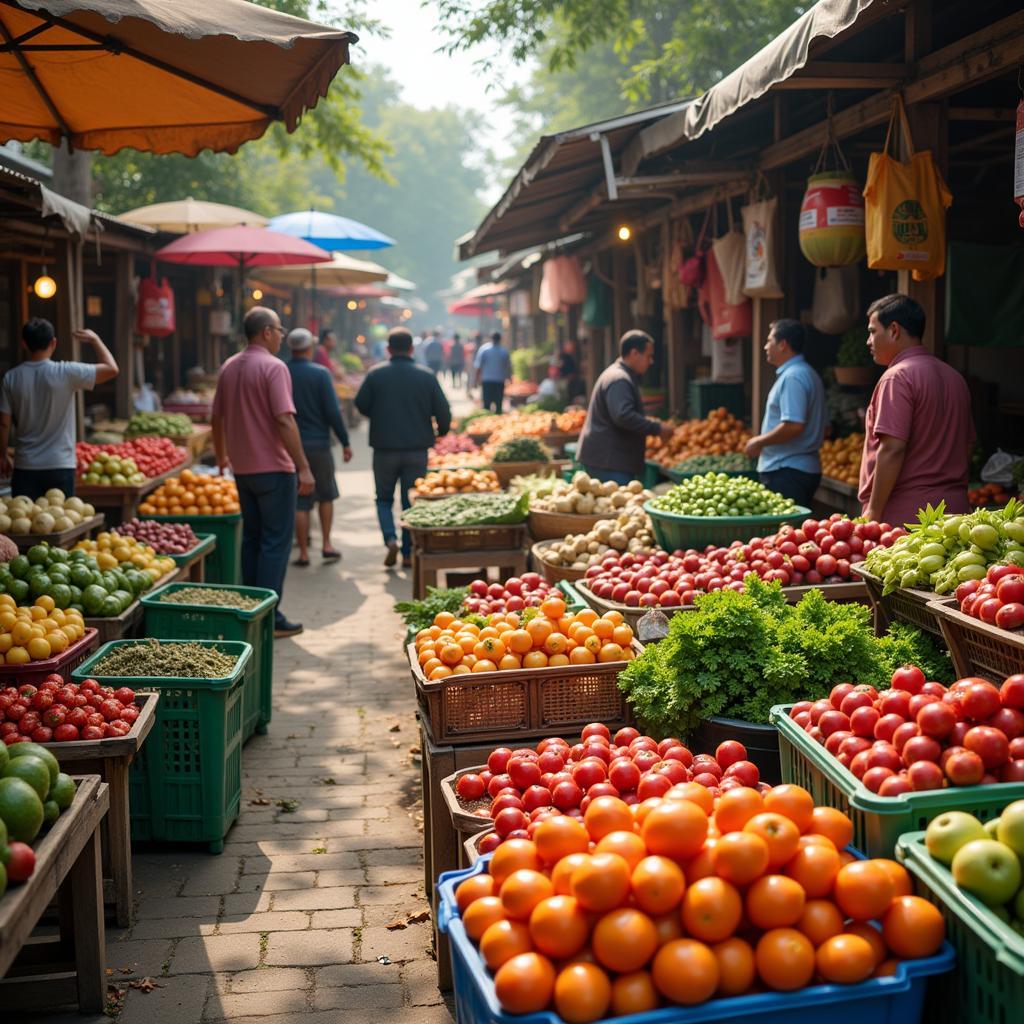 Agricultural products displayed at a market.
Impact of Policies on the Economy
Government policies on agricultural products have a positive impact on the economy. Increased productivity and quality contribute to economic growth, job creation, and higher incomes, especially in rural areas. A stable agricultural market minimizes price fluctuations during harvest seasons, protecting farmers’ interests.
Furthermore, exporting agricultural products to international markets generates significant foreign exchange earnings. These policies also contribute to national food security, social stability, and sustainable development.
According to Nguyen Van A, an agricultural economist, “Government support policies are a crucial driving force for the sustainable development of Vietnamese agriculture. However, close coordination between ministries, agencies, and localities is essential for effective implementation.”
 Graph showing the positive impact of agricultural policies on the economy.
Conclusion
Government policies on agricultural products are crucial for the sustainable development of the agricultural sector. Continuous improvement and effective implementation of these policies will contribute to improving farmers’ livelihoods, ensuring food security, and promoting economic growth.
FAQ
- What are the policies for supporting farmers with capital?
- How can I access training programs on farming techniques?
- What are the current channels for agricultural product consumption?
- Which markets are the main export destinations for Vietnamese agricultural products?
- What is the role of cooperatives in agricultural product consumption?
- How can I provide feedback on agricultural support policies?
- What are the policies regarding organic agriculture?
Common Situations and Questions:
- Situation: Farmers face difficulties in accessing preferential loans.
- Question: What is the loan application procedure? What documents do I need?
- Situation: Agricultural products are facing oversupply and difficulties in consumption.
- Question: Are there any support channels to help me find outlets for my products?
- Situation: I want to learn about policies supporting agricultural exports.
- Question: Which agency should I contact for advice?
Suggested Related Articles and Questions:
- Suitable trucks for transporting agricultural products.
- Procedures for registering an agricultural business.
- Tips for choosing a cargo truck.
For assistance, please contact us at Phone Number: 0968239999, Email: [email protected] Or visit our address: No. TT36 – CN9 Road, Tu Liem Industrial Zone, Phuong Canh Ward, Nam Tu Liem District, Hanoi. We have a 24/7 customer service team.