
“A stitch in time saves nine,” especially for expensive trucks. Regular maintenance is essential, but sometimes, unexpected issues like a broken timing belt can still occur. Anh Minh, owner of a Hyundai HD99 truck used for transporting construction materials on Nguyen Trai Street, Ha Dong, shared: “I was driving smoothly when suddenly my truck stalled. I had it towed to a nearby garage, and they said the timing belt had broken and needed replacement, which was quite costly. Since then, I’ve been more careful with maintenance.” So, what is a timing belt, what causes it to break, and how can it be fixed? This article will answer these questions.
What is a Timing Belt?
Definition and Function
A timing belt (also known as a cambelt) is a crucial component in an internal combustion engine. Its function is to synchronize the rotation of the crankshaft and camshaft. Simply put, the timing belt acts as a “bridge,” ensuring that the engine’s intake and exhaust valves open and close precisely in sync with the piston’s movement.
Structure
Timing belts are typically made of high-strength rubber reinforced with strong steel cords. The belt’s surface has teeth that mesh with the gears on the crankshaft and camshaft.
Causes of Timing Belt Failure
A timing belt can break for various reasons, the most common being:
- Belt Aging: Over time, the timing belt deteriorates, losing its elasticity and becoming prone to breakage, especially in harsh operating conditions.
- Bearing Failure: Damaged bearings can cause the camshaft to misalign, making the timing belt too loose or too tight, leading to breakage.
- Improper Installation: Incorrect timing belt installation is a frequent cause of premature wear and breakage.
- Lack of Lubrication: Lubrication reduces friction between the timing belt and other components. Insufficient lubrication can cause the belt to wear out quickly and break.
- Frequent Overloading: Consistent overloading forces the engine to work beyond its capacity, putting excessive strain on the timing belt, eventually leading to failure.
Signs of a Damaged Timing Belt
Early detection of timing belt damage can prevent more severe engine problems. Here are some common signs:
- Unusual Engine Noise: A loose or worn timing belt can produce a “rattling” or “ticking” sound, especially during startup or acceleration.
- Engine Vibration: A damaged timing belt can disrupt engine operation, causing vibrations, particularly at low speeds.
- Difficulty Starting or Sudden Stalling: A broken timing belt prevents the engine from running, resulting in starting problems or sudden stalling.
- Illuminated Check Engine Light: This is a general warning indicating a problem with the engine system, which could include a damaged timing belt.
Consequences of a Broken Timing Belt
A broken timing belt is a serious issue that can cause significant engine damage, potentially leading to complete engine failure.
- Bent Valves: When the timing belt breaks, the valves lose synchronization with the pistons, causing them to collide, resulting in bent valves.
- Damaged Pistons: Similarly, pistons can also be damaged due to collisions with the valves when the timing belt breaks.
- Damage to Other Components: A broken timing belt can also damage other engine parts like the camshaft, cylinders, and cylinder head.
How to Fix a Broken Timing Belt
If you suspect a broken timing belt, take immediate action to prevent further damage.
- Stop the Vehicle Immediately: Continuing to drive with a broken timing belt will worsen the engine damage.
- Call for Roadside Assistance: Have your vehicle towed to a reputable repair shop.
- Replace the Timing Belt: A broken timing belt cannot be repaired; it must be replaced.
- Inspect and Replace Related Components: After replacing the timing belt, thoroughly inspect related parts like valves, pistons, and the camshaft, replacing them if necessary.
Preventing Timing Belt Failure
Prevention is better than cure. Regular and proper maintenance can help prevent timing belt failure.
- Replace the Timing Belt Regularly: Experts recommend replacing the timing belt every 60,000 to 80,000 km or every 3 to 4 years, depending on operating conditions and the manufacturer’s recommendations.
- Use Quality Lubricants: Use genuine lubricants that meet your vehicle’s specifications.
- Regular Vehicle Inspections and Maintenance: Have your vehicle inspected and serviced regularly at a reputable garage to detect and address any potential issues.
- Avoid Overloading: Frequent overloading puts excessive strain on the engine, including the timing belt, increasing the risk of breakage.
Timing Belt Replacement Cost
| Vehicle Type | Timing Belt | Labor Cost | Total Cost |
|---|---|---|---|
| Light Trucks (Hyundai Porter, Kia K200…) | 1,500,000 – 2,000,000 VND | 500,000 – 1,000,000 VND | 2,000,000 – 3,000,000 VND |
| Medium Trucks (Hyundai HD72, Isuzu QKR…) | 2,000,000 – 3,000,000 VND | 1,000,000 – 1,500,000 VND | 3,000,000 – 4,500,000 VND |
| Heavy Trucks (Hyundai HD120, Hino 500…) | 3,000,000 – 5,000,000 VND | 1,500,000 – 2,000,000 VND | 4,500,000 – 7,000,000 VND |
Note: The prices above are for reference only. Actual costs may vary depending on the vehicle make, model, parts manufacturer, and repair location.
Important Considerations When Replacing a Timing Belt
- Choose a reputable garage with experienced technicians and modern equipment to ensure quality repairs.
- Use genuine or equivalent quality parts to ensure the engine’s durability and performance.
- Request a detailed invoice, receipts, and warranty information after the repair.
Frequently Asked Questions
What is the lifespan of a timing belt?
The lifespan of a timing belt depends on factors like quality, operating conditions, and maintenance. However, it’s generally recommended to replace it every 60,000 to 80,000 km or every 3 to 4 years.
Where can I find a reputable timing belt replacement service in Hanoi?
In Hanoi, you can find reputable garages on streets like Le Duan, Nguyen Trai, Tam Trinh, Pham Hung… or seek recommendations from friends and family.
How much does it cost to replace a timing belt?
The cost depends on the vehicle type, parts manufacturer, and repair location. Refer to the table above or contact garages directly for detailed quotes.
How to Purchase from Hanoi Trucks
To purchase trucks or genuine parts, visit our website xetaihanoi.edu.vn or contact us directly at 0987.654.321 for consultation and support.
Hanoi Trucks – Your Trusted Partner!
Related Products
Besides timing belts, Hanoi Trucks offers a wide range of products and services, including:
- Hyundai Trucks
- Isuzu Trucks
- Hino Trucks
- Genuine Auto Parts
- Vehicle Repair and Maintenance Services
Conclusion: A broken timing belt is a serious issue that can cause significant damage and expense. Regular and proper maintenance is crucial. We hope this article has provided valuable information about the causes, solutions, and prevention of timing belt failure. Drive safely!
Timing Belt Replacement
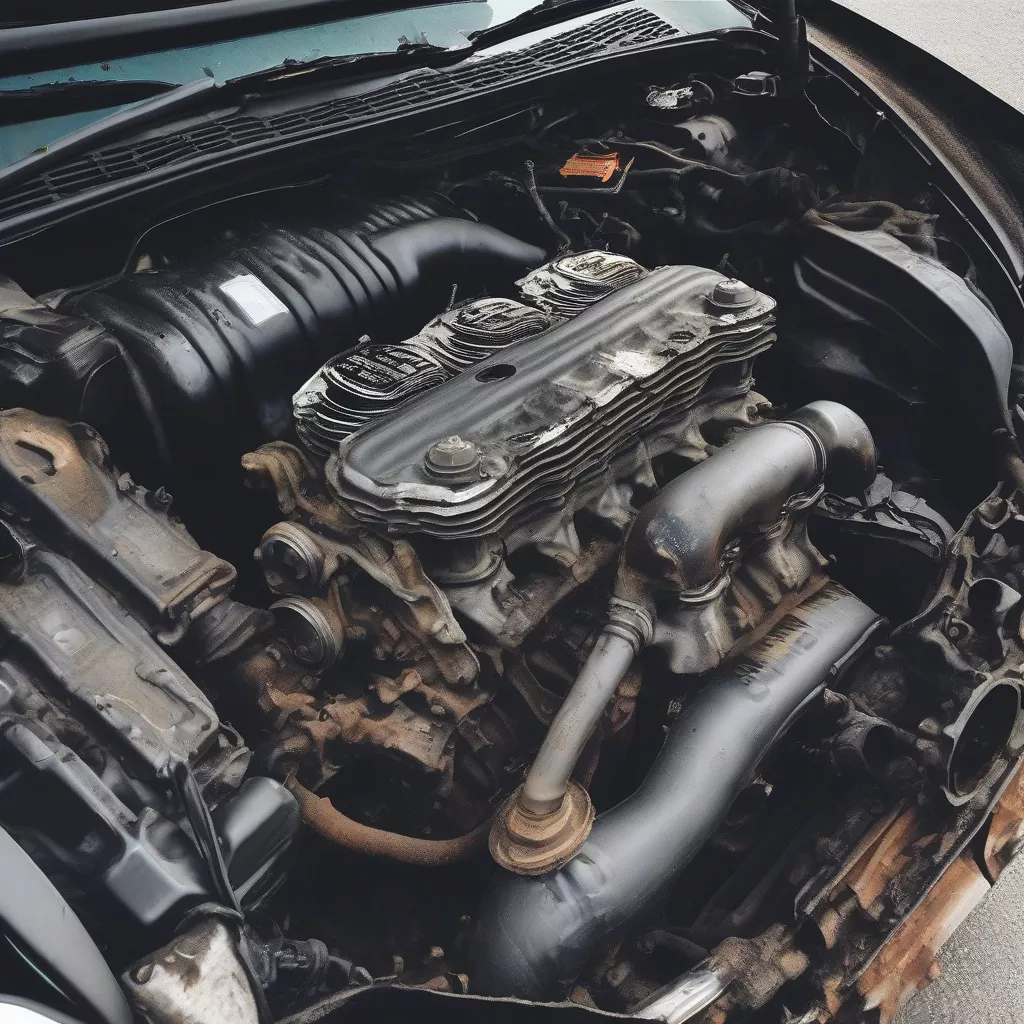 Damaged Car Engine









