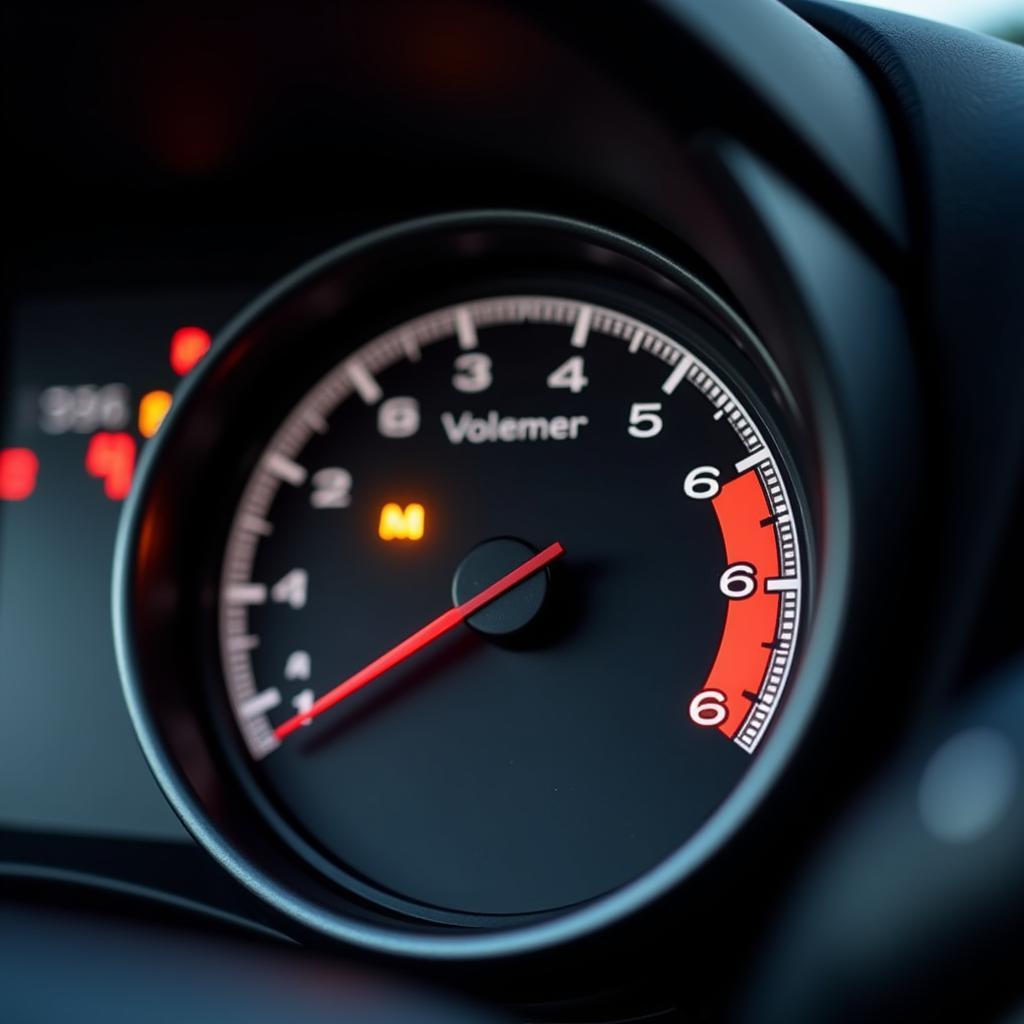
A car’s voltmeter is a crucial component of the electrical system, providing insights into the battery’s charge and discharge status. Understanding its function and readings helps you maintain your vehicle’s electrical system, identify potential issues early, and ensure smooth operation.
The Importance of a Car Voltmeter
The voltmeter indicates the voltage of the electrical system, allowing you to monitor the battery and alternator’s health. Voltage that’s too high or too low can cause significant problems, potentially damaging electronic components. Regularly checking the voltmeter helps detect potential issues early, saving on repair costs and ensuring safe driving. You might be interested in learning more about the car charging system.
Car voltmeter displaying voltage
How to Read a Car Voltmeter
Voltmeters typically have a scale ranging from 10V to 16V. With the engine off, the needle usually points around 12V, reflecting the battery’s voltage. When the engine is running, the alternator charges the battery, and the needle should be between 13.5V and 14.5V. Readings outside this range warrant an immediate electrical system check. Learn more about the working principle of a car alternator for a deeper understanding.
Low Voltage: Causes and Solutions
Low voltage can result from a weak battery, a faulty alternator, or loose wiring. Excessively low voltage can lead to starting difficulties or stalling. In such cases, check and replace the battery or alternator if necessary. Sometimes, simply tightening the wiring solves the problem. Refer to Anker car jump starter for handling a dead battery.
High Voltage: Causes and Solutions
High voltage usually indicates a problem with the alternator’s voltage regulator. This can damage the car’s electronics. If the voltage is too high, take your car to a mechanic for diagnosis and repair.
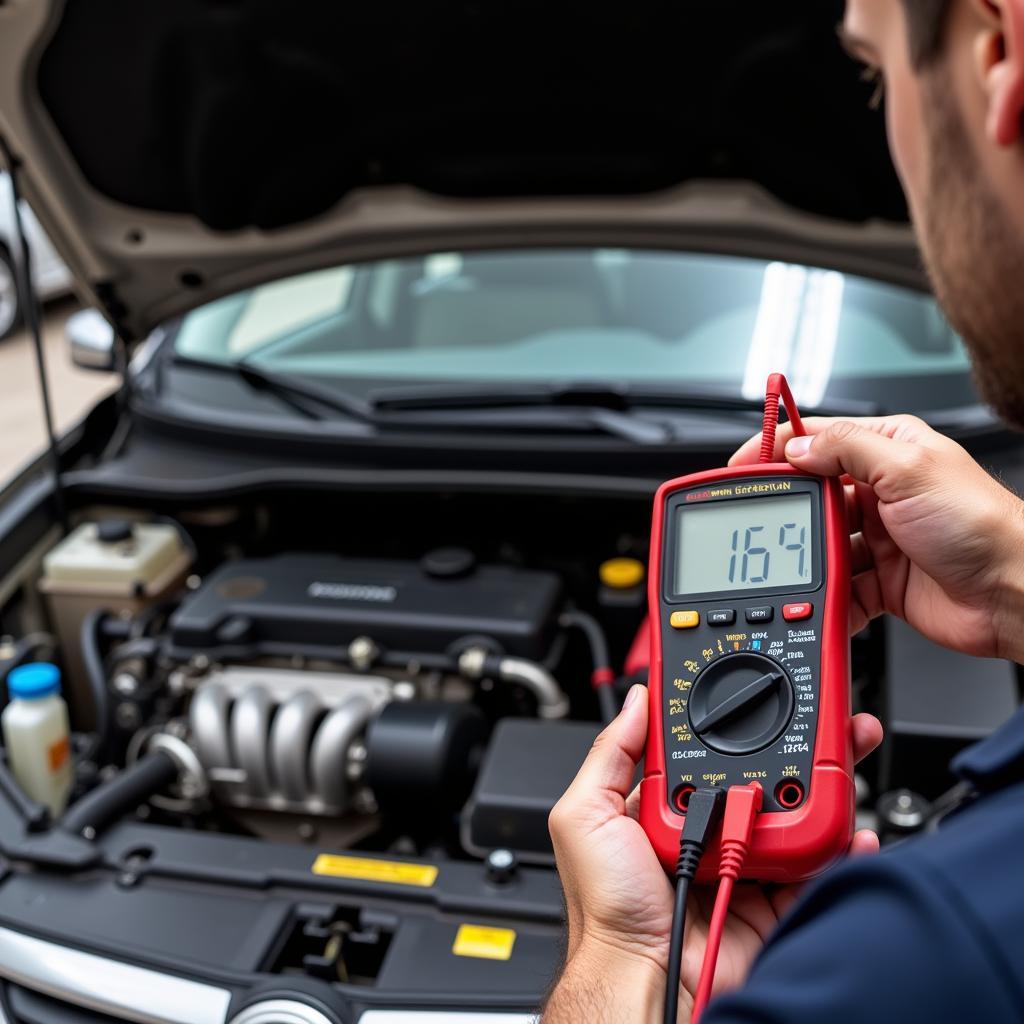 Mechanic checking a car voltmeter
Common Voltmeter Problems
Voltmeters themselves can malfunction, with the needle staying put or giving inaccurate readings. Check the fuse, wiring, and the voltmeter itself if this occurs.
Voltmeter Maintenance
For accurate readings, regularly inspect your car’s electrical system. Keep the voltmeter clean to prevent dust from interfering with its operation. Proper maintenance prolongs the voltmeter’s lifespan and ensures your safety while driving. Explore car key replacement services for related automotive services.
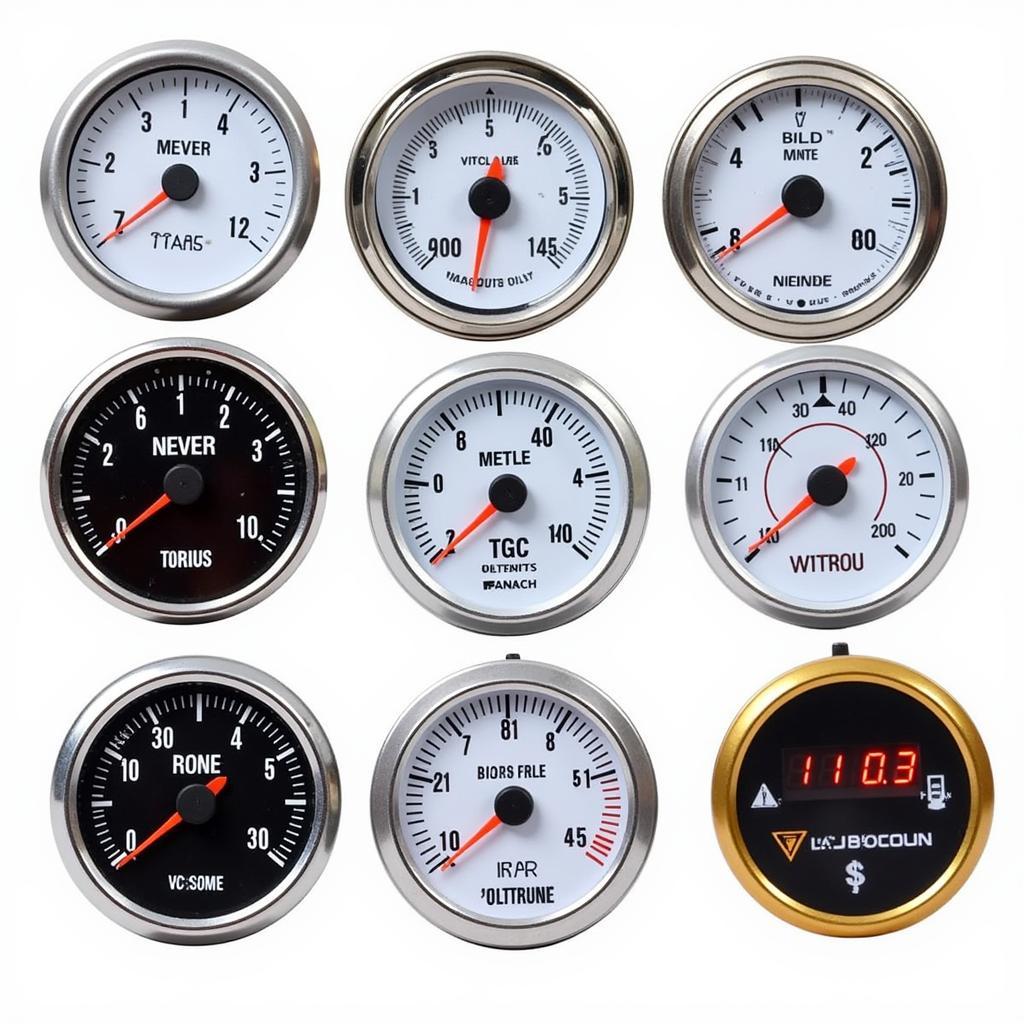 Different types of car voltmeters
Conclusion
The car voltmeter is a vital indicator of the electrical system’s health. Understanding its readings and related issues helps maintain your car’s performance and prevent unexpected breakdowns. Regularly check your voltmeter for safety and to save on potential repair costs. Discuss with experienced car owners on car forums.
FAQ
- Where is the car voltmeter located? Usually on the dashboard, near the speedometer and tachometer.
- What is the normal voltage reading when the engine is running? Between 13.5V and 14.5V.
- What does low voltage indicate? It can be due to a weak battery, a faulty alternator, or loose wiring.
- What does high voltage indicate? Usually a problem with the alternator’s voltage regulator.
- How to check the voltmeter? Use a multimeter.
- When should I replace my car battery? When the battery voltage is too low and cannot be fully charged.
- How to maintain the voltmeter? Regularly inspect the electrical system and keep the voltmeter clean.
For assistance, contact us at Phone: 0968239999, Email: [email protected] Or visit us at: TT36 – CN9 Road, Tu Liem Industrial Zone, Phuong Canh Ward, Nam Tu Liem District, Hanoi. We have a 24/7 customer support team.









