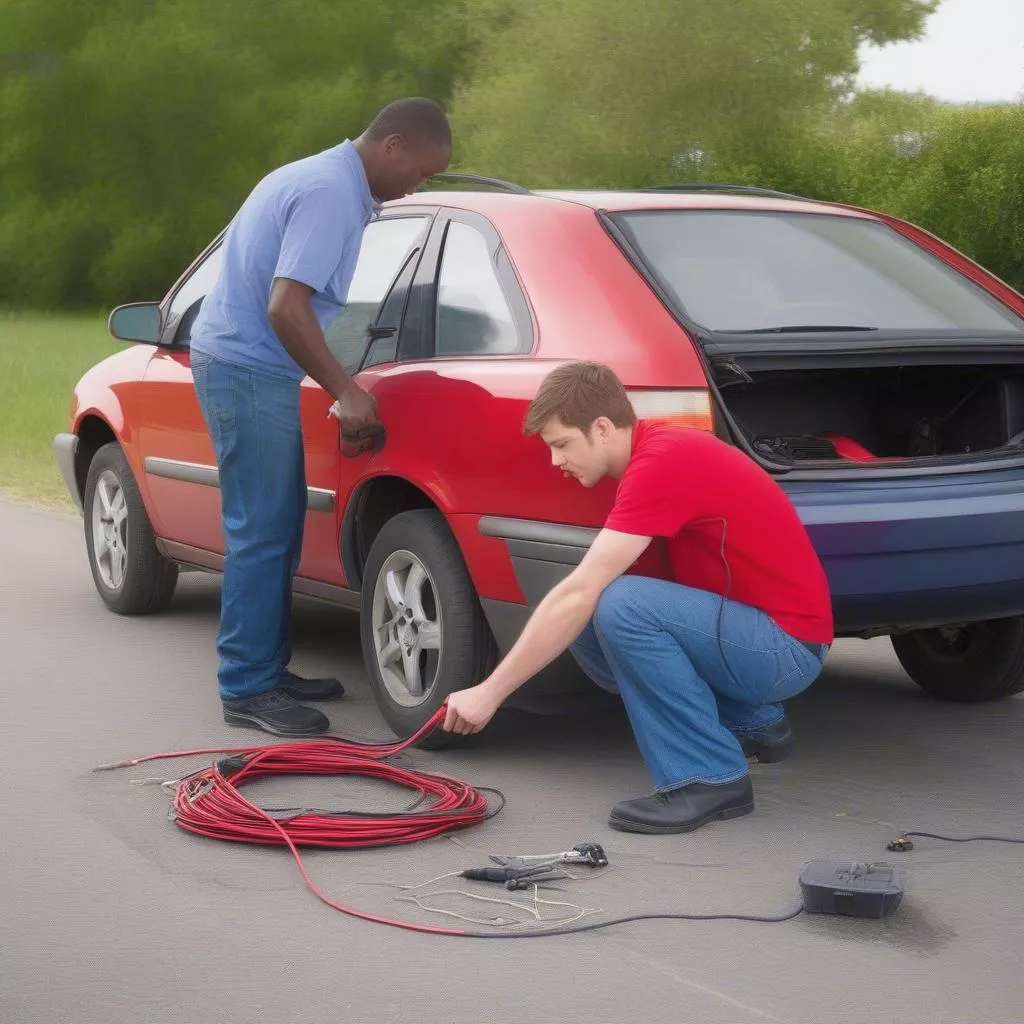
Is your car battery dead, leaving you stranded? Or are you simply curious about how to safely and effectively jump start a car? This guide provides a comprehensive overview of car jump-starting, from basic principles to essential safety precautions.
Why Jump Starting Matters:
Knowing how to jump start a car is crucial for overcoming a dead battery. It’s a simple, effective, and quick solution to get your car back on the road.
The Solution: Jump Starting
Jump starting involves using the electrical current from a fully charged battery to provide enough power to a dead battery, enabling the car to start.
Steps to Jump Start a Car:
Preparation:
- Jumper Cables: Use heavy-duty jumper cables with copper or nickel-plated clamps, approximately 2-3 meters long and at least 6mm in diameter.
- Charged Battery: Ensure you have access to a vehicle with a fully charged battery.
- Safe Location: Choose a level, dry, and well-ventilated area. Avoid damp or flammable locations.
Procedure:
- Connect the Jumper Cables:
- Step 1: Connect the positive (+) clamp of the good battery to the positive (+) terminal of the dead battery.
- Step 2: Connect the negative (-) clamp of the good battery to a grounding point (e.g., the car frame) on the car with the dead battery.
- Start the Vehicles:
- Step 1: Start the car with the good battery.
- Step 2: After the engine is running, turn off the engine of the car with the good battery.
- Step 3: Attempt to start the car with the dead battery.
- Disconnect the Cables:
- Step 1: Disconnect the jumper cables in the reverse order of connection: negative first, then positive.
Important Safety Precautions:
- Prioritize Safety: Avoid direct contact with battery terminals during the jump-starting process.
- Inspect Jumper Cables: Before use, ensure the cables are in good condition, free from damage, tears, or corrosion.
- Ensure Personal and Vehicle Safety: Never use metal objects to touch the battery while jump-starting.
Frequently Asked Questions:
- “How Do I Know if My Battery is Dead?”: A dead battery often manifests through slow engine cranking, dim headlights, or warning lights on the dashboard.
- “What Type of Jumper Cables Should I Use?”: Use heavy-duty jumper cables with copper or nickel-plated clamps, approximately 2-3 meters long and at least 6mm in diameter.
- “How Can I Prevent Battery Failure?”: Regular battery maintenance, including checking fluid levels, periodic servicing, and timely replacement, can help prevent battery failure.
Alternative Solutions:
Besides jump-starting, consider these alternatives:
- Battery Charger: Use a battery charger to fully charge a dead battery.
- Portable Power Bank: Utilize a portable power bank to jump-start a car with a weak battery.
Further Questions to Explore:
- “How to Maintain a Car Battery?”
- “Signs Indicating a Car Battery Needs Replacement?”
Call to Action:
Contact us via our website https://xetaihanoi.edu.vn/ or hotline 0968 239 999 for more information or assistance with jump-starting your car. Our team of experts is available 24/7.
Conclusion:
Knowing how to jump start a car is an essential skill for every driver. Mastering the procedure and adhering to safety precautions will help you quickly address a dead battery, ensuring your safety and the well-being of your vehicle.
Share this article with friends and family to spread awareness about car maintenance. Follow our website https://xetaihanoi.edu.vn/ for the latest updates on trucks.