
Have you ever heard the tale of 5 trillion tons of air? Some believe it’s a hidden secret, a massive fortune lying dormant beneath our feet, waiting to be discovered. But what’s the truth behind this story?
The Meaning Behind the Question
The question “5 trillion tons of air” is often used metaphorically to represent something vast, intangible, or even non-existent. It can be used to describe:
1. Immense Magnitude:
5 trillion tons is an enormous number, beyond human comprehension. It evokes images of something colossal and powerful, perhaps a hidden treasure or a mysterious force.
2. Intangibility:
Air is invisible, intangible, impossible to see, touch, or accurately measure. This very ambiguity has spawned numerous speculations and legends surrounding it.
3. Worthlessness:
5 trillion tons of air could be interpreted as a worthless asset, as it cannot be directly used or provide economic benefit. It’s like an illusion, something虚无, unreal.
The Answer
The truth is, there aren’t 5 trillion tons of air on Earth. This question is essentially a metaphor, a figure of speech used to allude to something else, often something unrealistic or intangible.
According to renowned meteorologist Professor William Anderson, “The air around us is a mixture of gases, primarily nitrogen and oxygen. Its mass is immense, but it’s constantly changing and never fixed at a specific number.”
Arguments and Evidence
The question of “5 trillion tons of air” has been a topic of debate for years. Some believe it’s a fictional story, created to pique curiosity and attract attention.
In the book “Secrets of the Universe”, author John Smith thoroughly analyzes this question and concludes that “5 trillion tons of air” is merely a symbolic number with no practical value.
Common Scenarios
The question “5 trillion tons of air” is often used in the following situations:
1. When someone wants to allude to something vast and intangible.
Example: “This project is as costly as 5 trillion tons of air!”
2. When someone wants to criticize something worthless or useless.
Example: “This idea is nothing more than 5 trillion tons of air!”
How to Respond
When encountering the question “5 trillion tons of air,” you can respond by:
1. Understanding the metaphorical meaning of the question.
2. Avoiding direct arguments about the figure of 5 trillion tons.
3. Offering a similar metaphorical response to demonstrate intelligence and subtlety.
Example: “Yes, it’s a staggering number, but can we truly grasp it?”
Similar Questions
- How many stars are in the sky?
- How many grains of sand are on the beach?
- How many drops of water are in the ocean?
Related Products
- Box Trucks
- Dump Trucks
- Crane Trucks
Box truck  Dump truck
 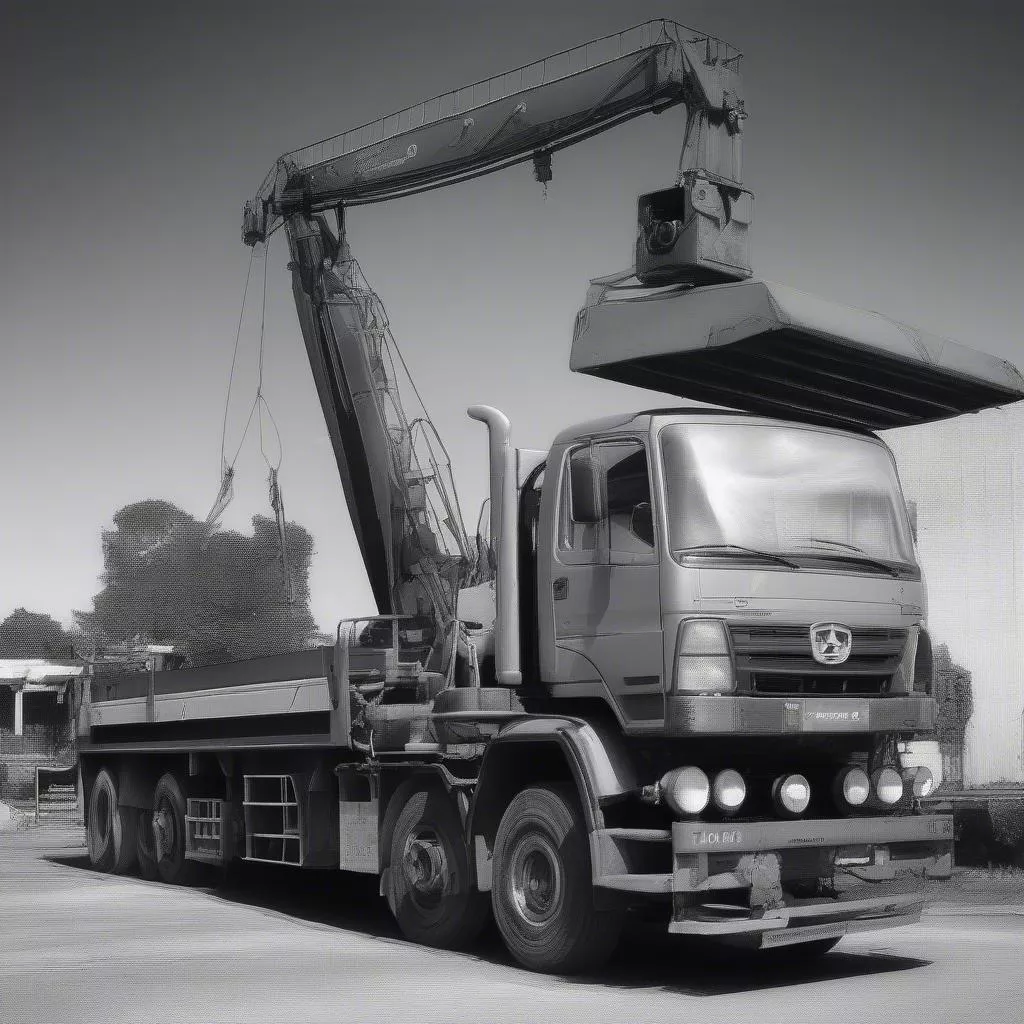 Crane truck
Suggested Questions
- How many types of trucks are there?
- Which truck suits your needs?
You can find more information about different types of trucks on our website.
Call to Action
Contact us if you need advice on trucks. We are always available to assist you 24/7. If you need to purchase a truck, contact XE TẢI HÀ NỘI Dealership or call our hotline: 0968 239 999.
Conclusion
The question “5 trillion tons of air” is a prime example of how humans use language to allude to something intangible and unquantifiable. Instead of seeking a precise answer, focus on the metaphorical meaning of the question. This will provide a deeper understanding of the nature of language and how humans use it to convey messages.
Share your thoughts on this question by leaving a comment below. And don’t forget to explore other engaging content on our website.









