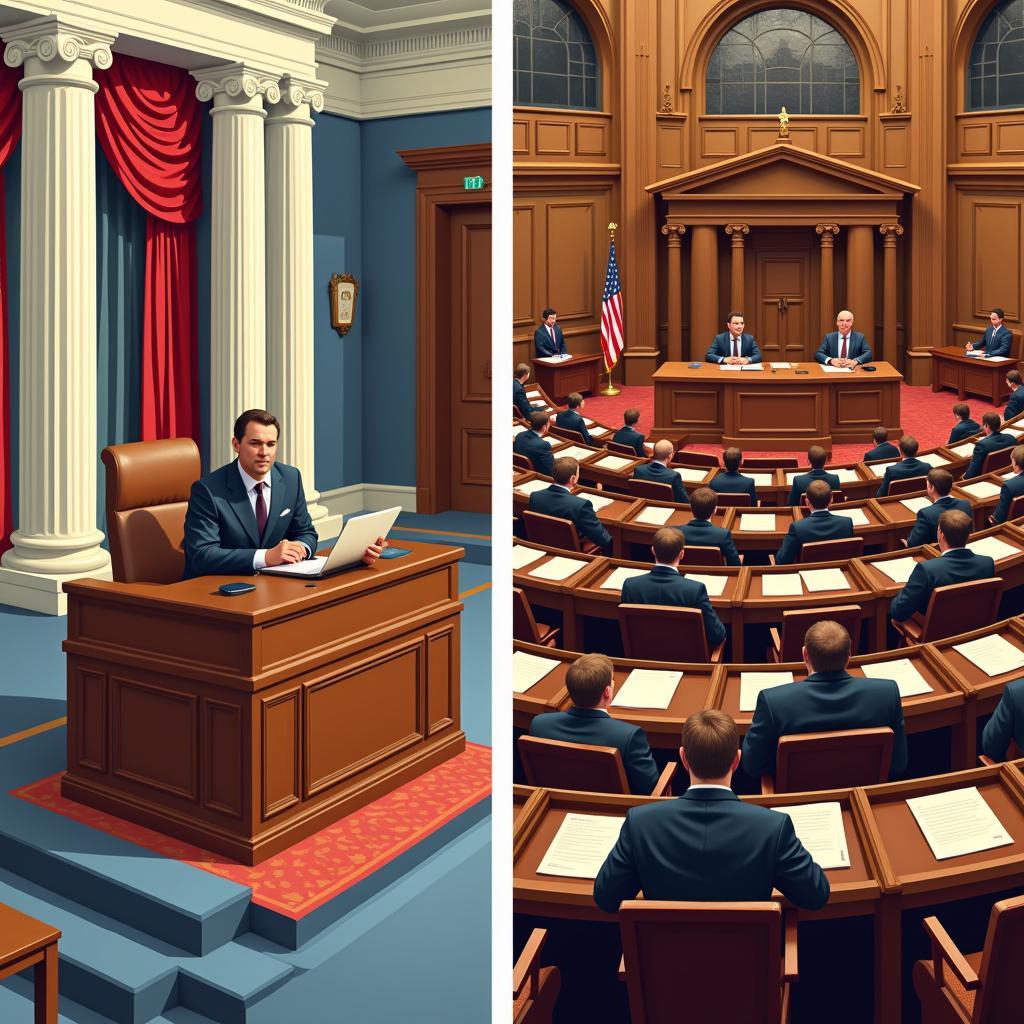
State policy, a system of rules and guidelines established to manage and govern society, affects every aspect of our lives. But who is responsible for implementing these policies? The answer is not simply the government.
The Executive Branch: Leading Policy Implementation
The government, as the executive branch, plays the primary role in implementing state policy. From development and enactment to supervision and enforcement, the government is responsible for ensuring policies are put into action and achieve their intended goals. Ministries, departments, and local authorities are extensions of the government, deploying policies to specific regions and sectors. For example, the Ministry of Transport is responsible for implementing policies related to road, rail, waterway, and air transportation. Provinces and cities then tailor these policies to suit local conditions.
The Vital Role of the Legislative and Judicial Branches
While not directly involved in implementation, the legislative and judicial branches also play critical roles in the process. The legislative branch, the National Assembly, is where laws are debated, passed, and amended, creating the legal framework for policy implementation. The judicial branch, the courts, oversees the enforcement of laws, ensuring fairness and accuracy in the process. The coordinated operation of these three branches is crucial for effective policy implementation. Similar to a thesis on criminal policy, analyzing the roles of state agencies is essential.
Legislative and Judicial Branches
The People: Subjects and Objects of Policy
Citizens are not just beneficiaries but also active participants in policy implementation. Their support and active involvement are decisive factors in the success of any policy. For example, a policy encouraging the use of environmentally friendly trucks will not be effective without public support. The government needs to create favorable conditions and provide transparent information so that people understand and participate in the implementation process. This has similarities with the social policy bank for poverty reduction which requires public participation.
Businesses: Driving Socio-Economic Development
Businesses, as drivers of socio-economic development, also contribute to the implementation of state policy. Policies that support businesses, promote production, and facilitate business activities create jobs, increase people’s income, and contribute to the state budget. For instance, policies supporting truck manufacturing companies will help the automotive industry develop. For a better understanding of the current state of social insurance policy, you can refer to this article.
 Businesses contributing to policy implementation
Conclusion: Collaboration of All Social Components
Implementing state policy is not the sole responsibility of any single entity but a collaborative effort of all social components, from government agencies, citizens, and businesses to social organizations. Each component has its own role and responsibility, contributing to the sustainable development of the country. A detailed example of a thesis on social insurance policy planning clearly demonstrates the complexity of policy implementation. For those interested in New Zealand’s new policy, this content will be helpful.
For assistance, please contact us at Phone: 0968239999, Email: [email protected] or visit us at: TT36 – CN9 Road, Tu Liem Industrial Park, Phuong Canh Ward, Nam Tu Liem District, Hanoi. We have a 24/7 customer service team.









