Vietnam’s monetary policy from 2015 to 2018 played a crucial role in stabilizing the macroeconomy and promoting growth. This article delves into the monetary policy presentation of this period, covering its objectives, tools, and achieved outcomes.
Objectives of Vietnam’s 2015-2018 Monetary Policy
From 2015 to 2018, the State Bank of Vietnam (SBV) prioritized controlling inflation, stabilizing the currency’s value, and supporting sustainable economic growth. Inflation control was paramount to create a stable macroeconomic environment for investment and production. The SBV also focused on maintaining a reasonable exchange rate, avoiding significant fluctuations that could impact import-export activities and foreign investment attraction.
Monetary Policy Tools Used from 2015-2018
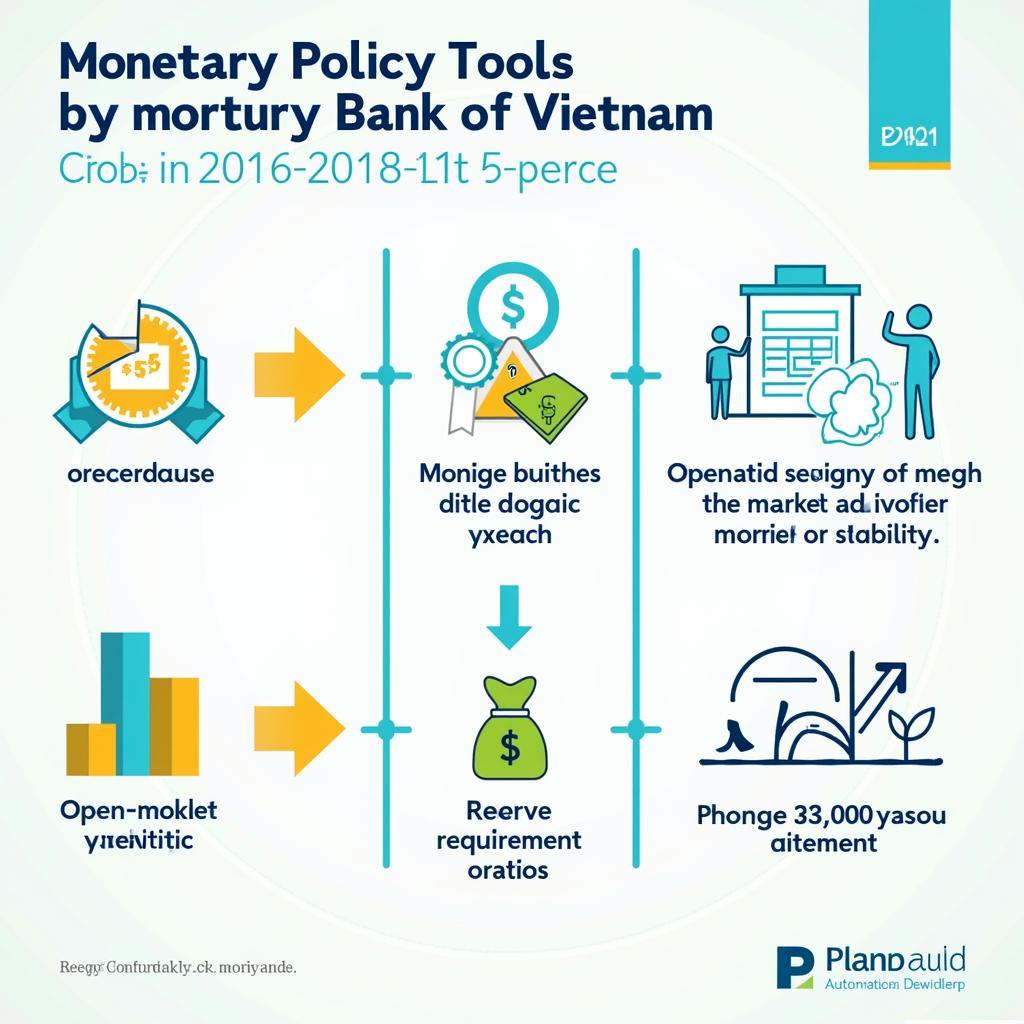
The SBV employed various monetary policy tools to achieve its objectives. These included adjusting interest rates, reserve requirements, open market operations, and exchange rate interventions. The flexible use of these tools allowed the SBV to effectively manage money supply, stabilize the monetary market, and support economic growth.
- Interest Rate Adjustments: The SBV adjusted the policy interest rate to influence market interest rates, thereby impacting credit and investment activities.
- Reserve Requirements: Altering the reserve requirements for commercial banks served as a tool to regulate the money supply in the market.
- Open Market Operations: The SBV bought or sold government bonds in the open market to adjust the amount of cash within the banking system.
Monetary policy tools used in Vietnam from 2015-2018
Outcomes of the 2015-2018 Monetary Policy
The monetary policy implemented from 2015 to 2018 yielded positive results. Inflation was kept low and stable, contributing to a favorable environment for economic growth. The exchange rate remained stable, supporting import-export activities and attracting foreign investment. However, challenges remained, such as improving the effectiveness of monetary policy tools and enhancing the ability to forecast economic fluctuations.
Monetary Policy Presentations: The Role of Transparency
Publicly disclosing information about monetary policy through presentations is crucial. This enhances transparency, builds market confidence, and assists businesses in their planning.
Conclusion
The presentation on monetary policy from 2015 to 2018 provides an overview of the objectives, tools, and outcomes of this period. Continuously refining monetary policy is essential for ensuring macroeconomic stability and promoting sustainable growth in the future.
FAQ
- What was the main objective of the 2015-2018 monetary policy?
- What tools did the SBV use to implement monetary policy?
- What were the achieved outcomes of the 2015-2018 monetary policy?
- What challenges remain in implementing monetary policy?
- What is the role of transparency in monetary policy?
- How does monetary policy affect businesses?
- How can I learn more about Vietnam’s monetary policy?
 Frequently asked questions about monetary policy
Common Customer Inquiries
Customers are often interested in loan interest rates, exchange rates, and support policies from the SBV.
Related Articles and Resources
See also our article on the truck market in Hanoi.
For assistance, please contact us by phone: 0968239999, Email: [email protected] or visit our address: No. TT36 – CN9 Road, Tu Liem Industrial Park, Phuong Canh Ward, Nam Tu Liem District, Hanoi. We have a 24/7 customer support team.









