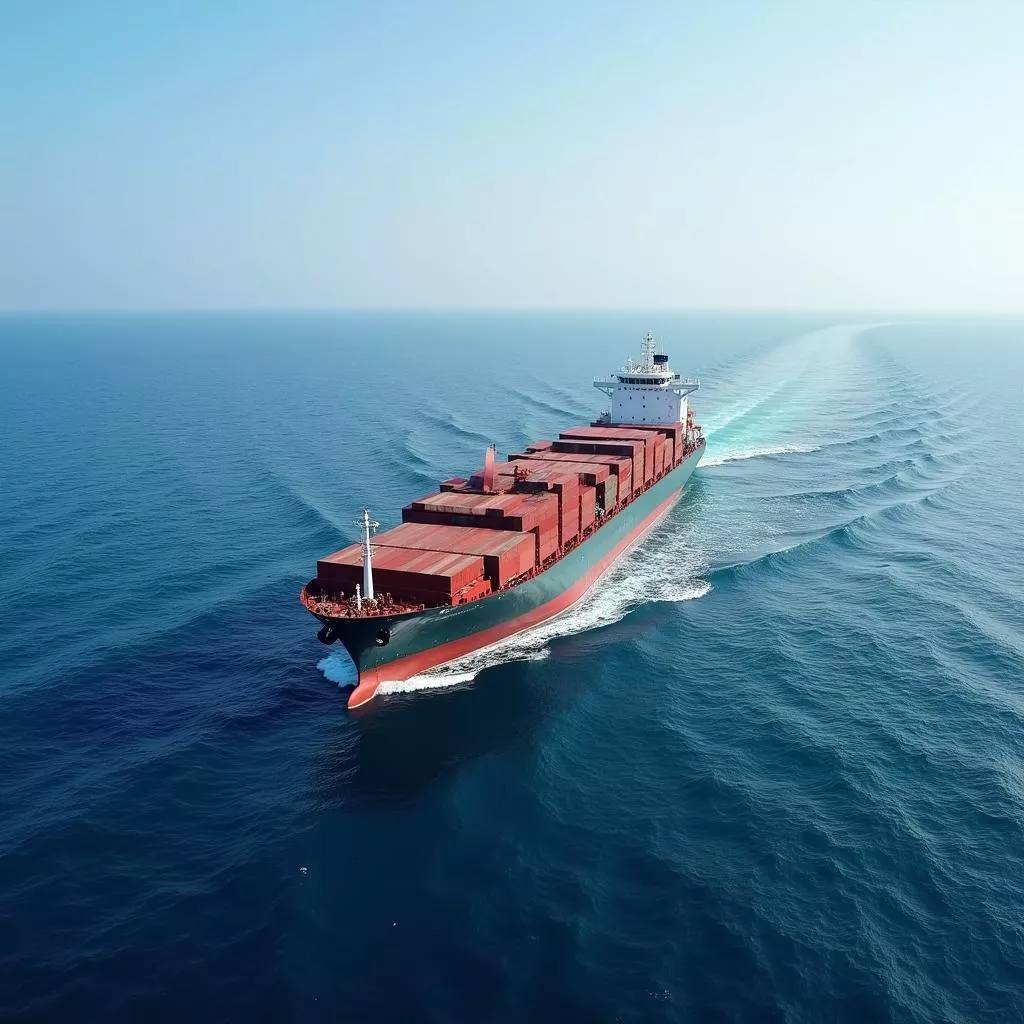
“Going to sea reveals hardship, mountains rise one after another.” This Vietnamese proverb, steeped in the sweat and tears of generations of fishermen, speaks to the vital importance of the sea, especially the South China Sea, to the economic and political life of the region and the world. How does the South China Sea factor into the policies of Japan, the Land of the Rising Sun?
The South China Sea’s Significance for Japan
Japan is often associated with a powerful economy and cutting-edge technology. However, few realize that this prosperity relies heavily on a distant body of water – the South China Sea.
The “Lifeline” – Fueling Japan’s Economy
South China Sea – Japan's vital trade route
As an island nation, Japan depends heavily on imported raw materials and the export of manufactured goods. The South China Sea serves as its vital maritime artery, transporting approximately 80% of its oil and natural gas, along with a significant volume of other goods from the Middle East, Southeast Asia, and beyond. Le Van Minh, a maritime economist at the South China Sea Institute, aptly stated, “If you compare the Japanese economy to a living organism, the South China Sea is the bloodstream that sustains it.”
Strategic Significance – A National Security Imperative
Beyond its economic importance, the South China Sea occupies a geopolitically strategic location, directly impacting Japan’s national security. The stability of the region directly affects Japan’s peace and security. Consequently, Japan prioritizes maintaining peace, stability, security, safety, freedom of navigation, and overflight in the South China Sea.
Japan’s South China Sea Policy
Recognizing the South China Sea’s critical importance, Japan has implemented various policies to safeguard its interests in the region.
Economic Cooperation – Diversifying Relationships
Japan actively promotes economic cooperation with South China Sea littoral states, particularly ASEAN members. It invests heavily in infrastructure, energy, and marine resource development in these countries.
Strengthening Military Capabilities – Protecting National Interests
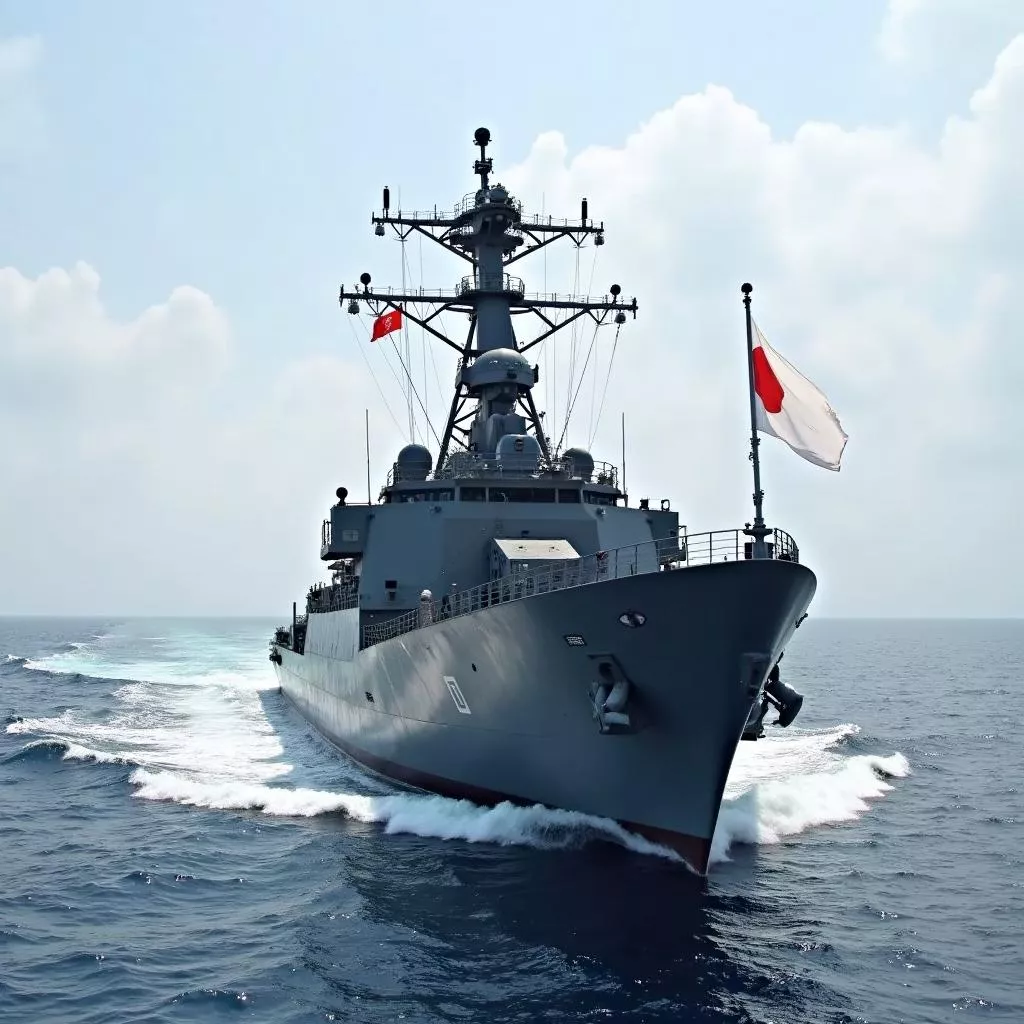 Japanese warship participating in exercises in the South China Sea
Alongside economic cooperation, Japan is bolstering its military strength, modernizing equipment, and expanding defense cooperation with regional countries and major powers like the US and India to ensure maritime security and protect its interests in the South China Sea.
International Law – The Guiding Principle
Japan consistently emphasizes adherence to international law, particularly the 1982 United Nations Convention on the Law of the Sea (UNCLOS), advocating for peaceful dispute resolution without resorting to force or the threat of force.
Challenges and Prospects
Despite its efforts, Japan faces numerous challenges in implementing its South China Sea policy.
Strategic Competition Among Major Powers
Strategic competition among major powers, particularly between the US and China, creates a complex and unpredictable geopolitical environment, impacting Japan’s policies in the region.
Maritime Sovereignty Disputes
Maritime sovereignty disputes in the South China Sea remain a significant challenge, posing a potential for conflict and threatening regional stability and Japan’s interests.
Conclusion
The South China Sea plays a crucial role in Japan’s foreign policy. Japan has implemented various policies to protect its interests in the region. However, it faces significant challenges in pursuing these policies. Closely monitoring developments, strengthening cooperation with regional and international partners, is essential for Japan to safeguard its interests in the South China Sea.
Looking for high-quality, competitively priced trucks in Hanoi?
Contact us today:
XE TẢI HÀ NỘI
Phone: 0968239999
Email: [email protected]
Address: No. TT36 – CN9 Road, Tu Liem Industrial Park, Phuong Canh Ward, Nam Tu Liem District, Hanoi.
We have a 24/7 customer service team.









