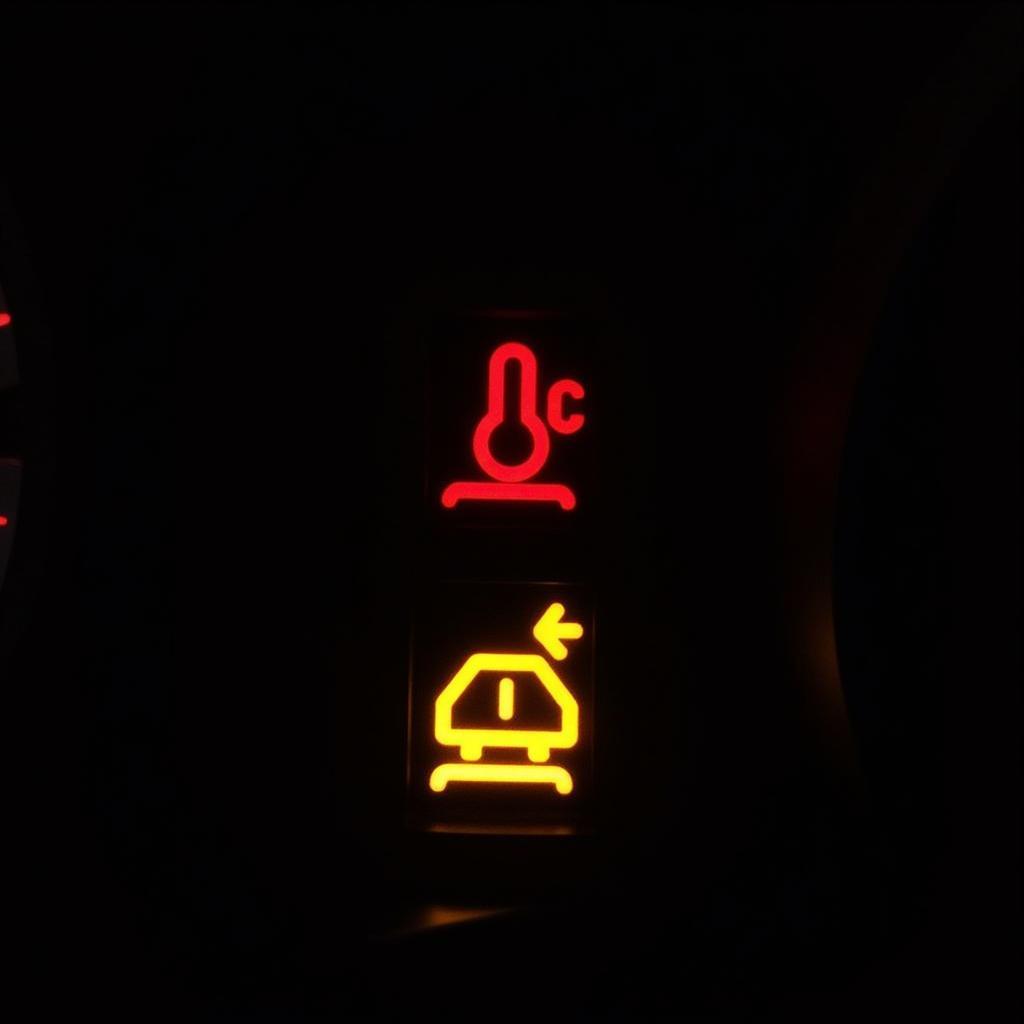
Your car’s dashboard is more than just a control panel; it’s a vital communication system. Understanding its language is key to safe and informed driving. Let XE TẢI HÀ NỘI guide you through the essential dashboard symbols and their meanings.
Warning Lights: Your Car’s Cry for Attention
Each warning light on your dashboard conveys a specific message, alerting you to potential issues that require attention.
Color Codes Indicate Urgency:
- Red: Signals a serious danger requiring immediate action. Stop driving and address the issue.
- Yellow/Amber: Indicates caution and the need for a prompt inspection.
- Green/Blue: Confirms that systems are functioning normally.
Deciphering Common Dashboard Symbols
While specific symbols can vary between car models, here are some common ones you should know:
1. Engine & Fuel System:
- Check Engine: This notorious light can indicate problems with the engine, emissions system, or electronics.
- Engine Temperature: When the needle enters the red zone, your engine is overheating.
- Oil Pressure: Warns of low oil pressure, requiring immediate attention to prevent engine damage.
- Low Fuel: Signals that you’re running low on fuel.
Common engine and fuel warning lights on a car dashboard
2. Brake System:
- Parking Brake: Reminds you to release the parking brake before driving.
- ABS Warning Light: Indicates a problem with the Anti-lock Braking System (ABS).
- Brake Pad Warning: Signals worn brake pads needing replacement.
3. Safety System:
- Airbag: Warns of an issue with the airbag system.
- Seatbelt: Reminds you to fasten your seatbelt.
- Electronic Stability Control (ESC): Indicates a problem with the ESC system.
4. Other Systems:
- Battery: Warns of a low battery or charging system problem.
- Tire Pressure Monitoring System (TPMS): Indicates low tire pressure in one or more tires.
- Door Ajar: Signals that a door is not fully closed.
Tips for Effective Dashboard Use
- Consult Your Owner’s Manual: Each car model has unique warning lights. Familiarize yourself with your car’s specific symbols.
- Never Ignore Warnings: Even seemingly minor warnings should be addressed promptly to ensure your safety.
We hope this guide provides valuable insights into understanding your car’s dashboard. Stay tuned to XE TẢI HÀ NỘI for more informative articles on vehicles and safe driving practices.
Frequently Asked Questions
1. Why is my Check Engine light on?
The Check Engine light can be triggered by various issues, from a loose gas cap to serious engine, emissions, or electronic problems.
2. What should I do if the oil pressure warning light comes on?
Stop driving immediately and check your engine oil level. If it’s low, add more oil. If the light persists, call for roadside assistance.
3. Can I continue driving with the ABS warning light on?
You can still drive, but your ABS will be disabled. Drive cautiously and have your car inspected as soon as possible.
4. How do I turn off dashboard warning lights?
Warning lights typically turn off automatically after resolving the underlying issue. If a light persists, have your car’s electrical system checked.
5. What do the numbers on the dashboard gauges mean?
Depending on your car model, the numbers on the gauges display information like speed, RPM, mileage, and fuel level.
Need Assistance?
Contact XE TẢI HÀ NỘI:
- Phone: 0968239999
- Email: [email protected]
- Address: No. TT36 – CN9 Road, Tu Liem Industrial Zone, Phuong Canh Ward, Nam Tu Liem District, Hanoi.
We offer 24/7 customer support.









