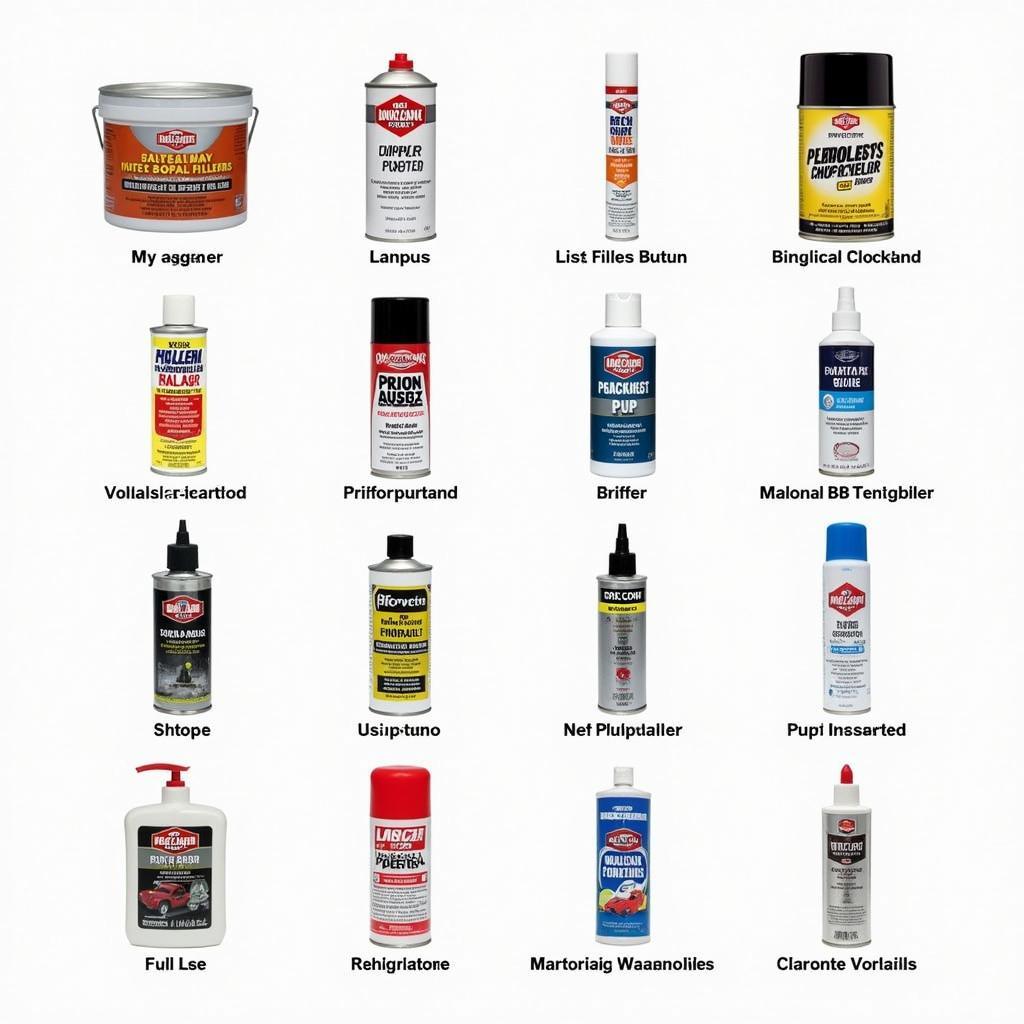
Car body filler, also known as putty, plays a crucial role in the car painting and repair process. It helps fill dents and scratches, creating a smooth surface for the final coat of paint. Choosing and applying the right body filler directly impacts the quality and durability of the paint job. In this article, we’ll delve deeper into this essential material. car body filler
The Importance of Body Filler in Automotive Painting
Car body filler is more than just a filling material. It’s the foundation for a beautiful and long-lasting paint job. A surface properly treated with body filler allows the paint to adhere better, resulting in a more even color and reducing defects like peeling and rust. Using body filler correctly also saves paint, reduces costs, and minimizes repair time.
Common Types of Car Body Filler
There are various types of car body fillers available, each with its own characteristics and applications. Some common types include polyester body filler, epoxy body filler, and water-based body filler. Each type has its advantages and disadvantages, making it suitable for different vehicles and purposes.
Polyester Body Filler: A Popular Choice
Polyester body filler is the most common type due to its fast drying time, ease of use, and affordability. This type of filler is suitable for most vehicles and general repair work.
Epoxy Body Filler: Superior Durability
Epoxy body filler offers high adhesion, excellent waterproofing, and corrosion resistance. It is often used for high-end vehicles or parts requiring high durability.
Water-Based Body Filler: Environmentally Friendly
Water-based body filler is a more environmentally friendly option compared to the other two types. However, it typically has a longer drying time. how to apply car body filler
Car Body Filler Application Techniques: From Basic to Professional
Applying car body filler requires meticulousness and experience. From surface preparation and filler mixing to application techniques and post-application surface treatment, every step affects the final result. A smooth, even, and defect-free filler layer is the foundation for a perfect paint job.
Surface Preparation: A Crucial Step
Preparing the surface before applying body filler is crucial. The surface must be cleaned, removing dirt, grease, and old paint layers. This ensures better adhesion of the body filler and prevents peeling later. car body filler application techniques
Mixing Body Filler: Precise Ratios
The mixing ratio of body filler and hardener should be followed according to the manufacturer’s instructions. Incorrect ratios can affect the drying time, hardness, and durability of the filler layer.
Body Filler Application Techniques: The Skill of the Craftsman
Applying body filler requires the skill and experience of a craftsman. The filler layer should be spread evenly, thinly, and smoothly, avoiding bumps or air bubbles.
Mr. Nguyen Van A, a car painting and repair expert with over 20 years of experience, shared: “Body filler application is an art that requires meticulousness and patience. A good filler layer is the foundation for a perfect paint job.”
Conclusion: Car Body Filler – The Key to a Perfect Finish
Car body filler is an essential component in the car painting and repair process. Choosing the right type of body filler and applying it correctly will deliver perfect results, keeping your car looking new and durable. car putty
FAQ about Car Body Filler
- What types of car body filler are there?
- How to mix car body filler?
- How to apply car body filler correctly?
- How much does car body filler cost?
- Which type of body filler should I choose for my car?
- How to store car body filler?
- Is car body filler toxic?
Types of Car Body Filler
Ms. Tran Thi B, owner of a car repair shop in Hanoi, said: “Using high-quality body filler combined with professional application techniques will significantly increase the lifespan of the paint, saving customers money in the long run.”
Suggested articles on our website: automotive paint supplies.
For assistance, please contact us by phone: 0968239999, Email: [email protected] Or visit our address: No. TT36 – CN9 Road, Tu Liem Industrial Park, Phuong Canh Ward, Nam Tu Liem District, Hanoi. We have a 24/7 customer support team.









