Driving simulators are becoming a leading-edge tool in driver education, offering significant advantages over traditional methods. This technology realistically simulates traffic environments, allowing students to practice handling real-world situations in a safe and controlled setting.
Benefits of Using a Driving Simulator
Using a driving simulator provides numerous practical benefits for both students and training centers. Students can experience driving in a safe environment, familiarize themselves with complex traffic situations without risk, and improve their driving skills, reflexes, and confidence on the road. Moreover, simulators save on fuel costs, reduce vehicle wear and tear, and contribute to environmental protection.
After learning about driving simulators, you might want to learn more about other essential car parts, such as the car accelerator sensor.
Key Features of a Driving Simulator
Driving simulators are designed with many modern features, realistically simulating everything from the steering wheel, gear shift, and pedals to the sound system, visuals, and vibrations. Some high-end simulators even incorporate virtual reality (VR) technology for a truly immersive driving experience. These features allow students to familiarize themselves with driving maneuvers and handle diverse traffic situations, from crowded city streets to highways. Students can also practice driving at night and in adverse weather conditions like rain, wind, and fog.
Modern driving simulator
Driving Simulators and Their Application in Driver Training
Driving simulators are widely used in driver training for all vehicle classes, from cars to trucks and buses. For beginners, simulators help familiarize them with basic operations and develop safe driving skills. For experienced drivers, simulators help improve their ability to handle challenging situations and drive in difficult conditions. Some training centers also use simulators to assess students’ driving skills.
Common Types of Driving Simulators
Currently, there are many types of driving simulators on the market with varying prices and features, ranging from simple simulators for entertainment purposes to professional simulators used in driver training. Choosing the right simulator depends on individual needs and budget. However, priority should be given to simulators with realistic simulation capabilities, user-friendly interfaces, and ease of use.
You should also learn about the car assembly process for a more comprehensive overview of the automotive industry.
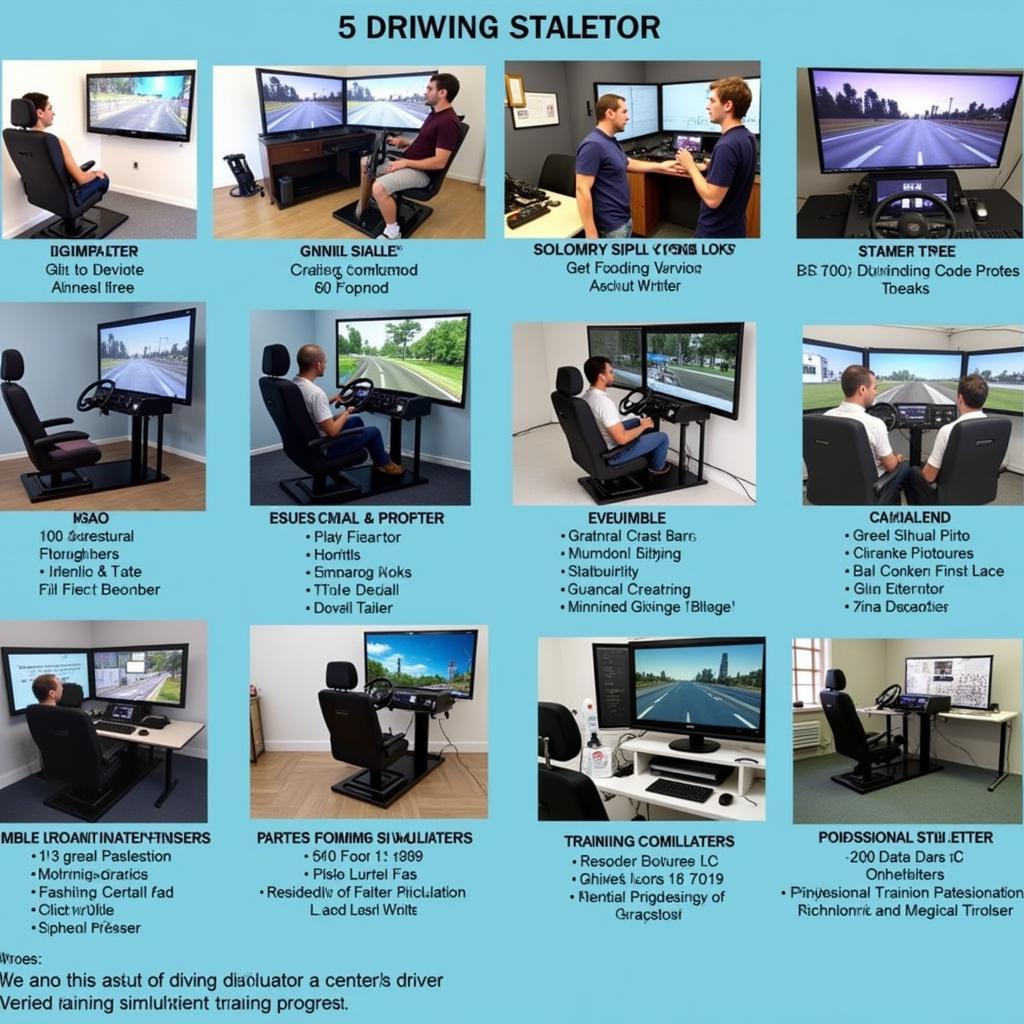 Different types of driving simulators
Conclusion
The driving simulator represents a significant advancement in driver training technology, offering numerous practical benefits. With the continuous development of technology, driving simulators promise to become an indispensable tool in modern and safe driver training.
FAQ
- Are driving simulators expensive?
- Are driving simulators difficult to use?
- Can driving simulators completely replace real-world driving lessons?
- Which driving schools use driving simulators?
- Where can I buy a driving simulator?
- Will using a driving simulator make it easier for me to pass my driving test?
- Can driving simulators simulate all traffic situations?
For support, please contact us by phone: 0968239999, Email: [email protected] Or visit us at: TT36 – CN9 Road, Tu Liem Industrial Zone, Phuong Canh Ward, Nam Tu Liem District, Hanoi. We have a 24/7 customer support team.