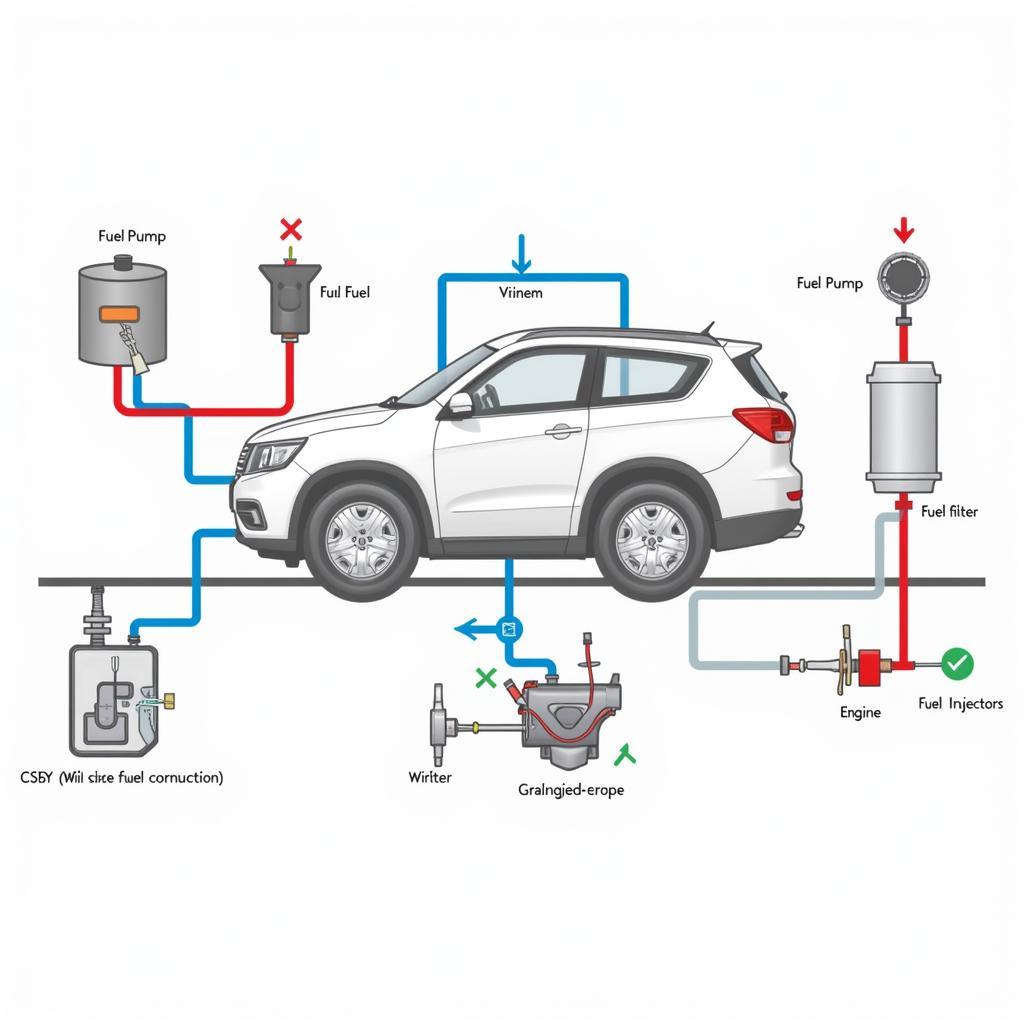
The main components of a car play a crucial role in its operation and the safety of the driver and passengers. Understanding the structure and function of each part will help you maintain your vehicle effectively and handle any problems that may arise on the road.
Chassis
The chassis is the foundation of the entire vehicle, responsible for supporting its total weight, including the engine, transmission system, body, and passengers. A sturdy chassis ensures stable and safe vehicle operation. The suspension system, a vital part of the chassis, absorbs vibrations from the road, providing a smooth driving experience.
Suspension System
The suspension system comprises springs, shock absorbers, and connecting parts, which minimize the impact of uneven road surfaces on the car body. A good suspension system improves road grip, enhances handling, and provides comfort for passengers.
Engine
The engine is the heart of the car, converting energy from fuel into kinetic energy to propel the vehicle. Internal combustion engines are the most common type, using gasoline or diesel as fuel. Engine performance directly affects the vehicle’s operation and fuel consumption. You can learn more about vehicle GPS tracking.
Fuel System
The fuel system supplies fuel to the engine and includes the fuel tank, fuel pump, fuel filter, and injectors. This system ensures a stable and efficient fuel supply to the engine.
Modern car fuel system
Transmission System
The transmission system transfers power from the engine to the wheels, enabling the car to move. This system includes the gearbox, driveshaft, and differential. The gearbox allows for changing gear ratios, enabling the car to move at different speeds.
Gearbox
The gearbox can be manual or automatic. A manual gearbox requires the driver to shift gears manually, while an automatic gearbox does this automatically. You can learn more about automatic car prices for more details.
Braking System
The braking system slows down or stops the vehicle. Modern braking systems typically use disc brakes or drum brakes. The Anti-lock Braking System (ABS) is a crucial safety feature that prevents the wheels from locking up during emergency braking.
 Safe car braking system
Steering System
The steering system allows the driver to control the direction of the vehicle. Power steering, either electric or hydraulic, makes steering easier. You can learn more about how to practice driving to improve your driving skills.
Electrical System
The electrical system powers the electrical devices in the car, including lights, horn, audio system, and air conditioning. The battery is the primary power source for the electrical system.
Lighting System
The lighting system includes headlights, taillights, turn signals, and warning lights. Headlights illuminate the road at night, while taillights help vehicles behind you see your car.
Car Body
The car body is the outer shell of the vehicle, protecting passengers and internal components from environmental factors. The body is designed for optimal aerodynamics, reducing wind resistance and saving fuel.
 Modern car body
Conclusion
The main components of a car work together harmoniously to ensure safe and efficient operation. Understanding the function of each part will help you maintain your car better and handle any arising issues. If you are interested in used car lift liquidation, please refer to our website for more information.
FAQ
- How does a car engine work?
- How does the ABS braking system work?
- What is the difference between an automatic and a manual transmission?
- How to maintain a car’s electrical system?
- What is the role of the suspension system?
- How does power steering work?
- What materials are car bodies made of?
For assistance, please contact us by phone: 0968239999, Email: [email protected] Or visit us at: TT36 – CN9 Road, Tu Liem Industrial Zone, Phuong Canh Ward, Nam Tu Liem District, Hanoi. We have a 24/7 customer support team.









