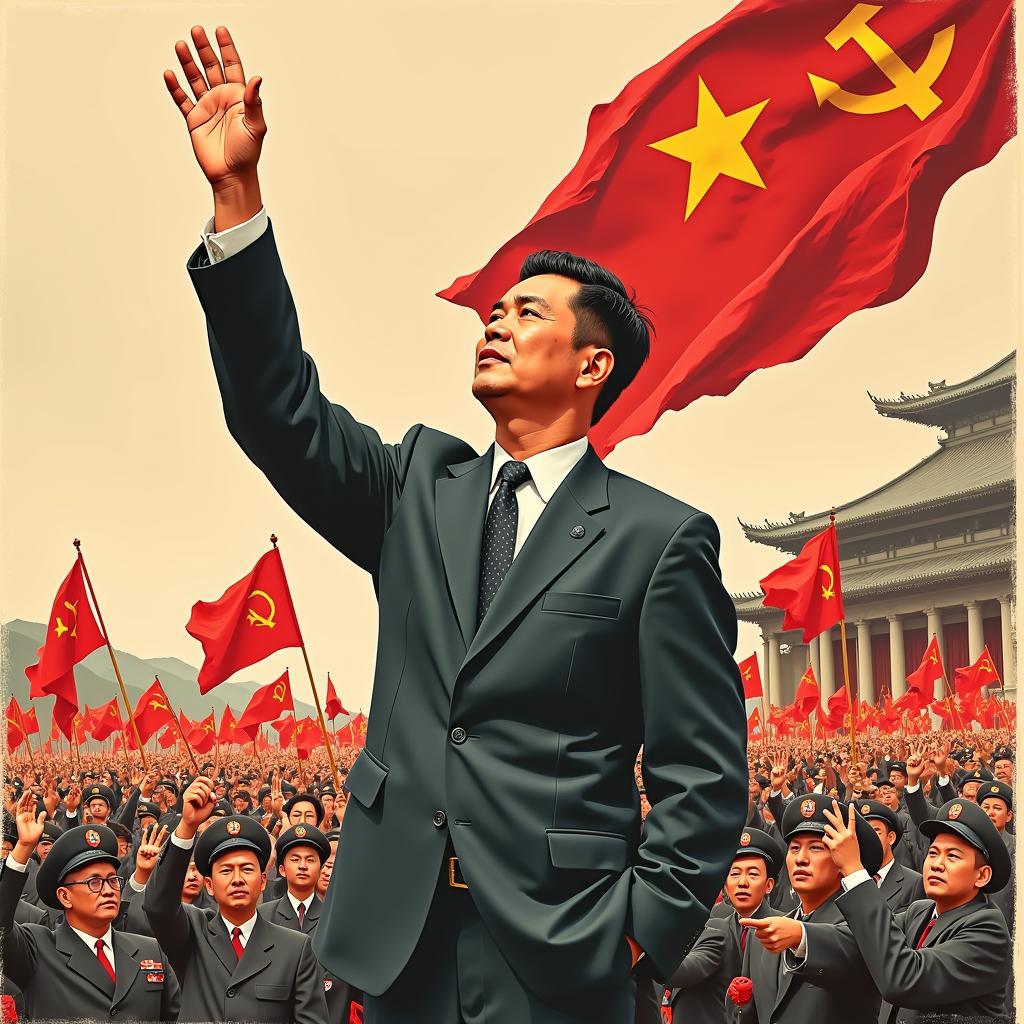
Syngman Rhee’s foreign policies, as the first president of South Korea, played a crucial role in shaping the nation’s international relations during its formative years. This article delves into Rhee’s key diplomatic strategies, including his relationship with the United States, his staunch anti-communist stance, and their lasting impact on the Korean Peninsula.
South Korea – United States Relations under Syngman Rhee
Rhee’s foreign policy heavily emphasized establishing and strengthening ties with the United States. He viewed the U.S. as South Korea’s most vital ally, a bulwark against the threat posed by North Korea and the expansion of communism. American economic and military aid was deemed essential for the survival and development of the fledgling nation. Rhee successfully forged a strong alliance with the U.S., culminating in the Mutual Defense Treaty signed in 1953. This laid the foundation for a long-term U.S. military presence in South Korea and secured substantial economic aid, contributing significantly to post-war reconstruction and economic growth.
Syngman Rhee’s Anti-Communist Policy
Anti-communism was a cornerstone of Rhee’s foreign policy. He adopted a hardline stance against North Korea, vehemently opposing any form of dialogue or cooperation with the communist regime. This rigid approach stemmed from a deep-seated belief in the irreconcilable differences between the two ideologies and a fear of communist infiltration in the South. Rhee’s anti-communist policies profoundly impacted the political and security landscape of the Korean Peninsula, contributing to the enduring division and prolonged tensions between the two Koreas.
Syngman Rhee's staunch anti-communist policies
The Impact of Syngman Rhee on the Korean Peninsula
Rhee’s foreign policies left an indelible mark on the Korean Peninsula. The close alliance with the U.S. ensured South Korea’s survival and facilitated its post-war economic development. However, his uncompromising anti-communist stance also contributed to the enduring division and confrontation between the two Koreas. Rhee’s legacy remains controversial to this day, with differing opinions on the effectiveness and long-term consequences of his policies.
Syngman Rhee’s Role in the Korean War
Rhee played a critical leadership role during the Korean War, guiding South Korea’s resistance against the North Korean invasion. He appealed for international support, particularly from the U.S., and was determined to defend South Korea’s independence.
Political analyst Kim Dae-jung observed: “Syngman Rhee was a resilient leader who guided South Korea through the most challenging period in its history.”
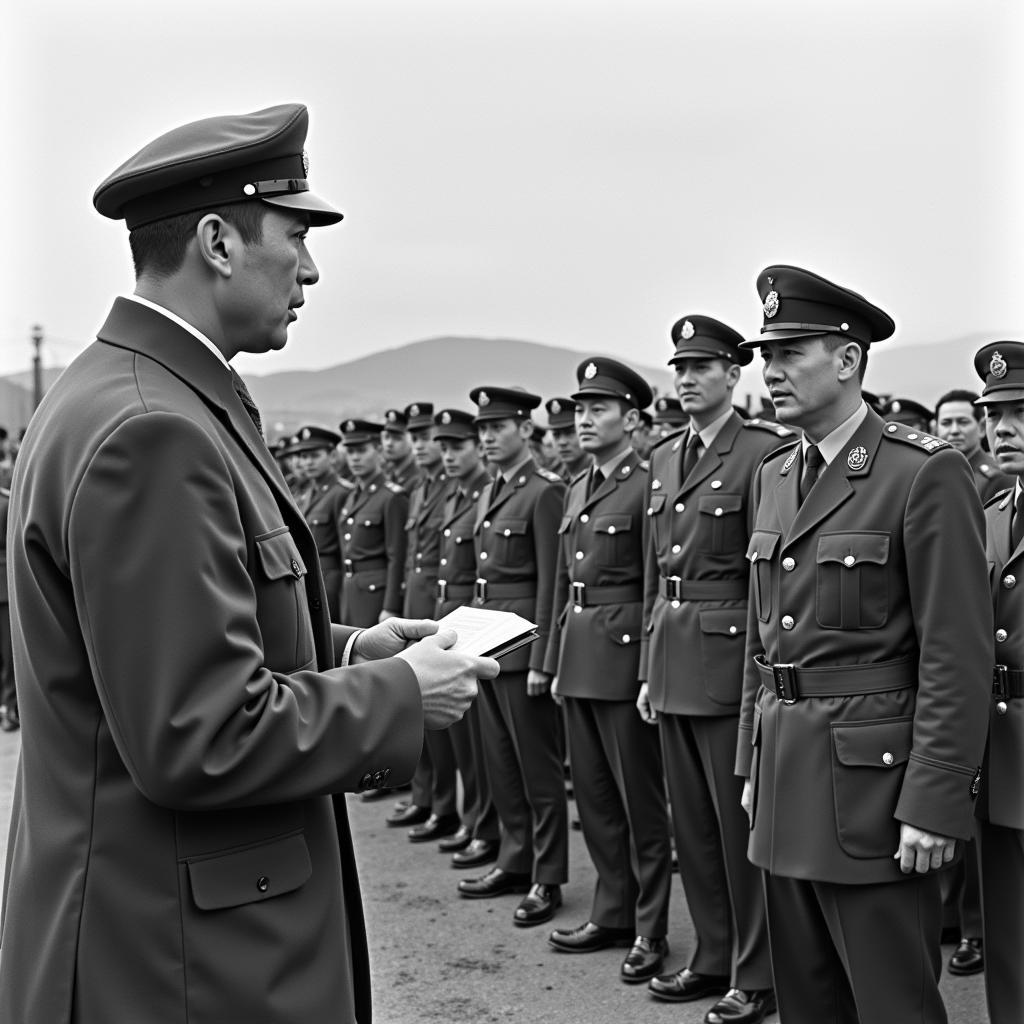 Syngman Rhee's leadership during the Korean War
Conclusion
Syngman Rhee’s foreign policies, particularly his alliance with the U.S. and his anti-communist stance, shaped the destiny of South Korea in its early years. While achieving some success in safeguarding and developing the nation, these policies also contributed to the division and enduring tensions on the Korean Peninsula. Understanding Rhee’s foreign policies is key to comprehending the history and current political context of the Korean Peninsula.
FAQ
- What were Syngman Rhee’s key foreign policies?
- How was the relationship between South Korea and the U.S. under Syngman Rhee?
- How did Syngman Rhee’s anti-communist policies affect the Korean Peninsula?
- What was Syngman Rhee’s role in the Korean War?
- How is Syngman Rhee’s legacy evaluated?
- What were the main challenges Syngman Rhee faced in formulating his foreign policies?
- How did Syngman Rhee’s foreign policies impact South Korea’s economy?
For assistance, please contact us at Phone: 0968239999, Email: [email protected] or visit us at: TT36 – CN9 Road, Tu Liem Industrial Zone, Phuong Canh Ward, Nam Tu Liem District, Hanoi. We have a 24/7 customer service team.









